

Danger: You Need To Act Fast When Your Client Seems Cognitively Impaired

Danger: You Need To Act Fast When Your Client Seems Cognitively Impaired

Danger: You Need To Act Fast When Your Client Seems Cognitively Impaired

This really happened. An advisor was managing a portfolio for a client we'll call "Janet" with about $5M in assets. She seemed to be "with it" most of the time. But she had become confused in some of their conversations, unable to follow what her advisor was saying. (It was not complicated). She called several times in one week, asking the same questions over and over. She forgot that they had already been answered. She missed two appointments, apologizing that she had been really busy. The advisor didn't seem to take all this seriously and didn't do anything differently from how he had always interacted with this client.

Janet had always been a generous person. She liked to help people out. She got drawn into a "friendship" with a stranger, who was very sweet and complimentary to her and it made her feel good to hear all those nice things. He saw her often. And after awhile, he asked her for a loan. She gave it to him. He kept up the frequent calls and visits. Perhaps she was addicted to them. The loans continued. Her advisor was concerned, but he figured it's her money and she can do what she wants with it. The amounts climbed, first to $100,000 in these "loans" and over three years the amount she had given to this false friend reached over $500,000. Of course he never intended to repay any of it.

The advisor finally seemed to catch on that something was wrong. He contacted Janet's daughter, and steps were taken right away to stop the drain on her assets, stop the phony friend and stop Janet from making those poor decisions.

The takeaways that every advisor should know are these:

  1. When your clients seem confused, forgets phone conversations and misses two appointments, these are RED FLAGS of diminished capacity. The time to contact the family is right then, not after some disaster happens.
  2. Even if your client has ample assets, it is wrong to simply allow a predator to manipulate her or him out of them. You, the advisor have the obligation to do all things possible to stop financial manipulation. It is not an excuse that "it's her money and she can do what she wants with it." That aids and abets elder abuse.
  3. You need advance information in your file when you accept the client into your book. That information must include more than one alternate contact and written permission from your client in a legally sufficient document, to contact the responsible others when you see fit.
  4. An unusual change in your client's spending pattern, such as Janet's taking out huge sums to "loan" to this fake friend should be red flags of financial elder abuse for you. Please don't wait until a thief takes a half a million dollars from someone before you catch on that something is very wrong here and you need to act right away.

If you are not sure about the warning signs of diminished capacity to look for, you can get a free checklist at AgingInvestor.com. Download yours today and you won't make the same mistake as the anonymous advisor in this case study. If you aren't sure about the major warning signs of financial elder abuse, we can help you there too, with another free checklist. Get yours right away and keep those aging clients financially safer.

Carolyn Rosenblatt, RN, Elder Law Attorney, AgingInvestor.com
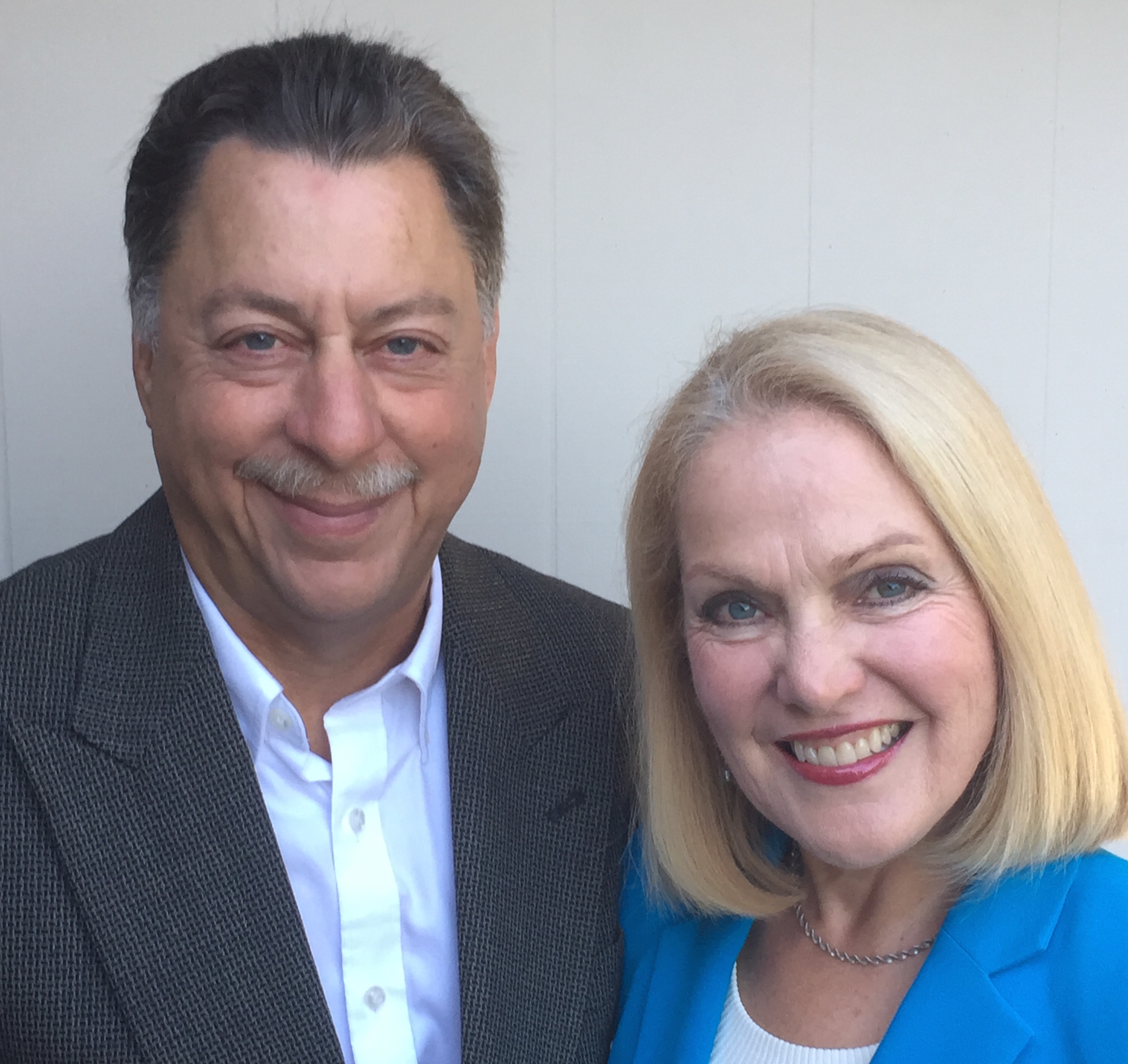
 

Dr. Mikol Davis and Carolyn Rosenblatt, co-founders of AgingInvestor.com

Carolyn Rosenblatt, RN, Elder Law Attorney offers a wealth of experience with aging to help you create tools so you can skillfully manage your aging clients. You will understand your rights and theirs so you can stay safe and keep them safe too.

Dr. Mikol Davis, Psychologist, Gerontologist offers in depth of knowledge about diminished financial capacity in older adults to help you strategize best practices so you can protect your vulnerable aging clients.

They are the authors of "Succeed With Senior Clients: A Financial Advisors Guide To Best Practice," and "Hidden Truths About Retirement And Long Term Care," available at AgingInvestor.com offers accredited cutting edge on-line continuing education courses for financial professionals wanting to expand their expertise in best practices for their aging clients. To learn more about our courses click HERE

Five Very Personal Questions Older Advisors Need To Ask Themselves

Five Very Personal Questions Older Advisors Need To Ask Themselves

Advisors talk to clients all the time about the big topic of retirement. The industry inundates the media with advertising among competitors about who can do retirement planning best. You help clients plan for how to reach their goals. You do your research and calculations. You offer sage advice after years of experience. And then there’s your OWN plan: when is it time to schedule your own exit from the burdens of your work?

We often hear “age is only a number” or “age is just a state of mind”. That’s not really true. Age is a process that takes its toll and ignoring it can be costly. We work, we have our self-image of productivity and success. We pass 50, then 60 still going strong. But one day, you forget an important phone number you should know. You quietly ignore it. Until it happens again. You forget names and that’s not really such a big deal, as lots of your age-mate friends laugh about the same thing. But at the back of your mind there is that tiny, creeping doubt: am I starting to “lose it”?? Fear has emerged in the shadows of your consciousness. “How long can I keep going?”

The literature of the financial services industry is replete with advice about advisors’ succession planning. Sounds good, but it never tells you exactly when to move on, to merge your business with one managed by younger folks, or sell the book of business to someone you trust.

Here at AgingInvestor.com, we offer a deep dive into information about aging clients and how to spot signs of trouble. We give you our professional guidance as aging experts on how to understand when your client is demonstrating dangerous signs of diminished capacity. We give you concrete suggestions about what you need to do. We spend a little time on the subject of the impaired advisor too, and how firms can deal with that. But we have not asked you to look within and formulate a plan for your own exit strategy when you, yourself see any warning signs that age is affecting you in your work.

It’s time to do just that. We know that many advisors are still doing fine at 60, 65, 70 and up. However, age statistics don’t lie and loss of sharpness can happen to anyone. Advisors don’t age differently from anyone else in the world. A few firms do have a mandatory retirement age but most don’t. Independent advisors are independent for a good reason. You didn’t want to march to the beat of an institutional drum. That independence has likely led to greater job satisfaction and perhaps even greater financial success. But it leaves you vulnerable when you are on your own, getting on in years and not clear about whether to merge with a firm, sell, or otherwise set a date for realizing your own exit strategy.

Here are five things to ask yourself in considering the question: when is it the right time for me to exit this business?

  1. Am I noticing any changes in my memory such as forgetting appointments or important phone numbers I ought to remember easily?
  2. Am I having any difficulty concentrating on complex financial information that is part of the nuts and bolts of my work?
  3. Has anyone in my life encouraged me to retire, “take it easy” or otherwise modify my work life?
  4. Have I failed to create an exit plan for myself the way I help my clients set their retirement dates?
  5. Am I afraid that if I retire, merge my business or sell my book that I will lose a sense of my own self-worth or identity?

If the answer to the first two questions is “yes”, that’s a signal to attend to rather than ignore. It may be time to quit while you’re ahead. If you have not thought these things through, that’s what needs to happen. As for the last questions, 4 and 5, consider this. Anyone who gives up a long-held identity based on what you do for a living has to face the same challenges. And many people do transition successfully to a different lifestyle, to finding purpose in other pursuits or in removing a major source of stress that can come from your work. The life cycle does not go on forever, despite society’s denial of aging. Kicking the bucket at your desk is not a pretty picture. On the contrary, you can set your glide path out in a graceful way.

The Takeaways:

If you are 65 or above, you really do need an exit strategy. It could take some years to execute it but have a plan. If you do not have one, create one. If you have any small, back-of-your-mind doubt about being as sharp as you once were in a younger day, pay attention to that little doubt. It just might be your internal nudge to make your exit happen. Consider a strategy that allows this at a time when you can make the most of the benefits involved while you’re still at the top of your game. What you have created has value. Take advantage of negotiating with that value at its high point.

Carolyn L Rosenblatt, RN, Attorney, AgingInvestor.com

What Extraordinary Advisors Do For Retiring Clients That Other Advisors Miss

What Extraordinary Advisors Do For Retiring Clients That Other Advisors Miss

Every advisor wants clients to think that he or she is unique, different, better than the competition. Maybe you are. But if your retirement planning with them stops at calculating their planned retirement income and preserving their assets, you’re not extraordinary. It takes more than that to be outstanding.

Standing out among the others means that you are looking at the client’s entire life and relationship to their family members. Acquiring the courage and skill to do that is how you distinguish yourself from the next advisor down the street or anywhere. So how do you do that? Aren’t you just supposed to do a good job managing the money?

Advising about and managing the money is your essential bedrock, and then there is service above and beyond. That’s the unique play, going beyond average. It’s not so hard to do, but it may be outside your usual comfort zone. You assess. You discuss difficult subjects clients may not want to talk about. You take the time. You communicate more often than the next guy or gal. You offer tools. You become a sort of coach, encouraging a retiree or soon-to-be-retired client to do things that will make life easier for everyone around them. Your guidance can help not only your client, but every person whose life is touched by what your client does and fails to do. Most will likely think how wonderfully unusual you are for doing this. The average advisor won’t bother with any of it but not being ordinary, you can shine.

Let’s start with one tool you can use, created at AgingInvestor.com (free download here). In this article, we address the first item on our Ten Step Checklist For Smart Retirees. The first step is:

Decide whom you want to communicate with about your future. Set a date and sit down together.”

This sounds simple but it’s not. Clients’ families frequently have poor communication about aging, the potential for needing help, and finances. The elders may want secrecy. Everyone may be afraid to talk about end of life. Although wealthier folks usually do better with estate planning than the less wealthy, not everyone takes the time to update their legal documents and your client’s loved ones need to know this. If you, the advisor encourage a family meeting (or friends meeting if there is no family) specifically about basic topics in your client’s future, that can get the ball rolling on communication about other essential matters related to getting older. The communication must address the real risk of becoming impaired with aging. The checklist is a guide for your client, a place to start. If a client does these steps, it will save everyone enormous and avoidable aggravation later.

Our checklist has ten steps in it. We’ll go through all the ten steps and why they are crucial in subsequent posts. Get your copy today and consider having a conversation with every client age 55 and older in your book about the checklist. You hand it out to them and discuss how to use it. You can bring it up at portfolio review, on the client’s birthday or at the time of retirement. If you want to set yourself apart, talking about things besides the client’s income in retirement will indeed set you apart.

By Carolyn Rosenblatt, RN, Attorney, AgingInvestor.com


The Hole in The Senior Safe Act: Why Briefly Holding Transactions Is Not Enough To Stop Abuse

The Hole in The Senior Safe Act: Why Briefly Holding Transactions Is Not Enough To Stop Abuse

 The Senior Safe Act allows you to hold transactions when you suspect financial abuse of a client. The Act is designed, at least in theory, to allow time for the trusted contacts you have on file to take appropriate action. Many of those victimized by predators or manipulated by unscrupulous family have dementia and have lost their judgment about what makes sense financially. The Act urges you to get trusted contacts and provides that you are not breaking privacy rules to contact them in the reasonable belief that your client is being financially abused. The length of time you can hold a requested transaction can be as long as a month. This is where the Senior Safe Act has missed the mark.

 Let’s look at the reality of impaired elders who are in charge of their wealth on the family trust. The trust is in order, and if the elder recognizes that he or she is experiencing decline in mental ability, that trustee may choose to resign. Simple. But that is not what happens in too many cases. For many persons who have cognitive decline and dementia, the elder does not recognize that he is impaired at all. “I feel fine!” he tells his worried family. When asked to resign as trustee, having total control over (theoretically) millions of dollars in a trust, the elder flatly and stubbornly refuses. Meanwhile, financial abuse by predatory people can continue unabated.

 When an older person experiences cognitive decline, it typically has a very slow onset. Short-term memory loss does not raise enough red flags for those closest to the elder to take any action. “She’s just getting old” they say dismissively. But memory loss is often the first and earliest warning sign of Alzheimer’s disease, the most common form of dementia. The odds of having Alzheimer’s disease by age 85 are at least one in three.  Think about your own older clients. Some live well beyond age 85. The risk of dementia rises with age. Short-term memory loss interfering with daily life is not a normal part of aging.  Financial abuse and cognitive impairment often go together.

 When financial abuse reaches a visible level, the advisor may do what the law allows and call the trusted contact person, usually an adult child.  The advisor hopes that the call will somehow trigger something and the abuse will be stopped. But here is a reality check: The family can’t accomplish anything needed in two weeks or even a month if you hold transactions then. Here is a real case example of just such a situation, showing how long it really did take.

 In our work with a family at AgingParents.com we saw rampant financial abuse of an elder by a family member. The elder had dementia but had not been formally diagnosed by his doctor. Over 70% of his income was going to the predator. He was asked to resign as trustee by his two adult children, who were reasonably worried that he was going to give away all his cash and further encumber his home. The dad, whom we’ll call Gene, had been developing dementia for at least two years. He felt obligated to the predator and was totally powerless in resisting her demands for money. He just kept writing checks, draining his own resources. It was clearly a case of financial manipulation.

 We were involved in working to persuade Gene to allow what his family trust provided: to have his daughter, Jennie, become the successor trustee.  He agreed, then reneged. He accepted the logic and then refused to accept it. The kids had no choice but to use the law to take over control. Their father was too stubborn to resign as trustee when asked, even with the entire family presenting a united front, asking and respectfully begging.

 The trust, like many such documents provided that Gene could be removed as trustee by his appointed successor, his daughter, after two physicians had declared him to be incapacitated for handling his own finances. A court decision was not required. However, getting him to two doctors willing to assess him and put their observations in writing was a challenge that took months to accomplish. The total time spent getting the change of trustees accomplished according to the terms of Gene’s trust was eight months.

 His children were the trusted contacts in the advisor’s file. They knew about the abuse and were in agreement with the advisor that Gene had to stop being the trustee. The adult children had to hire consultants (AgingParents.com), have meetings, hire an attorney, and try various methods to get the job done.  Their time energy and thousands of dollars were expended to prevent an even worse outcome, which was being left to support their aging father if he were to totally deplete his own funds.

The takeaways:

  1. Though well intended, we do not expect that the Senior Safe Act will do much to stop financial abuse because of the short time allowed for a financial professional to hold transactions. In Gene’s case, the predator would have been happy to wait a mere two weeks or a month before resuming the financial manipulation of Gene.
  2. Know that any older impaired client may not understand that he or she is cognitively impaired and will ignore pleas to resign as trustee with total control over any family trust.
  3. If you see that an older client is showing signs of cognitive decline, do not wait until it gets worse. Reach out at the time of your first suspicions of trouble.  The family or other trusted persons may well have a better opportunity to persuade an elder to transfer power over finances to the appointed successor before complete loss of capacity. Expect this to take time.

In the case described above as a result of ongoing financial abuse, nearly all of Gene’s cash was depleted during the eight months of effort on the part of his adult children to have him removed.  The advisor did the right thing but too much of Gene’s cash was depleted in the period when the abuser could keep manipulating him for those months of effort by family to have him removed as trustee.

By Carolyn L. Rosenblatt, RN, Elder law attorney, AgingInvestor.com 

If you are seeing abuse and feel lost about how to stop it, contact us at AgingInvestor.com for a confidential consultation with our nurse-lawyer, geriatric psychologist team so you can do everything possible to protect your vulnerable client.

Advising Your Longest-Lived Clients

Advising Your Longest-Lived Clients

It used to be that we could think of retirement in a kind of predictable way. People lived into their 70s perhaps, and we measured retirement by that. We used tables, algorithms and other tools to tell us how much we should save and how much we could spend in retirement. And it was all based on assumptions that may no longer apply.

Life expectancy for a woman in the U.S. in 2018 was 84 years. For a man, the figure is 80 years. Those averages do not take into account the fact that well educated and financially secure people live longer than average. This is presumably based on the notion that people who know what a healthy lifestyle is and who can afford the best medical care will outlive those who do not have those advantages. In my own county, for example, which has a high proportion of elders compared to other counties in California, one wealthy city shows a life expectancy for men of 93 years.

Suppose that your aging client lives to be 93, having retired at age 65. That's 28 years of retirement. What the algorithms don't clarify is what you, the advisor needs to plan for with your client during the last decade of life, from 83-93.  No formula is going to help you with the individual discriminations you need to make concerning your client's risks for care and how to assess and plan for them. They can be a substantial cost, out of pocket, not covered by Medicare, and absolutely necessary.

The way we age is determined by two main factors: hereditary tendency and lifestyle. Our genetic makeup directs only about 30% of the equation. The other 70% is driven by the way we choose to live our lives.  There are plenty of folks who think that a healthy lifestyle is just too much bother. They avoid exercise, eat whatever they feel like eating, never learn to manage stress and say they'd rather die a few years sooner than give up their habits, which their doctor advises against.

Here's the problem with that belief. Leading an unhealthy lifestyle does not just cause you to "die sooner". Rather, it may likely cause you to live with impairments, disabilities and a need for expensive long term care for chronic health conditions. These can go on for decades.

Take obesity, for example. Over two-thirds of Americans are overweight or obese. Obviously excess weight increases our risks for all manner of health issues, including diabetes, heart disease, high blood pressure, and strokes. When a doctor makes a diagnosis of one of these, the person doesn't typically just die on the spot and save a lot of expense later on. No. The medical providers will keep the person going with medications, surgery in some cases, lots of diagnostic monitoring and trips to the doctors. These chronic conditions usually lead to disability late in life, particularly when more than one of them exists in the same person.

If you have aging clients, you definitely need to understand health risks in a basic way, so that you can help your clients set aside funds for the care they are likely to need in the last years of their retirement lives.  All of the chronic conditions I mentioned are manageable with an effort toward a healthy lifestyle but for those who do not wish to do the work involved, you can bet on a likely need for long term care. While you can't predict the future, you can plan for risk. It's what you do.

My own mother in law had high blood pressure and chronic kidney disease for decades. She worked vigorously at diet, exercise, social activities and other components of a healthy lifestyle. Heredity was not on her side. She lived to be 96. During the last 3 years of her life, she needed help. She moved to a seniors' community where help was available and eventually, she paid for private caregivers. Her cost of living at the last part of her life was $120,000 a year. If this were your client, would he or she have at the ready $360,000 to pay for care? How about if there was no pursuit of a great lifestyle? The care expense could easily be 10 years.

The takeaway here is that advising for longevity needs to include the skill of assessing fundamental health risks that create a need for out of pocket, long term care. You don't need to be a doctor and you can't predict everything, but you can do what is reasonable to help your client plan. Ask the right questions. Keep track of your client's general health picture.

To learn more about what to look for and what to ask, get Hidden Truths About Retirement & Long Term Care, available at AgingInvestor.com and on Amazon.

By Carolyn L. Rosenblatt, RN, Elder law attorney, AgingInvestor.com