

How Much Should You Plan On For Retirees’ “Out of Pocket Medical Costs”?

How Much Should You Plan On For Retirees’ “Out of Pocket Medical Costs”?

How Much Should You Plan On For Retirees' "Out of Pocket Medical Costs"?

For those outside the caregiving world, there is a lot of confusion about this cost. Calculations abound in retirement planning circles for helping your clients ensure that they have enough for the things they are likely to need medically. The usual calculations outline Medicare Part A premiums (deducted from Social Security payments), Medicare Part B supplemental health insurance premiums, also called "Medigap" and for medication expenses, as some are not covered my Medicare. In plain English, this means that your client's Social Security is less to them when the Medicare payment comes out and they have to pay out of pocket for the other kind of insurance that covers outpatient care, clinic and doctor visits, as well as prescription meds.

OK what's wrong with these calculators? Can't you rely on them? I think for an unusually healthy person who is your client, one who needs little care and has no chronic illnesses, they would be fine. I'm not sure where the folks making up the calculations get their statistics but I think they grossly underestimate the real costs of out of pocket medical care in retirement.

From personal experience with thousands of elders I visited at home as a nurse over a career, I did not see much of the unusually healthy. What I did see was the average person then taking numerous medications, having multiple chronic conditions and being at risk for those getting worse with age. And now, decades later, we live longer, have more health risks as a result of greater longevity and we have to pay more for the problems that go along with living to be 100. We have better diagnostics and we can catch and treat conditions more. That means more out of pocket expenses for those exotic tests Medicare will not cover. That also means more and more drugs being prescribed to manage and control chronic illness. They work, but we pay. You would be amazed at what Medicare does not cover.

Here's the message I want every retirement planning advisor to heed: you cannot predict how much out of pocket medical expense your client will have unless you really know a lot about both their genetic disposition and their health habits and condition. And then it's only an educated guess. How educated are you?

We do know that the way we age is about 30% due to our genetics. The other 70% of the picture is directed by how we choose to live. That means what we eat, how much we move our bodies, how we manage stress, how we socialize and how we succeed or not in our relationships with others. All of these factors affect our health and longevity and consequently, how much it's going to cost to keep living with conditions like heart disease, diabetes, cancer, hypertension, arthritis, etc.

We haven't even touched on the subject of Alzheimer's disease. If you are calculating out of pocket medical I'll bet you never calculate what it costs to care for someone at home 24/7 with specialized skill for dealing with this devastating disease. It can last 20 years. Nursing home care and caring for a person with any serious illness at home is long term care. That is not in the calculations in those handy tables describing the out of pocket medical costs for an average couple retiring at the age of 65 and living to be 85.

Here's an example. Mort is 95. He has multiple health issues and early dementia. He can't do anything by himself. He has 4 caregivers in shifts every day in his home. He isn't sure he wants to keep going but he doesn't want to stop the numerous medications he takes to stay alive. It costs over $250,000 a year just for the caregivers, not for the other costs of housing, utilities, transportation via handicap van and such. And the out of pocket medical is still there. The dentist, the hearing aids, the medications that no insurance pays for, the stair lift, the ramp on the front of the house, the high-end wheelchair and more.

If you want to help your clients plan so they won't run out of assets, you'll need to be realistic. Lots of cash may need to be available at the later end of life. It is more likely than not. Forget reliance on a calculator or use one that has the highest number you can find. Then add on expenses like Mort's and you're on the right track.

Get a lot more detail on caregiving, costs of care and what is needed as we age in The Family Guide to Aging Parents: Answers to Your Legal, Healthcare and Financial Questions. Check it out here.

Carolyn Rosenblatt, RN, Elder law attorney & Dr. Mikol Davis, Gerontologist
AgingInvestor.com and AgingParents.com


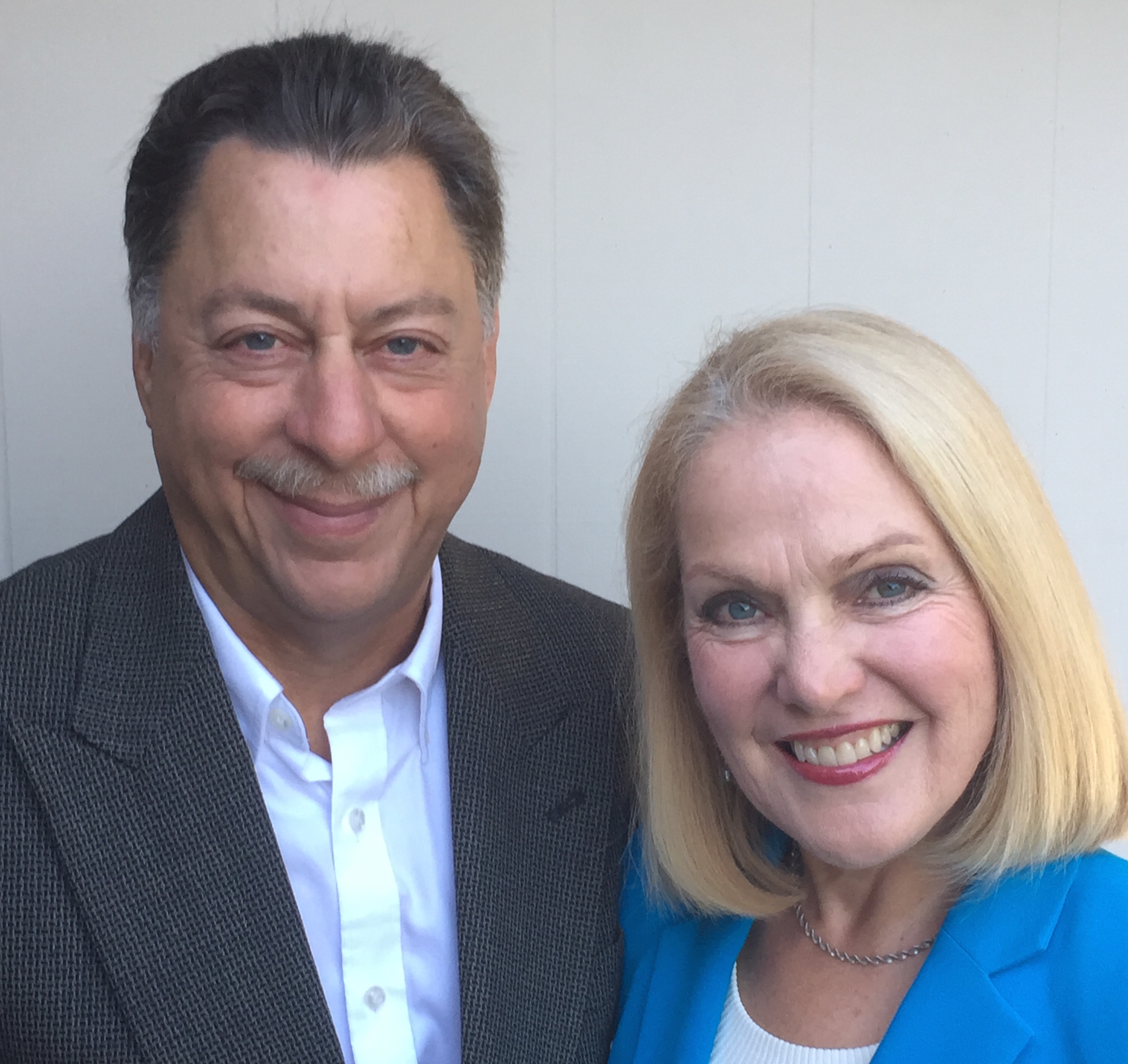
Dr. Mikol Davis and Carolyn Rosenblatt, co-founders of AgingInvestor.com

Carolyn Rosenblatt, RN, Elder Law Attorney offers a wealth of experience with aging to help you create tools so you can skillfully manage your aging clients. You will understand your rights and theirs so you can stay safe and keep them safe too.

Dr. Mikol Davis, Psychologist, Gerontologist offers in depth of knowledge about diminished financial capacity in older adults to help you strategize best practices so you can protect your vulnerable aging clients.

They are the authors of "Succeed With Senior Clients: A Financial Advisors Guide To Best Practice," and "Hidden Truths About Retirement And Long Term Care," available at AgingInvestor.com offers accredited cutting edge on-line continuing education courses for financial professionals wanting to expand their expertise in best practices for their aging clients. To learn more about our courses click HERE

What To Watch For: Aging Clients and The Sweetheart Scam

What To Watch For: Aging Clients and The Sweetheart Scam

What To Watch For: Aging Clients and The Sweetheart Scam

If it didn't happen so often, there would be no need to warn your single, widowed clients about it. But every day, someone gets taken in by a "special someone" who appears to have only your client's interests at heart. The special someone is a scam artist who knows just how to get an unsuspecting lonely man or woman into the web of deception. And then they finagle money out of your client and run.

Some of these scammers are skillful repeat offenders. Some just see an opportunity and proceed to milk it for all it's worth. Take the case of Tommy, whose wife was ill with cancer. He used to take his clothes to the local dry cleaner every week and he got friendly with the woman who ran the business. She loved to chat and gossip and he was lonely with his caregiving, cooped up with the daily chores he had to do for his ailing wife. Norma, the dry cleaner heard all about it.

Just after his wife passed, Tommy got a visit from Norma. She was so consoling and comforting. He felt like he had a real friend. She had heard about his wife's illness for over a year and was ever so sympathetic. She also knew he had money. Within a month she had moved in with Tommy.

Over the next six months of giving Tommy her undivided attention, she managed to persuade him to give her "loans" of over $300K. She promised to stay with him forever. He loved the flattery and feeling special. No sooner had Norma gotten the last of what she could easily take, she promptly sold the dry cleaning business and disappeared. This is not such an unusual story.

Here's what every financial professional needs to know about the Sweetheart Scam. Professional predators comb the obituaries for stories about the beloved widow or widower left behind. They look for those who have been with a deceased who was a business leader, a banker, a financially successful person. They choose the ones who may be likely targets, the survivors who have means. They scope out how to meet them and seize the opportunity to take advantage of loneliness.   They will stop at nothing to get in the door. And sooner or later they always need "a temporary loan" or a little help to get out of an unfortunate jam. If it works, they up the ante. This can go on until they have bankrupted a widow or widower. It will at least drain available cash if no one is watching.

That's where you come in, the financial professional with the ability to notice when unusual withdrawals are coming out of your client's account. Once the scammer has gotten control over your client's emotions, it may be too late to stop the scam. Your client is "in love" or at least addicted to the showered on attention. She won't believe your warning then. The heads-up must come early, before an opportunist has a chance to cast a spell.

Here's the takeaway: any recently widowed client in your book is a potential target. Do these things:

  1. Gently raise the subject of being careful of any stranger he/she meets soon after the loss of a spouse. Warn with empathy and facts.
  2. If your client claims he's met a "special someone" do some digging. Google the person he names. Ask a few probing questions. See what your client may not be able to see. Share the data you glean with your client.
  3. Be sure you have contact information for a family member or trusted friend of your client whom you can call if you see something suspicious. Call them if you think your client is in danger, particularly if your client doesn't want to hear your warning.

That protective posture you take on can save your client from disaster.

Financial elder abuse takes many forms besides the Sweetheart Scam. It is called "the crime of the century", it is so prevalent. With the right know-how, you can stop it and keep your clients safer. Take a deeper dive into this subject in a book written just for you, Succeed With Senior Clients: A Financial Advisor's Guide to Best Practices. Get a look at it here.

Carolyn Rosenblatt, RN, Elder Law Attorney & Dr. Mikol Davis, Gerontologist

AgingInvestor.com and AgingParents.com


Dr. Mikol Davis and Carolyn Rosenblatt, co-founders of AgingInvestor.com

Carolyn Rosenblatt, RN, Elder Law Attorney offers a wealth of experience with aging to help you create tools so you can skillfully manage your aging clients. You will understand your rights and theirs so you can stay safe and keep them safe too.

Dr. Mikol Davis, Psychologist, Gerontologist offers in depth of knowledge about diminished financial capacity in older adults to help you strategize best practices so you can protect your vulnerable aging clients.

They are the authors of "Succeed With Senior Clients: A Financial Advisors Guide To Best Practice," and "Hidden Truths About Retirement And Long Term Care," available at AgingInvestor.com offers accredited cutting edge on-line continuing education courses for financial professionals wanting to expand their expertise in best practices for their aging clients. To learn more about our courses click HERE

How Can You Tell If Your Client Has Diminished Capacity?

How Can You Tell If Your Client Has Diminished Capacity?

How good are you at spotting the telltale signs of diminished capacity in an older client? Many older people have a bit of difficulty remembering. We often dismiss this when we see it, thinking it's "just getting old". It may be part of aging, as we do process things more slowly as we age and recall may take longer. But, there is a point when a problem recalling things should be a red flag for diminished capacity for you, the advisor.   What are those red flags anyway? How do we label them? There are numerous signs of diminished capacity, more extensive than this article allows, but we'll look at one category, which we call cognitive signs. Here's a breakdown of what you should look for when your client has a lot of difficulty remembering things.

What to note and document about memory loss

This is one of the first things most advisors may notice in a client that causes concern. Perhaps she does not remember important meetings, decisions and discussions. Here are some examples of what you may see:   Multiple telephone calls in one day that are repetitive and do not make sense. The client forgets that she has already talked with you and is calling about the same thing in another call to you. She repeats a question she already asked you and that you already answered.   Client forgets why he has an appointment with you. This can be by telephone or in person. Perhaps the client himself asked for the meeting but then he forgets why. Or perhaps you wanted to discuss a proposed transaction with him and told him that, but when you call or he comes into your office, he has no idea why he is there. Trying to refresh his memory about it does not help.   Complete forgetting of an event that just took place. You just spent a hour with your client telling her some important information about upcoming changes to her portfolio. She seemed to understand when you were talking but an hour later she asks you questions as if the meeting you just had never took place. She had totally forgotten about it.   No shows. You have arranged meetings, appointments with others or events that require your client's participation. He agrees on the pre-arranged date and time but then does not show up. When you call him, he has no recollection of the event, that others are involved nor that he had agreed to this.

If your client demonstrates any of these indicators you need to be paying close attention and make an effort to contact your client more often than you did before you noticed these problems. Any or all of them might be warnings of developing dementia. There could be other reasons for memory loss, but you won't know unless you are keeping good records. The only way to determine if you have a serious problem here is to track these signs over time and document each instance you see.   If the problem gets worse, it is time to take it to the next level. In your organization that might mean escalation, or having the documentation reviewed by a committee. Ideally, as we see it, the next step should include contacting the client's appointed trusted third party who would step in when the client became impaired.   To learn more about diminished capacity and just what you should do about it, click here. An hour of accredited learning on the course Best Practices for Clients With Diminished Capacity will make you a lot wiser in your approach.

By Carolyn Rosenblatt, RN, Elder Law Attorney, & Dr. Mikol Davis, Gerontologist co-founder of AgingInvestor.com

The Elephant In The Room: Financial Professionals With Diminished Capacity

The Elephant In The Room: Financial Professionals With Diminished Capacity

Every profession is facing a common dilemma: what to do about your own impaired colleagues. When there is no mandatory retirement age, there is no one to say, it's time to quit. Do you think a colleague has dementia?

People are living longer than ever, continuing in their work longer than ever and sometimes they start to "lose it" before they decide to retire. As none of us are absolutely immune from Alzheimer's or other dementia, or anything that causes cognitive decline, we all need to consider what we would want if it happened to us.

Would you want a friend or colleague to tell you that you've got a problem with memory and maybe it's time to hang it up and rest? Would you want your legal department to embarrass you and tell you to stop handling other people's money because everyone knows you're no longer competent? It's a frightening thought.

Longevity can be great, but not when you are impaired. As a consultant with expertise in aging, I have seen cognitive impairment to a dangerous level in numerous professionals. One was a trial lawyer colleague, high profile and famous. No one stopped him from practicing law until he had nearly destroyed things. I have seen it in a business owner who founded his company and had been going to the office for 50 years. He was kicked out of his favorite restaurant and was physically harassing employees, his Alzheimer's had gotten so bad. No one made him stop until outsiders (myself and my partner, Dr. Davis) came in and created a plan to prevent him from entering the office again.

I have seen a judge with dementia fall asleep on the bench in the middle of lawyerly argument in court.

I spoke with the sister of a former bank president who had become a financial advisor. He had lost most of his wealth because he could no longer keep track of it and he was being taken advantage of. He was living in squalor before family intervened. During that time, he was still working as a wealth manager.

These are real cases. The message is that we need a strategy and a policy in any office with advisors who work into their senior years, to address the possible impairment that might occur.

There is a way to do this so as not to needlessly embarrass the affected person. There is a way to require that a person with memory loss confirmed by colleagues should step down and give up managing anyone's assets. This should thought out in every office. Clients need protection. It takes construction of a reasoned policy to address the impaired advisor confidentially by first requesting retirement and then mandating retirement if the advisor refuses to go along.

Pilots have a mandatory retirement age of 65. That would not work for many other kinds of professionals. But something has to be done. If you want some concrete action steps to put in place in your office, you will find them in our book, Succeed With Senior Clients, A Financial Advisor's Guide to Best Practices. Get your copy today by clicking here.

By Carolyn Rosenblatt, RN, elder Law Attorney, & Dr. Mikol Davis, Gerontologist co-founder of AgingInvestor.com

What Does It Really Mean to “Know Your Client”?

What Does It Really Mean to “Know Your Client”?

Every advisor understands that you are theoretically required to know your client. But does one or two contacts a year after you do retirement planning suffice? When it comes to aging clients we at AgingInvestor.com think it takes a lot more than that. Here's a real case that illustrates the problem with an advisor not really meeting this obligation.

Nigel is 80 and his wife, Berta is 84. Each had a large estate of separate property when they got married. Nigel owned a home in an expensive county and Berta had her own inheritance. They had had the same financial firm in a different state from where they now live for decades.

We got involved at the point of a desperate call from Nigel. His wife was being discharged from the rehab facility, he was told and he wasn't sure what to do. He had the means to pay for private care and that was what he wanted. I consulted with him at some length and asked about the medical records. He obtained them at my request. The news was not good. His wife was terminally ill and plans for how to manage her had not been discussed with anyone: not the doctors, not the rehab folks, no one.

A person's choices about care are driven largely by how much they have in assets that can be spent on care. I asked. He contacted his financial advisor and we all spoke together. There was plenty to cover the need, but at that point I learned that Nigel and Berta had never done any estate planning. No will, no trust, no beneficiary designation on any account naming the other as a recipient when one passed.

Where was the financial advisor in all this? Ignorant. Not involved in encouraging her clients to do what would benefit both of them. She apparently did not keep in touch with them, despite that Berta had been ill for over a year. She did not know that Berta was gravely ill and going into hospice care (comfort measures only for the terminally ill). She did not know that they were about to incur a daily cost for a private room in a well appointed nursing facility at a cost of $430 a day.

Scrambling to find an estate-planning attorney and get advice, we did accomplish what the advisor could have urged her clients to do long before this crisis. Nigel does not use a computer. The advisor emailed the power of attorney and beneficiary designation form to me and I ensured that it was signed and sent back. Now Nigel is on his wife's account, and can access her funds, should she lose consciousness. Why, I asked did this long time advisor not do this much earlier in the planning process? At least Nigel, who needs a trust for his estate, will now have one done, no thanks to any advice from his long time advisor.

Adding value for your clients takes more than the latest algorithm and getting the best returns. It takes knowing them, their life situations, the risks posed by aging and the skill to look at the anticipated expenses of care as clients near the end of the road. The nursing home cost for what Berta needs now is not covered by Medicare.

The simplest takeaway from this: contact your clients every six months if they are at retirement age. Keep in communication and know them, not just their assets. It's the least you can do.

Learn about the actual cost of care and how to help your clients with long term care planning in Succeed With Senior Clients: A Financial Advisor's Guide to Best Practices. Click here to download your copy today.

Carolyn Rosenblatt, R.N., Elder Law Attorney & Dr. Mikol Davis

co-founders of AgingInvestor.com and AgingParents.com