
Nipping A Predator In The Bud: How Fast Action Saved A Client From Abuse

Nipping A Predator In The Bud: How Fast Action Saved A Client From Abuse

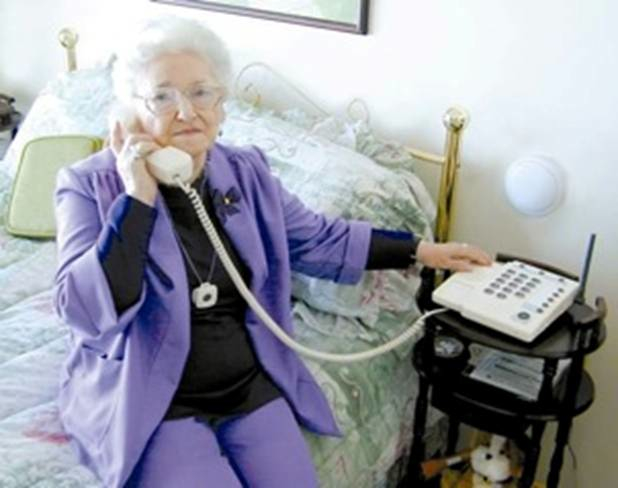
Consider what you would do in this true case study. The advisor did not step up. Would you? Rhonda is 91 and lives independently. She has a few million in invested assets managed by her longtime advisor. Apparently, he forgot the requirement to "know your client". Rhonda started playing the sweepstakes a year before things came to a crisis point. She got really excited about the prospect of winning. A scammer, who probably purchased her name from the sweepstakes companies, got in touch with her by phone. "You've won!" he exclaimed excitedly. He then went on to use a classic scammer's trick. He told her she could get her million-dollar check if she would just pay the "fee" for transferring the funds. Sometimes the trick is paying the "taxes" or the "insurance fee". It's all the same. The scammer claims that they will deliver the check in person in exchange for the cash from the mark, often an elderly person. Luckily, Rhonda's son found out and he and his brother tried hard to talk their mother out of this. She insisted that they didn't understand and that "Mr. Banks" (don't you love the name?) was a good person and he was going to deliver her winnings to her for real. No amount of reasoning could persuade her she was about to be victimized. Her son, Jamie called us at AgingParents.com. "What can I do?" he asked.

We had to act fast as "Mr. Banks" was coming the following week in person. Rhonda was still the trustee over her multi-millions despite the fact that she had been showing clear signs of cognitive impairment for over two years. No one had taken any steps to keep her safe until this crisis. We asked Jamie to get her trust and any estate planning documents ASAP. He did so. In reviewing them, I saw that he was a co-trustee on the trust. It also revealed that Jamie was the "attorney in fact" on mom's Durable Power of Attorney and that he could act immediately. He got careful step-by-step instruction as to how to stop transactions on her accounts, and how to confront the nefarious "Mr. Banks" when he called to set up a time to meet with Rhonda. He also got advice about how to either get Rhonda to resign as trustee or to have her removed if she resisted. I personally called Rhonda's financial advisor to let him know about the imminent abuse, that transactions should be held until either Rhonda resigned as trustee or until Jamie could put a stop to Rhonda's attempts to get thousands of dollars for the predator. The options to stop his client would take a few days at least.

The advisor gave me a helpless-sounding response: "I don't know of anything I can do". Really? In the face of regulators insisting that you keep aging clients safer, that you address elder financial abuse and that next year you will be required to report abuse? Really? In the face of an upcoming regulation from FINRA that you can, in fact, hold transactions for two weeks in just this kind of situation? I was shocked at the lack of attention he paid to his own client's risks. The outcome on this matter was successful. Jamie used the power of attorney to stop any transfers out of Rhonda's account. She was too confused to argue with that action. When "Mr. Banks" called, Jamie was present and asked him "Who are you anyway?" Banks claimed he was a long lost relative and when Jamie told him to get lost, he actually did. Rhonda did not hear from him again. Whew, close call! The takeaways for advisors from this true case are these:

  1. Know your client. Diminished capacity leaves a trail. Stay in communication with your aging client's family members, particularly those who are on their estate planning documents appointed to take over in the event of incapacity. Know them too.
  2. When you are informed of any clear case of imminent abuse, hold transactions. It's that simple. Stop predators. Don't play helpless. You do know what to do. See the compliance department of your organization if you are unsure about this. It should be clear – do what is necessary to keep your client safe!
  3. Recognize that your oldest clients, age 85 and up are at very high risk for dementia or diminished capacity. The risk is at least one in three. Some experts put it at 50%. Therefore, you need to be on the lookout for signs of diminished capacity and to have a plan in place to address it with those who are in the position to take other protective action. In the earliest stages of dementia, a person loses financial judgment and is a prime target for scammers of all kinds.                                                                                                                                                       Learn more about what you can do to stop financial abuse at AgingInvestor.com.
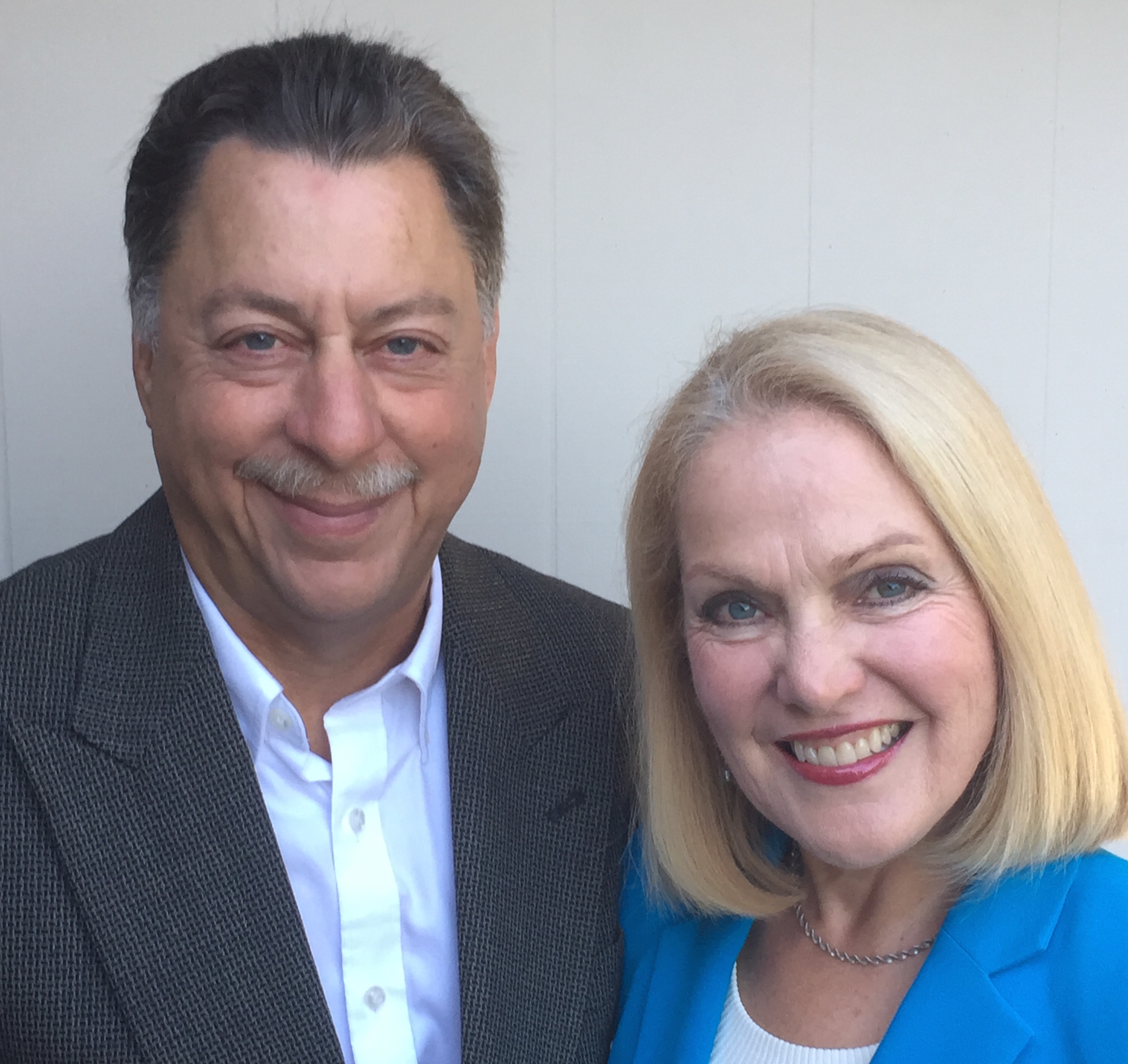
 

Dr. Mikol Davis and Carolyn Rosenblatt, co-founders of AgingInvestor.com

Carolyn Rosenblatt, RN, Elder Law Attorney offers a wealth of experience with aging to help you create tools so you can skillfully manage your aging clients. You will understand your rights and theirs so you can stay safe and keep them safe too.

Dr. Mikol Davis, Psychologist, Gerontologist offers in depth of knowledge about diminished financial capacity in older adults to help you strategize best practices so you can protect your vulnerable aging clients.

They are the authors of "Succeed With Senior Clients: A Financial Advisors Guide To Best Practice," and "Hidden Truths About Retirement And Long Term Care," available at AgingInvestor.com offers accredited cutting edge on-line continuing education courses for financial professionals wanting to expand their expertise in best practices for their aging clients. To learn more about our courses click HERE

Intrusion or Just Being Safe?  Why You Need Closer Monitoring of Aging Clients

Intrusion or Just Being Safe? Why You Need Closer Monitoring of Aging Clients

Most financial advisors with aging clients often find themselves in the dilemma of just how involved they should get when it comes to their clients. You talk with them for portfolio reviews, but what if they show signs of diminished capacity in those conversations? Should you meet with them to talk about it or just wait until "something happens"? A critical point that every financial advisor needs to know: if your older client shows signs of mental decline, something is already happening. You don’t have the luxury of waiting. Research makes it clear that the ability to manage finances is the first thing to go downhill when a person begins to develop Alzheimer's disease or other forms of dementia. There could be other reasons for cognitive decline too. Don't make the mistake of ignoring it.

At AgingInvestor.com we recently heard a story that reinforces the importance of staying vigilant for your aging clients. Penny is 93 and until recently, the professionals in her life saw no particular reason to be concerned about her mental status. She was usually clear in conversation. Her accountant thought she was ok but failed to see mistakes and changes. But Penny was managing seven separate real estate investments and no one in her family, particularly her son, was helping her. Her son may have thought she was fully capable. She had been successful for decades. No one anticipated that she might become impaired late in life. But then her lawyer, living in a different city, wanted her to sign a document and have it notarized. She got confused and insisted that it be done incorrectly. The document came back a mess. Her lawyer did not heed these red flags that something was wrong and thought Penny was probably ok. He attributed the error to "normal" forgetfulness. Forgetfulness is a warning sign that closer monitoring of the older person needs to start right away.

Penny’s son eventually got her to a doctor who wrote a letter with the opinion that Penny was no longer able to manage her personal and financial affairs. Her son began taking over managing the property but was not prepared for what he found. Of the seven real estate holdings, five had IRS liens! One had become uninhabitable, the tenant had moved out and was billing Penny for the hotel stay, waiting for the home to be fixed. Penny had failed to pay the property taxes for several years.

Penny is a good example of a senior who is generally pretty clear but is definitely not able to handle complex finances any longer. The process of her cognitive decline did not happen overnight. It took several years. During that time she endangered her assets, lost track of her finances and could have lost most of her real estate to tax liens. Warning signs happened but no one paid attention to them.

Could this be prevented? Of course. Had her financial advisor kept a better eye on all of Penny’s assets, not just her stock account, he could have noticed the problem and contacted her son. The point is that wealthy clients may have assets you do not manage but also provide income. It is good practice to ask about all of your client's holdings. Penny's failure to pay property taxes and allowing the houses to fall into disrepair should have been seen by those close to her. Paying attention to those telltale signs of decline, which an alert advisor would have noticed, should have triggered reaching out to Penny's trusted contact person. Working with your clients' families is key to protecting their financial safety. Learn more about successful family meetings at AgingInvestor.com.


Dr. Mikol Davis and Carolyn Rosenblatt, co-founders of AgingInvestor.com

Carolyn Rosenblatt, RN, Elder Law Attorney offers a wealth of experience with aging to help you create tools so you can skillfully manage your aging clients. You will understand your rights and theirs so you can stay safe and keep them safe too.

Dr. Mikol Davis, Psychologist, Gerontologist offers in depth of knowledge about diminished financial capacity in older adults to help you strategize best practices so you can protect your vulnerable aging clients.

They are the authors of "Succeed With Senior Clients: A Financial Advisors Guide To Best Practice," and "Hidden Truths About Retirement And Long Term Care," available at AgingInvestor.com offers accredited cutting edge on-line continuing education courses for financial professionals wanting to expand their expertise in best practices for their aging clients. To learn more about our courses click HERE

Your Retirement-Age Clients and Budget Politics

Your Retirement-Age Clients and Budget Politics

While advisors are there to serve those with investable assets, it is not only your clients who are affected by politics, the Federal budget and cuts to programs. It may be your clients' family members, their aging parents or struggling adult kids.

When family members are beneficiaries of various public programs that help them get by, your clients may not be affected except with feeling relief. But when programs are slashed, the reverberation can affect your own clients, who are likely to be better off financially and therefore expected to help. Every advisor needs to consider this. Cash flow projections on retirement savings can be totally disrupted when your client has to pitch in and give financial help to a low-income family member.

Imagine this: your Boomer clients are ready for retirement. You have carefully worked out what they will need to sustain their lifestyle and make their money last. One or the other of them has low income aging parents in their 80s. Their parents have part of their health care costs paid by Medicaid. Medicaid gets slashed. Your client has to help pay the 20% of costs Medicaid was previously covering for their parent's health care costs. And since those costs tend to rise with aging, your client will potentially pay the cost of a supplemental insurance policy or non-covered medications or other things.

Here's another thing to see in looking at how budget cut proposals can destroy your careful retirement income planning for your clients. Some have disabled siblings, adult children or others who benefited directly from the Medicaid expansion of the Affordable Care Act. Some of those folks are not yet eligible for Medicare and rely entirely on Medicaid for all health care coverage. With massive cuts to Medicaid, they are among the millions who would lose insurance altogether. If they have a well-to-do family member, your client, where will they look if a medical need arises and there is no way to pay for it? Probably to your client.

Then, lets look at your clients' lowest income family members who rely on the Supplemental Nutrition Assistance Program (SNAP), formerly called food stamps. Nearly five million seniors rely on this program in order to afford food. A massive cut (proposed) of $194 billion would surely affect them immediately. Can you imagine any client refusing a request from a low-income family member for money because he or she couldn't afford groceries? That grocery money contribution could be every week and go on indefinitely into the future.

Perhaps this is just a heads-up for every financial planner to build into clients' retirement planning that some cash may be needed on a monthly basis to help their relatives who can't get by without their help. In my own family, four of us pitch in every month to support a low-income sibling. He has Medicare and also Medicaid. For all of us who are Boomers and a bit older, a hit to the existing Medicaid benefit would cost each one of us more dollars every month than we are currently paying.

Your clients may be in the same situation. We at AgingInvestor.com hope you will bring up the subject and help your clients plan accordingly. You would do that by asking clients planning retirement if there is anyone in the family they may be called upon to help support.

Our political climate may not change for some time. And every lower income American who is a needy family member of your retirement-aged clients will be affected one way or another. Help them prepare for the anticipated expense.


Dr. Mikol Davis and Carolyn Rosenblatt, co-founders of AgingInvestor.com

Carolyn Rosenblatt, RN, Elder Law Attorney offers a wealth of experience with aging to help you create tools so you can skillfully manage your aging clients. You will understand your rights and theirs so you can stay safe and keep them safe too.

Dr. Mikol Davis, Psychologist, Gerontologist offers in depth of knowledge about diminished financial capacity in older adults to help you strategize best practices so you can protect your vulnerable aging clients.

They are the authors of "Succeed With Senior Clients: A Financial Advisors Guide To Best Practice," and "Hidden Truths About Retirement And Long Term Care," available at AgingInvestor.com offers accredited cutting edge on-line continuing education courses for financial professionals wanting to expand their expertise in best practices for their aging clients. To learn more about our courses click HERE

Know The Pros and Cons Of Assisted Living For Your Older Clients

Know The Pros and Cons Of Assisted Living For Your Older Clients

Mostly at the urging of their adult children, many seniors choose to move to senior communities where some help is available. These are usually called Assisted Living facilities (AL). When it is too difficult to keep up the family home or an elderly client of yours becomes too isolated after the loss of a spouse, AL can be a good choice.

No doubt you, the financial advisor have helped them consider the expense and the consequences or benefits of selling the family home. And they likely would not move if they could not afford the monthly cost of being in AL. However, there are things every advisor should know about AL so you can properly advise your clients.

The marketing departments of these homes can be very aggressive about promoting the benefits of AL. Indeed may of them are well appointed and have numerous convenient amenities. What they don't tell you are the hidden disadvantages. Having interfaced with many of these facilities in our work at AgingParents.com and AgingInvestor.com as consultants to families, we want you to be fully informed of what they can and can't do.

First, AL homes are not nursing homes, and they do not provide nursing or health care. If there is a nurse on staff at all, which is not required of any of them, the nurse is there to evaluate residents' suitability, hear resident concerns, consult with staff and make referrals. It is not to provide direct care, even in an emergency. The nurse in such a facility, seeing an emergency, will call 911, just as any layperson might do.

These homes are not licensed to offer health care. Assistance with things like bathing, dressing, walking, bathroom, eating and getting in and out of bed are the limit of the help they can provide.

Next, these homes do not provide full staffing at night. If your client is forgetful or wanders around at night and her family shares this with you, AL may not be the best choice. Some people hire additional help privately to watch their loved ones in AL more closely, especially at night and this arrangement can work well. However, it is a significant additional expense and must be paid on top of the regular monthly charges of assisted living. We know of one resident whose family was spending $12,000 a month for the combination of AL and outside supplemental caregiving.

Finally, any home whether it is AL or any other place where care is delivered should be held accountable for the safety of your client who may become a resident there. No one is going to check on your aging client every hour in AL. Falls can happen anywhere, including a so-called "supervised environment". The concept of AL was originally meant to give all levels of care but today that is not the case. The law requires separate licensing of any unit or facility that offers skilled nursing. Even when it is given on the same campus as AL, skilled nursing facilities are a separate entity from AL.

If you are talking to any client about the possibility of AL, be sure that your client is educated and that the family does not have unrealistic expectations of AL. The expense of these places is one consideration. The overall plan for the future of taking care of a client's needs is another. Help your client be a wise consumer.


Dr. Mikol Davis and Carolyn Rosenblatt, co-founders of AgingInvestor.com

Carolyn Rosenblatt, RN, Elder Law Attorney offers a wealth of experience with aging to help you create tools so you can skillfully manage your aging clients. You will understand your rights and theirs so you can stay safe and keep them safe too.

Dr. Mikol Davis, Psychologist, Gerontologist offers in depth of knowledge about diminished financial capacity in older adults to help you strategize best practices so you can protect your vulnerable aging clients.

They are the authors of "Succeed With Senior Clients: A Financial Advisors Guide To Best Practice," and "Hidden Truths About Retirement And Long Term Care," available at AgingInvestor.com offers accredited cutting edge on-line continuing education courses for financial professionals wanting to expand their expertise in best practices for their aging clients. To learn more about our courses click HERE

Give Your Aging Clients a Heads Up About Medicare Fraud

Give Your Aging Clients a Heads Up About Medicare Fraud

Your older investors are sure it will never happen to them but Medicare fraud can trick anyone. Even those without a hint of cognitive decline can get taken by scammers. At AgingInvestor.com, we educate advisors about protecting clients from elder financial abuse and we thought we had our own family covered. With a 94 year old mother, we are especially alert. We were stunned when mom told us that someone "from Medicare" had called and asked her to "verify" her personal information.

Alice is a sharp 94 year old, living mostly independently in a seniors' complex. She's active, does her own shopping and is engaged with her neighbors in the community. She had an issue with Medicare not paying a bill for a service she had received some months prior. With our help, she had undertaken an appeal process, which involves a lot of repetitive paperwork. When a man saying he was from Medicare called, she thought it was about the appeal. Of course it wasn't. The scammer asked her to "verify" her Social Security number, her address, date of birth and mother's maiden name and she gave him that information.

A few hours later, she mentioned what had happened and said she had been wondering if it was right to give out that information. We were shocked! How is it that she didn't see the potential ID thief when we talk about this all the time? We knew we had to jump on this right away to stop the thieves from using the information to open new accounts in her name. Hours were spent the next day calling the two banks where she had accounts, her credit card company, the credit reporting agencies and Social Security. We had to stop the auto debits on her bill payments. We cleaned up the mess.

So far so good. No unauthorized transactions have happened. Her old accounts were closed and new ones opened. Social Security sends her payments to the new account. Fraud alerts are on everything now. Whew! This was a lesson that even the alert older person can get fooled with the right pitch on the phone.

Here's the takeaway.

Warn your clients: Medicare will NEVER call and ask you for your personal information. Never give it out unless you place a call to order something that you know is legitimate.

Medicare fraud can happen in many forms. This was just one of them. I believe that there was probably a connection between her Medicare appeal and the fraud attempt. It's too much of a coincidence that they called when she had communication with Medicare going on already with her appeal. The appeal had not yet been resolved. This information got into the wrong hands, making it easy to trick a sharp person by saying he was calling from Medicare. Mom could be just like any one of your older clients.

Why is this important? You're on the front lines and you have a trusting relationship with clients. Speak up and make basic efforts to educate them about these scams. A lot of money can be drained from an account instantly with all the client's personal information out there. Make yourself look good. A word from you can remind your aging clients that you care about their financial safety and that you are looking out for them.

Learn more about protecting aging clients from financial abuse in Succeed With Senior Clients: A Financial Advisor's Guide to Best Practices. Click here to purchase it now. You'll build your knowledge about aging investors fast.

Carolyn Rosenblatt, RN, Elder Law Attorney, & Dr. Mikol Davis, Psychologist, Gerontologist, co-founders AgingInvestor.com


Dr. Mikol Davis and Carolyn Rosenblatt, co-founders of AgingInvestor.com

Carolyn Rosenblatt, RN, Elder Law Attorney offers a wealth of experience with aging to help you create tools so you can skillfully manage your aging clients. You will understand your rights and theirs so you can stay safe and keep them safe too.

Dr. Mikol Davis, Psychologist, Gerontologist offers in depth of knowledge about diminished financial capacity in older adults to help you strategize best practices so you can protect your vulnerable aging clients.

They are the authors of "Succeed With Senior Clients: A Financial Advisors Guide To Best Practice," and "Hidden Truths About Retirement And Long Term Care," available at AgingInvestor.com offers accredited cutting edge on-line continuing education courses for financial professionals wanting to expand their expertise in best practices for their aging clients. To learn more about our courses click HERE