Dec 30, 2020 | aging, aging in place, aging investor, cost of aging, cost of long term care, elder investor, elderly, finances for elders, financial advisors, handling money for seniors, investor, long term care, medicare, retirement planning, senior investor, seniors finances
In retirement planning discussions, we see this statement financial professionals often publish for their clients:
“The average lifetime out of pocket costs for healthcare for a 65 year old couple retiring today is $285,000.”
Why should you never say this? It’s misleading at best and at worst, it’s false. From my own research as to where the number came from, I found it in government sources calculating Medicare deductibles and supplemental insurance payments, and co-pays Medicare does not cover. Generally, the out of pocket calculation refers to non-covered “medical” costs. But when that term gets diluted to mean “healthcare” it is far too broad and it simply ignores the reality that long term care is indeed healthcare. Medicare does not cover that at all, except for limited stays in skilled nursing homes following hospitalizations. It is noteworthy that when the Federal government uses data to calculate what out of pocket medical costs will be, the subject of long term care is entirely omitted.
The “average” lifetime cost of long-term care for two people in this country is far greater than $285,000. According to research by long term care insurance provider, Genworth, seven in ten people will need long term care at some point in their lives.
The comprehensive Genworth cost of care study, done annually, was published for 2020. Consider that at some point, with longevity being as it is, an older person with multiple medical conditions may need 24/7 care. Almost everyone will tell the advisor that he or she wants to stay at home and age in place. What will that cost at home in any of the most expensive states? In California, for example, the median cost of in-home care with a non-licensed caregiver full time, 27/7 is $252,000 per year! This is not medical care, in the sense that no skilled nursing is part of it, no doctor’s prescription is involved, and the agencies that supply unlicensed home care workers can charge whatever the market will bear.
A truthful financial professional will never mislead aging clients, or those planning for retirement by telling them that all they have to worry about for their future out of pocket healthcare costs is $285,000. Prudent financial advisors will themselves look annually at the Genworth study and help clients calculate the costs of long-term care, which every person should know about.
Costs of care, whether at home, in an adult day health center, in assisted living or in a skilled nursing facility vary widely from state to state. Looking at national median costs can be of little benefit to anyone doing retirement planning. Instead, using data from the Genworth study, one can look state by state for the real, most applicable numbers derived from where your client lives or plans to retire.
From my perspective, financial advisors are not educated to fully understand the difference between government provided statistics about out of pocket, non-Medicare covered medical costs and what we mean by long term care. They are quite different terms. It is distressing to me, with substantial experience in nursing, to see the fallacy of statements published by financial professionals about what retirement planning should include. Clients will be shocked to find that their own experience with having to pay for long term care out of pocket is not what their own advisor told them years before.
If you are in the retirement planning business and you want to serve your clients well, bear in mind that the data telling us that seven in ten people will need long term care at some point is likely true. Don’t fool yourself into thinking that retirement planning is just fine if a couple puts away enough to generate $285,000 for out of pocket medical costs. They also need to plan for how to pay for long term care, which they are statistically likely to need. That cost can destroy the most carefully laid plans for retirement income.
As a real-life example, take a client of ours, “George” at AgingParents.com, where we offer advice and guidance to families with aging loved ones. The advice encompasses legal, financial and healthcare issues as well as diminished capacity issues. George is 98 years of age and still sharp, though with some memory loss problems. He was wealthy at one point, after two successful careers. He owns his own home and wants to stay there for the rest of his days. His physical health is fragile and he now needs 24/7 help. He hired a good agency to provide in-home care. He spends in excess of $300,000 a year for caregiving alone, not counting the cost of everything else involved in home ownership, food, recreation, and out of pocket medical costs. Those medical costs involve dental surgery and equipment he needs at home. He has less than $400,000 left in savings. What if he lives another two to four years?
As you can see from this example, George is not a rare case. Many people do live into their 90s and beyond. Many start out with financial security, only to see assets rapidly depleted as the cost of care escalates to heights no one wanted to think about in retirement planning.
The Takeway
If you pride yourself in doing great retirement planning with clients, get real. Sit down with the data and find out what your clients might expect to need if they live long and require help at home or elsewhere. Tell the truth about it. If they need long-term care insurance to feel secure, talk about it. If they have sufficient assets to make it to 100 or so with full time care, they don’t need to get long term care insurance but they will need to have access to sufficient cash to cover the actual, not fantasy, costs. Above all, be clear in your own mind about what “out of pocket medical costs” means as compared with long term care costs. You are the key to these honest calculations. You can be the hero of the retirement planning story when you present an honest picture to every client you have.
By Carolyn L. Rosenblatt, RN, Attorney, AgingInvestor.com
About Carolyn Rosenblatt and Dr. Mikol Davis
Carolyn Rosenblatt and Dr. Mikol Davis are co-authors of The Family Guide to Aging Parents (www.agingparents.com) and Succeed With Senior Clients: A Financial Advisors Guide To Best Practices and Hidden Truths About Retirement and Long Term Care. Rosenblatt, a registered nurse and elder law attorney, has more than 45 years combined experience in her professions. She has been quoted in the New York Times and, Wall Street Journal, Money magazine and many other publications. Davis, a clinical psychologist and gerontologist, has more than 44 years experience as a mental health provider. In addition to serving his patients, Davis creates online courses and products to assist professionals and the public with understanding aging issues. Rosenblatt and Davis have been married for 36 years.

Dec 8, 2020 | aging, aging in place, cost of aging, cost of long term care, financial advisors, handling money for aging parents, long term care, retirement, retirement planning
Few things are more stressful than family disagreements, especially related to helping an aging family member. You're invited to a VIP Virtual Event: How to Resolve Family Conflicts, Care, Control and Money Approaches from Legal, Psychological and Compassionate Perspectives
Wednesday, December 9 I 4:00 – 5:00 pm Pacific Standard Time
Featuring special guest speakers Carolyn L. Rosenblatt, RN, Attorney and Dr. Mikol Davis, Psychologist of AgingParents.com
RSVP david@eleganceatnovato.com (Link will be provided with RSVP)
The first 20 attendees to RSVP will receive “The Family Guide to Aging Parents: Answers to Your Legal, Financial and Healthcare Questions,”  by Carolyn L. Rosenblatt.

Nov 12, 2020 | aging, cost of aging, elderly, handling money for aging parents, handling money for seniors, nursing home
If you have any older clients, this real case is one you should know about. Here at AgingInvestor.com, where we also serve families of your clientele, we see some horror stories and this one should wake us all up. It really happened. We think it could have been prevented if only someone had acted sooner. The names are changed, but the facts are not. Imagine that this 83 year old man is your client. You’ve known him over many years. He is what some refer to as an “elder orphan”. He has no kids, He’s widowed and was always very independent. No one paid much attention to him as he aged. He had about $1M invested, and his advisor figured that at his rate of withdrawal, he would be fine, probably for his life expectancy. It never dawned on his advisor to ask about his safety at home, whether he needed any help day-to-day, or if he had identified a trusted contact. Right now, after horrible abuse lasting four years, he is lucky to be alive. “Tony” lived alone and took care of himself. But he was getting frail and it was getting hard to get the grocery shopping done. While at the market, a checker seemed to befriend him and asked if he needed help at home. He agreed that he did. What he didn’t know was that the checker, Mae, who had no caregiving experience, had targeted him. Her evil intent played out. Almost immediately after offering to help, she moved into his house. His advisor never asked about his relationships at the annual portfolio review, and the adage “know your client” was ignored. Mae swiftly got control over his life and finances. The help Tony needed became her weapon. She refused to take him to the doctor or dentist despite severe hip pain and dental problems. He needed food, but she deprived him until he did as she demanded, giving her Power of Attorney. She went so far as to force him to marry her, taking him to another city, and then threatening to dump him there unless he married her secretly. He was helpless to resist. Changes to the authorized signatory on his account happened, but the advisor thought nothing of it. He never asked. Tony appeared to be suddenly married, but the advisor just changed documents and never had a conversation with Tony about it, despite his being 83 at that time. As his “wife” Mae seized his bank accounts, pension deposits, safe deposit box with gold in it, and all of his valuables. She isolated him from everyone who knew him. He was cut off for years, trapped and not knowing how to escape. She hit him, left him in ragged clothing and threw his dog against the wall. He had some memory issues but he did remember he had nieces and nephews. When Mae was out of the house one day, he made a desperate call to his nephew, with whom he had been close in years back. He begged for help. The nephew sprang into action. He summoned his 3 siblings, including one out of state, and together, they rescued Uncle Tony and brought him home. Tony’s nephew knew a lawyer who got an emergency court order to remove the “wife” from Tony’s house. Mae had to be escorted out by the police who initially resisted because Tony and the caregiver were married. It was stunning how the police believed the evil caregiver and not Tony nor his family members. Even with a court order in hand, the police were hesitant to evict Mae. His two capable nieces took over and addressed his needs. One moved in with her uncle to protect him for good. Tony is safe at this time and Mae will never have access to him again. Lawsuits are pending. He may never get his money or valuables back but at least he has his home and some relatives to step in. Some elder orphans have no one. How did this happen while an advisor managing his account saw it being drained by his “wife” over time? This is the most important point of the story for any advisor with aging clients who are alone, with no nearby family to watch out for them. YOU the advisor need to be watching out. The Takeaways Tony, an “elder orphan” made an easy target. Think about your older investors. How many live alone and have no family? It is well worth your time to ask them. Five things every advisor should do with any older client who is living alone and has no family are these:
- Check in with your older clients as often as quarterly, rather than once a year. Ask questions about how things are at home. The $700,000 Mae stole from Tony could have paid for a lot of care or help at home.
- That suggestion by regulators that you should “try” to get a trusted contact for every client must not be an option. You must insist on getting a trusted contact, especially for elders. (We recommend you get more than one!) Elder orphans may not act promptly when suspicious activity comes up but you can. When Mae made constant withdrawals from Tony’s account, the trusted contact should have been called. He was 83. That’s a red flag by itself.
- Know your client. That means general living situation, whether any family is around, and some basics about their health and independence. It’s not nosy to ask. It’s part of your job.
Brutal people taking advantage of aging clients, as Mae did are out there looking for victims. When you know your client, and you are paying attention, you are like the family they don’t have: you can keep them safe. By Carolyn Rosenblatt, RN, Attorney, Consultant
|
|
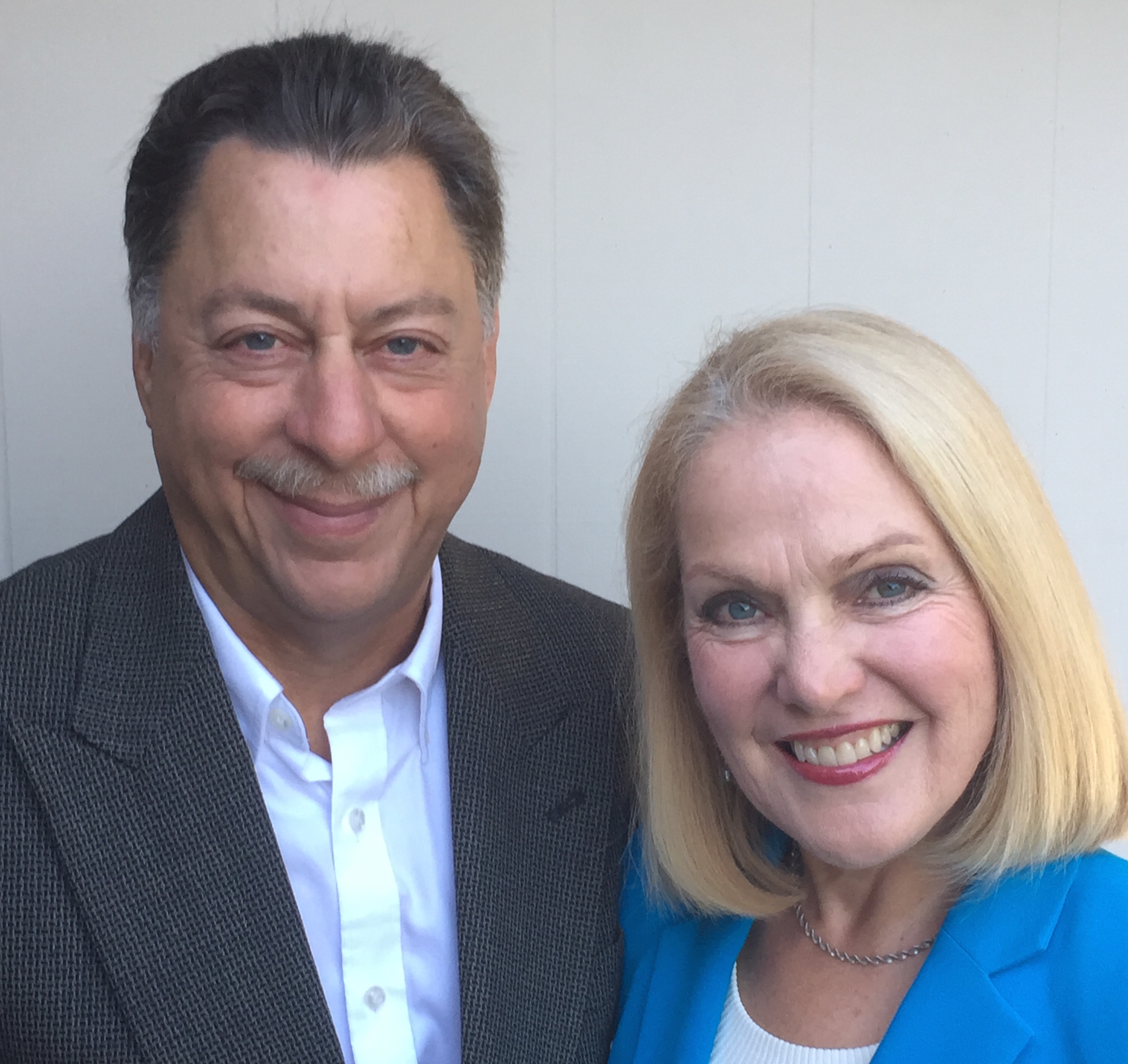
Dr. Mikol Davis and Carolyn Rosenblatt, co-founders of AgingInvestor.com
Carolyn Rosenblatt, RN, Elder Law Attorney offers a wealth of experience with aging to help you create tools so you can skillfully manage your aging clients. You will understand your rights and theirs so you can stay safe and keep them safe too.
Dr. Mikol Davis, Psychologist, Gerontologist offers in depth of knowledge about diminished financial capacity in older adults to help you strategize best practices so you can protect your vulnerable aging clients.
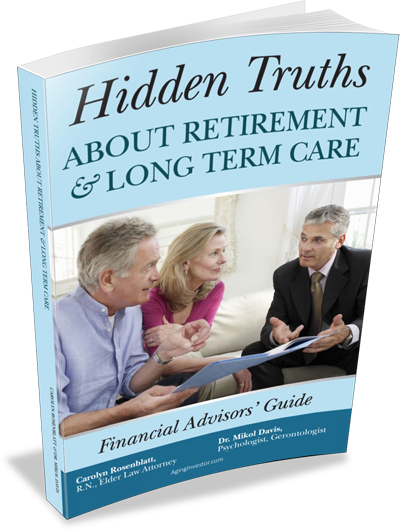
They are the authors of "Succeed With Senior Clients: A Financial Advisors Guide To Best Practice," and "Hidden Truths About Retirement And Long Term Care," available at AgingInvestor.com offers accredited cutting edge on-line continuing education courses for financial professionals wanting to expand their expertise in best practices for their aging clients. To learn more about our courses click HERE
|
Sep 8, 2020 | financial advisors
Jul 11, 2019 | aging, aging in place, cost of aging, diminished cognition, elderly, health, resources for senior, resources for seniors, retirement planning
Does The Advisor Have A Role With Aging Clients Who Become Unsafe Living Alone?
Carolyn Rosenblatt, RN, Elder law attorney, AgingParents.com
You’ve known the client for many years. As time passes and she lives longer than she thought she would, you see her inevitable decline. She loses her husband, on whom she depended. She doesn’t want to move to assisted living or anywhere, even if you think it would be best for her. Her vision is dimming and her hearing isn’t good either. She has refused all help even when you reassured her she could easily afford whatever she needs.
Is there anything you can do? You care about the client but you’re used to just managing the money, and it isn’t clear that you are obligated to go beyond that. But you know that your client just isn’t safe alone anymore.
In these situations, the most competent advisors and wealth managers can feel conflicted about their roles. They have over the years come to know the client well and there is a sense of wanting the client to be safe. At the same time, maybe it’s not an advisor’s problem. What about the family? What if there is no family?
The first thing every advisor should do is what the regulators make optional for you: “try” to get a trusted third party contact. From our vantage point at AgingInvestor.com and AgingParents.com, we think it’s ridiculous to consider it an option rather than a requirement to get a trusted contact on file. The advisor can be more trusted than family in some cases and has a unique vantage point. YOU are the one who may be first to see your client’s decline and need for greater safety in the client’s living situation. You need to have someone to call. If it’s family and they are willing to step in, good. If there is no family, the client must be advised to hire a licensed person who is capable of overseeing their care if needed and to assist with day-to-day finances. The term “fiduciary” has a different meaning in the context of your industry, but outside it, a fiduciary can be a person whom the state licenses to manage money for someone who is not able to do it alone. They serve in the capacity similar to that of a conservator, guardian or power of attorney appointee, but the aging person still maintains some control as long as he or she remains cognitively intact. For those with no family a licensed fiduciary can solve the question: who can the client count on to help?
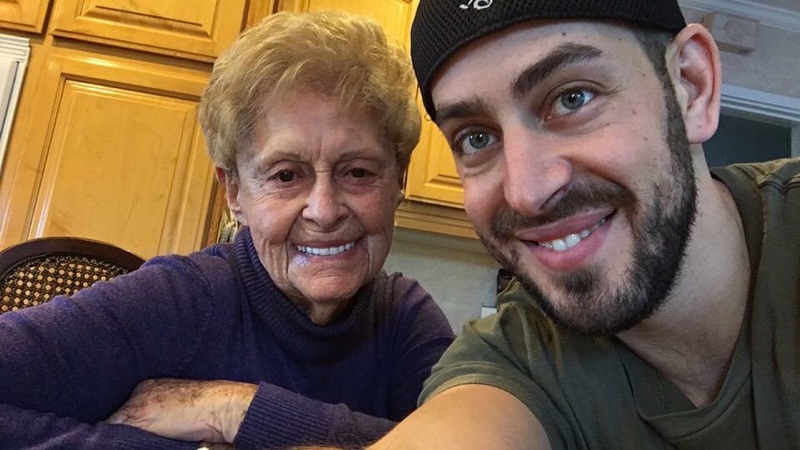
Even when there is family the aging client can still resist moving to a senior’s apartment in a community rather than struggling on living alone. It happened in our own family. It took two years for Dr. Davis’ mother, Alice to make up her mind to give up living alone in a house. To see a short video, Alice's perspective of her decision. Click HERE.
At age 90, she had vision and hearing problems, arthritis, leg pain, unstable blood pressure, kidney and bladder issues and she took 14 pills a day. That by itself was not enough to get her to agree to move. She ultimately reached the decision because she got tired of the daily difficulty she had trying to maintain independence.
Even with your efforts to persuade a client that he or she ought to consider some new choice like assisted living, remember that a person who is competent can’t be forced to move anywhere. Logic has nothing to do with the fear of losing one's independence. But keep trying and do work with the client’s family on a joint plan to help your client get to a safe decision.
What Action Can You Take?
Can you tell your client’s family about your observations? We see no ethical dilemma at all here. This is not about financial matters necessarily though it can be. The cost of moving and paying for care is a factor. But no one says you have to talk about what’s in your client’s portfolio. To be in the best position in anticipation of a client who is declining with age, get your client to identify any family or friends who could be called upon “in case of emergency”. Get more than one trusted contact. If you have a few people on the list identified by your client, call a phone meeting and discuss strategy. Gentle persuasion can work over time as it did with 92 year old Alice, who finally decided to move into a senior’s apartment. She was mighty stubborn but it did work out in the end, absent disaster. We were fortunate.
The takeaways from AgingInvestor.com:
Anticipate that long-lived clients may become unsafe living alone. Most people over age 80 need some kind of help in their lives.
You as the trusted advisor can be ready for age-related decline in your clients by having several trusted contacts in your client’s file whom you know and can call upon when safety is an issue.
If you become aware that your client is losing independence and should not be living alone, call a phone meeting with the trusted contacts to develop a strategy for working together to help your client make a good decision about moving or bringing help in.
Expand your role of merely managing the money and use your position of trust to help your client and the family keep the client physically safer.
If this all seems to be an awkward and uncomfortable thing to address, get a consultation from experts on aging at AgingInvestor.com. Our nurse-lawyer, geriatric psychologist team offers you expertise in how to approach a problem with an unsafe client and even what words to use to help them with important safety decisions.

May 6, 2019 | aging, aging investor, elder investor, elderly, finances for elders, financial advisors, investor, resources for senior, resources for seniors, retirement planning, senior investor, seniors finances
Retirement For Clients With Modest Portfolios—Making Money Last
By Carolyn Rosenblatt, RN, Attorney, AgingParents.com
The U.S. Census Bureau projects that by 2060, nearly twenty-five percent of Americans will be age 65 and above. At the same point, the number of people age 85 and older will triple. What will they all be doing in those long retirement years? If they live into their 90s, will they run out of money?
Many who have not saved enough ultimately find new jobs. Working in retirement is something to discuss with clients who are aging, have set a retirement date and have no answers to what happens if they outlive their savings. The advisor is not a miracle worker who can stretch their dollars beyond what is reasonable with prudent investments.
Maybe some clients will consider seeking a “not too big” job that is relatively easy, compared with what they did in a prior career. For the advisor with a client whose invested assets have a predictable length that does not match life expectancy, it is wise to help them plan how to keep their dignity as they live longer than they thought possible. That is through producing some earned income, even if modest.
If an older client is determined to retire from a stressful job, that’s fine. No one needs high pressure forever. But every job is not stress filled and some are more satisfying than others. The stereotypical image of a retired elder serving fast food is not for everyone, especially for educated clients who may have more interesting choices. For some retirees, long stretches without structure lead to isolation, boredom and even to depression. The routine of some kind of work relieves that risk and can bring enjoyment a person never had in the prior career.
Some may need the double benefit of bringing in money while finding ways to be with others. Elders certainly don’t need to go from one job to another at the point of retirement, but the holistic retirement plan for a person with modest investments should include some form of earning money through work. Your client may expect that family is willing and able to provide financial support if the client runs out of money. This prospect does not appeal to many younger families who are still supporting their own children and saving for their own retirement. They fear the idea of having to support aging parents and rightly so.
Imagine a client finding something to do in retirement that pays and something the client likes. Here’s an example.
My 30-something daughter is a regular Uber user who likes to converse with her drivers in San Francisco. She reports that three of her drivers in past two weeks were over age 65. One was age 80. He told her that he had retired from a union job at age 65. His wife had passed away and he got withdrawn and bored, having no sense of purpose. He worked part-time as a warehouse floor worker and cashier. He liked the walking and being around people. He worked another few days a week driving which he enjoyed because it kept him sharp, using the app, navigating around the city, keeping track of the best ways to get places, and most importantly, he liked chatting with his passengers.
Longevity creates a pool of older workers available either part-time or full-time, not necessarily expecting a benefits package and having no lofty career aspirations. Employers in a broad variety of service fields can benefit, as can the potential workers. We have met elders at AgingParents.com who have gotten a teaching credential after retiring from a high pressure career and are happily teaching part-time. We have found others who are mentoring in businesses, working in nonprofits, doing childcare, working in retail and otherwise using their natural talents while earning a paycheck. These were all part-time positions and all were glad to be doing them.
Discussing the possibility of working with your older clients should include when in retirement the client should consider doing it. Physical and mental loss of ability can preclude work of any kind, even volunteering. They can’t necessarily count on being able to work in the later years of retirement when they may run low on cash. Someone might be fine at 70 and impaired at 85. The time for planning an appealing part time job is in the earlier stages of retirement when the client is feeling good and is not impaired by health problems.
If your client has a modest portfolio that with a conservative drawdown would only last 20 years and life expectancy is 30 years, you need to encourage working. Take the axiom “know your client” to a realistic individual plan for living long with sufficient means.
If you have trouble with these sometimes emotional, difficult conversations, contact us at AgingInvestor.com for a private one-on-one consultation so you can get the job done. Click HERE to find out more how we can help you.

Apr 10, 2019 | aging, finances for elders, financial advisors, financial capacity, financial elder abuse, financial judgement, handling money for seniors, investment news, scammers, senior citizen investor, senior investor, seniors finances
Warn Your Aging Clients About A New Telephone Scam--Fake "Social Security" Calls
Carolyn L. Rosenblatt, RN, Elder law attorney, AgingInvestor.com
Scammers targeting your aging clients are getting smarter about how to fool them. Thieves can use spoofing computer software to trick the recipient of a call by showing a "real" number on caller ID. Pretend caller ID isn't new but using it to target seniors on Social Security is a cruel tactic used to intimidate seniors. Here's how it works. The evil caller has your older client's telephone number and knows him to be at least of Social Security age. When the call comes in, it shows on the ID that yes, it's Social Security. The caller immediately tells the elder in an authoritative voice that her Social Security number has been blocked. Of course this draws the expected reaction from most people--fear. They are not going to question what it means to have the SS number "blocked" or if that is even possible. (It isn't.)
The caller says it is urgent and that in order to "reactivate" the SS number, the elder must act immediately, or their Social Security benefits will be affected. As your senior clients had paid into Social Security since its inception they don't want to lose it. The scammer convincingly fakes concern and wants to "help". All your aging client has to do is pay a fee and the number will be unblocked, they're told. Many elders have heard of identity theft and believe that this person is going to help them prevent unauthorized use of their SS number, because that is what they hear on the call. Of course the caller then needs to "verify" the number and your client complies and recites the number. Instantly the number can be put into use any number of ways identify thieves have devised. And worse yet the elder pays them the "fee".
Even if you believe with all your heart that YOUR aging loved is not dumb one and won't fall for any of this, do not be so sure. Anyone can be caught off guard. Scammers are very clever at using fear and other strong emotions to manipulate unsuspecting aging parents to give up information without thinking about whether the request for it makes sense. You want to warn them. You want to remind them that they are never to give out any personal information like a SS number to a person they did not call themselves. Everyone's Social Security numbers are potentially floating around in cyberspace enough as it is, without handing them to a telephone stranger who is lying to get them to pay money. You can warn your aging parents that the Social Security Administration will never ever call and ask anyone to verify the SS number. You can remind them that even if the caller ID shows something that looks real, it can be fake because spoofing software can show anything the scammers want it to show.
Millions of elders are approached regularly by this telephone scam and many others. My own mother in law, now passed, was very smart at fending off such phony calls and smelling a scam. But by age 95, that scam sensor she used to have seemed to fade. One day a man called her landline and said he was from Medicare. He just wanted to "confirm her Medicare number". She had an active Medicare claim going on at the time, and we were helping her address the details. Because she had that claim, she fell for the trick. She gave the caller her full name, address, date of birth, mother's maiden name, and her Social Security number. Fortunately we found out within a day and were able to jump into action to change all her accounts and credit cards. It took four months to straighten out the mess. The scammers got nothing. We got a lot of work, and had to take her to her banks and financial institutions in person to change everything. She felt bad because she was supposed to know better. Yes, but she forgot. We were lucky to find out before anything worse happened.
The takeaway here is that financial advisors are in a unique position of trust with your clients and they are likely to read a friendly letter from you, just giving them a heads-up about the latest scam. We urge you to create an old fashioned series of letters warning them about scams, about things happening in your industry that affect them, such as the Senior Safe Act and just staying in contact. When they hear from you in a friendly way, it reminds them of why they like and trust you. You're more likely to retain them that way.
No time to write? Let us help at Aging Investor.com. We have free, pre-made client education material created just for seniors. You can simply download and send them out at intervals to all your retirement-aged clients. To access these items, ebooks and checklist, go to the Books and EBooks menu on our home page and find Resources for Clients. It can only make you look good to your investors!
|
|
Dr. Mikol Davis and Carolyn Rosenblatt, co-founders of AgingInvestor.com
Carolyn Rosenblatt, RN, Elder Law Attorney offers a wealth of experience with aging to help you create tools so you can skillfully manage your aging clients. You will understand your rights and theirs so you can stay safe and keep them safe too.
Dr. Mikol Davis, Psychologist, Gerontologist offers in depth of knowledge about diminished financial capacity in older adults to help you strategize best practices so you can protect your vulnerable aging clients.
They are the authors of "Succeed With Senior Clients: A Financial Advisors Guide To Best Practice," and "Hidden Truths About Retirement And Long Term Care," available at AgingInvestor.com offers accredited cutting edge on-line continuing education courses for financial professionals wanting to expand their expertise in best practices for their aging clients. To learn more about our courses click HERE
|

Feb 22, 2019 | financial advisors
Podcasts featuring Dr. Mikol Davis & Carolyn Rosenblatt
As aging experts Dr Davis & Ms. Rosenblatt are often featured on podcasts hosted by financial advisors through out US and Europe. We are happy to post the latest episodes as they become available. Thank you for taking the time to listen. We always appreciate any feedback you have, questions, or additional areas we should include in further podcasts.
Cras luctus ornare est, sed pharetra mauris vestibulum in. In nulla sem. Consectetur et tristique non, pulvinar pretium ante. Cras aliquam risus ullamcorper odio interdum facilisis. Vestibulum vitae augue tempor, commodo sapien ut, condimentum. Pellentesque habitant morbi tristique senectus et netus et malesuada fames ac turpis egestas. Cras luctus ornare est, sed pharetra mauris vestibulum in.
Latest Episode
Collaborating with Clients
Cras luctus ornare est, sed pharetra mauris vestibulum in. In nulla sem. Consectetur et tristique non, pulvinar preti. Cras luctus ornare est, sed pharetra mauris vestibulum in. In nulla sem.
Season 2, Episode 4 | 38min
New Episodes Weekly
Live Every Thursday @ 9am
Stay Connected to Get The Latest Podcast Alerts
Ipsum dolor sit amet, consectetur adipiscing elit. Vestibulum ornare nunc ut elit maximus convallis. Pellentesque rhoncus placerat nisi non lobortis. Etiam efficitur bibendum consequat. In porta mauris ac lacus sollicitudin, vel sagittis nisl sodales. Proin vitae blandit urna, ac sodales orci. Ipsum dolor sit amet, consectetur adipiscing elit. Vestibulum ornare nunc ut elit maximus convallis. Pellentesque rhoncus placerat nisi n
Pellentesque rhoncus placerat nisi non lobortis. Etiam efficitur bibendum consequat. In porta mauris ac lacus sollicitudin, vel sagittis nisl sodales. Proin vitae blandit urna.
DiviNation
Listen Now!
Vivamus magna justo, lacinia eget consectetur sed, convallis at tellus. Pellentesque in ipsum id orci porta dapibus. Sed porttitor lectus nibh

Feb 21, 2019 | aging, aging investor, cost of aging, cost of long term care, declining health, elderly, finances for elders, financial advisors, handling money for aging parents, handling money for seniors, health, long term care insurance, resources for senior, resources for seniors, retirement planning, senior citizen investor, senior investor, seniors finances
It used to be that we could think of retirement in a kind of predictable way. People lived into their 70s perhaps, and we measured retirement by that. We used tables, algorithms and other tools to tell us how much we should save and how much we could spend in retirement. And it was all based on assumptions that may no longer apply.
Life expectancy for a woman in the U.S. in 2018 was 84 years. For a man, the figure is 80 years. Those averages do not take into account the fact that well educated and financially secure people live longer than average. This is presumably based on the notion that people who know what a healthy lifestyle is and who can afford the best medical care will outlive those who do not have those advantages. In my own county, for example, which has a high proportion of elders compared to other counties in California, one wealthy city shows a life expectancy for men of 93 years.
Suppose that your aging client lives to be 93, having retired at age 65. That's 28 years of retirement. What the algorithms don't clarify is what you, the advisor needs to plan for with your client during the last decade of life, from 83-93. No formula is going to help you with the individual discriminations you need to make concerning your client's risks for care and how to assess and plan for them. They can be a substantial cost, out of pocket, not covered by Medicare, and absolutely necessary.
The way we age is determined by two main factors: hereditary tendency and lifestyle. Our genetic makeup directs only about 30% of the equation. The other 70% is driven by the way we choose to live our lives. There are plenty of folks who think that a healthy lifestyle is just too much bother. They avoid exercise, eat whatever they feel like eating, never learn to manage stress and say they'd rather die a few years sooner than give up their habits, which their doctor advises against.
Here's the problem with that belief. Leading an unhealthy lifestyle does not just cause you to "die sooner". Rather, it may likely cause you to live with impairments, disabilities and a need for expensive long term care for chronic health conditions. These can go on for decades.
Take obesity, for example. Over two-thirds of Americans are overweight or obese. Obviously excess weight increases our risks for all manner of health issues, including diabetes, heart disease, high blood pressure, and strokes. When a doctor makes a diagnosis of one of these, the person doesn't typically just die on the spot and save a lot of expense later on. No. The medical providers will keep the person going with medications, surgery in some cases, lots of diagnostic monitoring and trips to the doctors. These chronic conditions usually lead to disability late in life, particularly when more than one of them exists in the same person.
If you have aging clients, you definitely need to understand health risks in a basic way, so that you can help your clients set aside funds for the care they are likely to need in the last years of their retirement lives. All of the chronic conditions I mentioned are manageable with an effort toward a healthy lifestyle but for those who do not wish to do the work involved, you can bet on a likely need for long term care. While you can't predict the future, you can plan for risk. It's what you do.
My own mother in law had high blood pressure and chronic kidney disease for decades. She worked vigorously at diet, exercise, social activities and other components of a healthy lifestyle. Heredity was not on her side. She lived to be 96. During the last 3 years of her life, she needed help. She moved to a seniors' community where help was available and eventually, she paid for private caregivers. Her cost of living at the last part of her life was $120,000 a year. If this were your client, would he or she have at the ready $360,000 to pay for care? How about if there was no pursuit of a great lifestyle? The care expense could easily be 10 years.
The takeaway here is that advising for longevity needs to include the skill of assessing fundamental health risks that create a need for out of pocket, long term care. You don't need to be a doctor and you can't predict everything, but you can do what is reasonable to help your client plan. Ask the right questions. Keep track of your client's general health picture.
To learn more about what to look for and what to ask, get Hidden Truths About Retirement & Long Term Care, available at AgingInvestor.com and on Amazon.
By Carolyn L. Rosenblatt, RN, Elder law attorney, AgingInvestor.com

Jan 30, 2019 | aging, aging in place, cost of aging, cost of long term care, declining health, diminished cognition, elderly, finances for elders, financial advisors, financial capacity, handling money for seniors, long term care, nursing home
Most advisors who even ask this question of their retirement-aged clients never spend time on it. About 90% of those asked say they want to remain in their own homes as long as possible. That sounds fine. Until one faces physical decline, cognitive impairment or both. The advisor providing competent guidance about financing aging at home had better know the facts.
None of us like to think about losing physical ability or needing help. We abhor the thought of losing our total independence. In our view at AgingInvestor.com, the only advice clients are getting is about the long term picture is whether or not to purchase long term care insurance. Since most people don't do that, the actual costs of living at home can boggle the mind. It's the best advisor's obligation to educate your client about the risks of the plan to age in place, just as it is your obligation to educate them about balancing their portfolios. You are giving the client added value if you take the time to talk them through the risks and dollars they may need to have available.
Here are some briefly stated facts from a real case in which an 89 year old wanted to age in place and his wife promised he would never have to leave home.
At the outset of his declining health, he had about $3M in invested assets. His portfolio was healthy and balanced for his age, according to conventional wisdom. He began to lose his ability to walk due to multiple medical problems. His wife hired home helpers, three days a week at first. As his conditions progressed he needed more and more help. He had to have a wheelchair, and a special van. A stair chair was installed in their two-story home. By the time he reached age 95, he was spending over $150,000 a year on care and assistance around the clock. In the space of time during which he was steadily losing independence until he passed away at 95, his assets were depleted to the tune of $2M. He lived in a higher end market for the needed help but the reality is that in any market, the kind of care he needed would be very expensive.
For him, aging in place was more costly than a skilled nursing facility would have been. Home modifications, private caregivers, (none of whom were licensed nurses), equipment, medications, adaptive devices, etc. drained his resources by 2/3. And not everyone has as much invested as he had to even start the journey. His wife had her own assets and she paid the cost of household maintenance, taxes, food, and utilities with her funds. Had she relied on him for those things too, there would likely have been little left at the end of his life.
It is not all doom and gloom however. Many clients live rather well in their last years without all the care this gentleman needed. Some get by with family caregiving help, and some have fewer medical conditions. But if you are going to competently help your clients plan for longevity, it's essential to understand the real out of pocket costs of aging in place or anywhere else outside the home. If you want to add value to your services to older clients, know what they need to know to properly anticipate what can happen with living into one's 90s and beyond.
Learn all the actual costs of care for every aging client option in our book, Hidden Truths About Retirement & Long Term Care. Be well prepared to walk your client through the scenarios they could face in their futures. You distinguish yourself from other advisors when you sharpen your knowledge in planning for longevity.
By Carolyn Rosenblatt, RN, Attorney, AgingInvestor.com

Jan 27, 2019 | aging, aging investor, financial advisors, financial capacity, financial elder abuse, financial judgement, handling money for aging parents, handling money for seniors, seniors finances
Scams, theft and fraud with seniors' money is a growing problem. Now the Wall Street Journal reports that banks in our country calculated a 12% increase in financial elder abuse just in the last year. Why do the thieves pick on grandma or grandpa so much? It looks so ugly to take advantage of an elder.
Your aging clients, whether getting advice or investing in your institution, are targets without a doubt. They hold a disproportionate amount of our country's wealth. And you can help stop them from being victimized. Over $36B a year is stolen from elders in the U.S. alone.
Your aging parents are easy targets for scammerThe Ss for lots of reasons. Elders in this country hold a disproportionately high level of wealth compared to younger people. Some have accumulated significant assets and they may not see themselves as vulnerable at all. Clearly, diminishing cognition makes it easy for thieves and manipulators. Cognitive decline affects at least a third of people over age 85. Your aging client may not have the awareness any longer to spot a fishy-sounding line from anyone. Widowed clients live alone and are isolated, ready to engage with that friendly sounding, cheerful voice from the clever scammer on the phone.
Thieves stay in contact and weave a trap over time. Many aging folks are dependent on others for care, for help at home and for social contact. Dependency makes them vulnerable. Unscrupulous family members lead the pack of those who seize on that vulnerability and trust to rip off their elders. It's all too easy to influence an aging person to give a "loan", access to an account, or power of attorney to a person with ulterior motives, which essentially creates a license to steal. Eventually they all want your elderly client to give them money. That's where your awareness can thwart them.
Banks are making efforts step up their reporting of suspected elder abuse, but that is not enough to thwart the crime. The Senior Safe Act gives you, the financial professional protection if you report suspected financial abuse. Great. But how about stepping up your contact and review of transactions with any elderly client before abuse happens? Too often, the customer-facing bank employee does not see anything wrong until far too much money has been drained from the elder's account. After the abuse has occurred, it is too late to get the money back. And there is hesitation at the banks, even when they are warned. To put bluntly, banks can add to the problem.
One example of this involved a client of ours at AgingParents.com where we consult with families and elders. She was the daughter of an 87 year old dad who had some memory problems and was frail, losing independence. Her father was a wealthy man, in a long-term relationship with a younger woman. She had manipulated him into giving her access to his family's trust account into which his significant income was deposited each month.
The man's daughter found out after a suspicious withdrawal from the account and she contacted the bank immediately. She traveled to her father's state, went to the bank in person and showed them the trust, which did not have the girlfriend's name on it anywhere. She asked them to stop the access by the girlfriend. The bank complied and put the funds into an account to which the girlfriend did not have access. After the man's daughter left the state, the girlfriend took the elder back to the bank and told him to say that he wanted her on the account. Presto! The bank complied and the girlfriend then had access once again, only one day later. The bank aided the girlfriend in financial abuse of their own elderly customer, despite a specific request to stop it and evidence of manipulation. The matter ended up in litigation. We can only say "how ridiculous!" The financial professional, bank employee or manager should have known better. The picture was classic: warning had been given, paperwork proving the problem was given to the bank, and the bank agreed to take the pushy girlfriend off the account. Then they turned around the next day and did the opposite, just because the elderly customer was standing there. Never mind that he was manipulated into saying what the woman told him to say, prodding him as he stood there. That kind of scenario is what needs to change.
If you are now supposed to report abuse, you definitely need to know what the red flags of diminished capacity look like and how to see the warning signs of financial abuse. At AgingInvestor.com, we offer accredited courses to train financial service employees, compliance officers and managers in how to spot warning signs of cognitive decline and financial elder abuse.
Get your free checklist of the red flags of diminished capacity here.
Here are some takeaways:
1.The Senior Safe Act gives you some immunity if you report abuse. It offers you no guidance in how to spot elder financial abuse.
2. Aging clients with diminished capacity are, of course, much more vulnerable to manipulation by an unscrupulous romantic "friend", family member or stranger on the phone or internet. They need your protection.
3. Odds are that by the time you report suspected abuse, the money is already gone and authorities cannot get it back. It makes more sense to be proactive in protecting aging clients rather than merely reporting abuse. Learn about how to do that by training.
By Carolyn Rosenblatt, RN, Elder law attorney, AgingInvestor.com

Jan 25, 2019 | aging investor, financial advisors, investor
Do any of your
older clients have a problem with alcohol or addiction? You may be surprised at
the prevalence of these problems in our older population.
Opioid
addiction is not just about young people. Some sources tell us that opioid
dependency is present among people of all ages, which can include your aging
investor clients. According to a treatment facility exclusively for adults over age 50, the number of
adults over 50 with substance abuse problems will double from 2.5 million in
1999 to 5million in 2020.
Why
should this matter to you, as an advisor? There are several reasons why this
client health issue is important, particularly in retirement planning. First,
any substance abuse problem can affect financial decision-making capacity.
Dependency can lead to desperation, related physical issues added to existing
age-related issues and loss of capacity to make reasonable and necessary
judgments about any investment. Further, it can destroy family relationships,
just when you may need family members to get involved in helping an older
client make essential decisions about the portfolio and needed adjustments.
Your
aging client may not tell you about being substance dependent but sometimes you
can see the signs. They may confess to "a bit of drinking too much",
or feeling depressed about their future. Perhaps
the client comes to your office reeking of alcohol. Or you see them taking
pills right in front of you, with a shaking hand. That behavior doesn't look to
you like just some benign blood pressure pill or the like. There's a frantic
air to it, needing that pill fix. You can't be sure but your gut tells you
something isn't right. Listen to your gut.
Elders with a
drinking problem are not often talked about but we certainly hear about the
issues they cause at AgingParents.com, where we work with families to solve
problems with the elders and their adult children. According to publications at
the National Institutes of Health, prevalence rates for older-adult at-risk
drinking (defined as more than 3 drinks on one occasion or more than 7 drinks
per week) are estimated to be 16.0% for men and 10.9% for women. There is
also a substantial proportion of the older-adult population who are binge
drinkers (generally, 5 or more drinks per episode). This is not some small
problem among us.
You're not a
doctor, nor a mental health professional. Why should you care? Should you do
anything about a client who appears to you to show signs of substance abuse
risk? It can affect your client relationship if you do nothing. Your client can
accelerate age-related physical decline faster with substance problems than if
they aren't part of the picture. If they decline too much, you can't work with
them. If the client can't communicate or can't make decisions, you may have to
get rid of the client and the fees you earn on managing that portfolio. The
client can ruin your connection to them.
Have a plan
You can think
ahead and develop a plan if you suspect these issues are affecting your client.
One
essential strategy involves being prepared to reach out to your client's family
or close friends for help. Many, though not all investors have done some estate
planning. Often they wanted to protect their legacy and had a trust and will
drawn up by an attorney. Imagine that all their financial assets you manage are
in a trust. The trust will name a successor to your client, who is the person
who decided what the trust should contain. The successor trustee can assume
authority while your client is living, when he or she becomes impaired. Trusts
are written in many ways with no standard applied to when an impaired trustee,
your client, must or can step down and let the successor take over.
What to do first
You
can speak with your client about whether they have done estate planning. This
should be part of your job anyway. You don't want them to fail to do this and
have too much of their assets unnecessarily given to taxes after they pass or
have them go where the client didn't want them to go. Educate them. That's what
you do as part of your services. While you are on the question, find out whom
they've appointed as a successor trustee (assuming there is indeed a family
trust). Then ask for permission, in
writing to communicate with that successor trustee, whom they chose,
"in case of emergency" or some other event that may cause them to be
unable to function, such as a stroke. For help in getting the permission right,
reach out to us at AgingInvestor.com. We can help!
How to use permission to
communicate with a third party
That
permission will give you one essential thing: the ability to tell the appointed
person that you are worried about what you have observed (be specific; e.g., strong
odor of alcohol, forgetting appointments, etc.). You can simply request their
help. It's up to them to take it from there. You may not be able to solve any
problem your client has but with this kind of communication, you are doing all
you have a right or obligation to do to be of service. And who knows, your
contact with the right and motivated appointee, often a family member, could be
the trigger that starts their stepping in to assist with financial decisions.
Try this and you'll sleep better at night rather than worrying that your impaired client may do something dumb with their money, and expose you to scrutiny by heirs for your failure to act. This simple and proactive step can apply not only to a client you think may have a problem, but to any aging client. Make it your practice. It can prevent your loss of management of the client's assets.
Jan 24, 2019 | aging, aging in place, declining health, diminished cognition, elderly, financial advisors, health, long term care, resources for seniors

Jan 18, 2019 | aging, aging in place, aging investor, cost of aging, declining health, elderly, finances for elders, financial advisors, handling money for aging parents, handling money for seniors, health, long term care, resources for seniors, retirement planning, seniors finances
Most advisors who even ask this question of their
retirement-aged clients never spend time on it. About 90% of those asked say
they want to remain in their own homes as long as possible. That sounds fine. Until one faces physical
decline, cognitive impairment or both. The advisor providing competent guidance
about financing aging at home had better know the facts.
None of us like to think about losing physical ability or needing help. We abhor the thought of losing our total independence. In our view at AgingInvestor.com, the only advice clients are getting is about the long term picture is whether or not to purchase long term care insurance. Since most people don't do that, the actual costs of living at home can boggle the mind. It's the best advisor's obligation to educate your client about the risks of the plan to age in place, just as it is your obligation to educate them about balancing their portfolios. You are giving the client added value if you take the time to talk them through the risks and dollars they may need to have available.
Here are some briefly stated facts from a real case in which
an 89 year old wanted to age in place and his wife promised he would never have
to leave home.
At the outset of his declining health, he had about $3M in
invested assets. His portfolio was healthy and balanced for his age, according
to conventional wisdom. He began to lose his ability to walk due to multiple
medical problems. His wife hired home helpers, three days a week at first. As
his conditions progressed he needed more and more help. He had to have a wheelchair, and a special
van. A stair chair was installed in their two-story home. By the time he
reached age 95, he was spending over $150,000 a year on care and assistance
around the clock. In the space of time during which he was steadily losing
independence until he passed away at 95, his assets were depleted to the tune
of $2M. He lived in a higher end market for the needed help but the reality is
that in any market, the kind of care he needed would be very expensive.
For him, aging in place was more costly than a skilled
nursing facility would have been. Home modifications, private caregivers, (none
of whom were licensed nurses), equipment, medications, adaptive devices, etc.
drained his resources by 2/3. And not everyone has as much invested as he had
to even start the journey. His wife had her own assets and she paid the cost of
household maintenance, taxes, food, and utilities with her funds. Had she
relied on him for those things too, there would likely have been little left at
the end of his life.
It is not all doom and gloom however. Many clients live rather well in their last years without all the care this gentleman needed. Some get by with family caregiving help, and some have fewer medical conditions. But if you are going to competently help your clients plan for longevity, it's essential to understand the real out of pocket costs of aging in place or anywhere else outside the home. If you want to add value to your services to older clients, know what they need to know to properly anticipate what can happen with living into one's 90s and beyond. Learn all the actual costs of care for every aging client option in our book, Hidden Truths About Retirement & Long Term Care. Be well prepared to walk your client through the scenarios they could face in their futures. You distinguish yourself from other advisors when you sharpen your knowledge in planning for longevity.
By Carolyn Rosenblatt, RN, Attorney, AgingInvestor.com

Nov 15, 2018 | aging, aging investor, cost of aging, cost of long term care, custodial care, declining health, elder investor, elderly, finances for elders, financial advisors, financial capacity, financial judgement, handling money for aging parents, handling money for seniors, health, investor, long term care, seniors finances
Your clients are getting ready for retirement. You’ve done the calculations, balanced the portfolio and advised them of what income to expect. You’ve discussed how much spending is ok. You used your program and your analysis was thorough. You’ve done your job, right?
Not exactly. There is probably no algorithm nor program that will calculate your client’s individual profile of health risks that will likely lead to the expense of long term care. That can be a whopper. Maybe you’ve suggested long term care insurance. Most people don’t choose to buy it. For those who do, the benefits are limited and the “elimination period” (deductible) is thousands of dollars. There go your careful calculations. At least 90% of folks don’t have that coverage. Now what?
But how can you predict what’s going to happen to anyone’s health in retirement, you ask. You can’t be precise, but you surely can make some rational observations and give advice accordingly. Those observations consist of two parts: what you can see with your own eyes and what you can glean by asking a few basic questions. If you think asking any client about their health conditions is too nosy or not your job, consider that if the client needs long term care and runs out of money because of it, they’re not going to think much of you. And the cost can wipe out their security.
Asking about health issues is not nosy at all. Rather, it’s what any smart advisor planning for longevity must do. Let’s not keep pretending that everyone stays the same physically and mentally from the start of retirement to end of life. Our bodies go through wear and tear and things break down. Cognitive decline affects at least a third of people who reach the age of 85. The risk of Alzheimer’s disease keeps climbing after that. Now, what was that life expectancy you were using in your calculation? Was it age 99?
Let’s start with what you can see in your client with your own eyes. (If they’re not in front of you, perhaps Skype is an option). Is your client obese, as about 40% of the U.S. population is? This leads to heart disease, stroke, and diabetes, among other diseases and conditions. The medical care people receive in many cases will save them from dying but they then live with disabilities. And yes, they will be very likely to need expensive long term care. Neither health insurance nor Medicare will cover long term care. Such help as a part time caregiver at home is how most folks start out with long term care. Your client pays out of pocket most of the time. Did you calculate how much it costs as well as how long they will likely need it? If they have multiple medical conditions, and have started long term care, they’ll probably continue to need some form of it for all their remaining years.
Find out what you may not know from simply observing your client’s appearance by asking questions. You can make your own list or get a health care provider to help you with a few targeted questions. You will need to educate your client as to the reason why you need this information. It’s to help them plan for how much to save in their retirement years.
Here are some examples of basic questions that can help you predict the need for possible long term care:
- How’s your health these days? Has a doctor told you that you have any long term conditions?
- Are you taking medications? What are they for?
- Do you smoke?
- Are you concerned at all about any health issues you have at this time?
- Do you recall your parents’ ages when they died?
Your aging clients will not be eager to talk about the potential need for long term care. When you told them about what to expect for “out of pocket medical costs in retirement”, you did not give them a figure that included long term care. Long term care is not “medical” according to Medicare. Rather, it is called “custodial care”. The client probably will not bring it up, so you must do this.
When you have done your observations and gotten answers to your health-risk related questions at least there is a place to start a meaningful conversation. You can give them figures as to the cost of typical kinds of care, such as a non-medical home care worker. We at AgingInvestor.com recommend starting your projections at age 80 as to when a person might need physical help. Many of us know someone who did require help with at least some part of his or her life at that age. Then you can talk about how any condition your client identifies for you, such as high blood pressure, diabetes, etc. as shortening normal life expectancy and increasing the risk for needing help. If your client already has difficulty with some normal daily activity such as walking or bathing, they are definitely at high risk for needing paid help sooner than a person without these problems.
Clients may be completely unaware of such things as the hourly cost of a home care worker, what assisted living costs each month and what home modifications cost if they are able to remain in their own home. You can find a thorough discussion of these and many other parts of long term care in our book, Hidden Truths About Retirement & Long Term Care, written specifically for financial advisors like you.
Every conscientious advisor needs to wake up to the reality that your retirement income calculator omits the reality check of health problems. We’re not talking about nursing homes, but every other kind of care and help most people will need as they age. If you do want to help clients who are reaching retirement age to plan realistically, include the health risks you can see or learn about by asking.
By Carolyn L. Rosenblatt, RN, Elder law attorney, AgingInvestor.com

Aug 9, 2018 | aging investor, cost of aging
Whether your older clients have family or not, living alone can lead to increasing social isolation and higher risks of health problems. The case study here is based on a true story involving a 75-year old that was very independent until a crisis. Imagine that she is your client with a multi-million dollar portfolio.
Brenda is single and never had kids. She has one family member two thousand miles away. Few friends live in her area. She rents a two-story condo with steep stairs, in a largely inaccessible hillside area. She has been driving herself places though she admits she shouldn't drive. Brenda is also in chronic pain, even after two surgeries and she feels ready to give up. She takes multiple medications.
With multiple medications, things can go wrong. They interact, they have side effects, and they can cause chemical dependency. All of these things happened and one day Brenda could not get out of bed. An emergency room visit, hospitalization, and rehab followed. She acknowledged that she could no longer live alone in her unsafe condo. She was just too weak to keep managing the stairs.
What happened next is something we at AgingInvestor.com personally witnessed. Brenda was referred to us just before the crisis. We had established a trusting relationship by phone but first met her in the hospital. Without professional help and a transition team of committed people, she would most likely have gotten stuck in the healthcare system until her only relative could fly across the country and rescue her. She needed a suitable apartment in a seniors' community with help at hand found in assisted living. The healthcare folks were not going to offer a transition team.
Brenda got a great deal of assistance from us, as we were able to assemble a team consisting of a psychologist, geriatric care manager, nurse-attorney (myself), mover, and a personal assistant, just to line up a plan. She needed to complete physical therapy to strengthen her so she could walk around and get settled in a new apartment. Without that, what would have happened? If statistics tell the story, she would have returned to her unsafe condo. She probably would have fallen there and ended back in the hospital, perhaps in worse shape than when she left there a few weeks earlier.
When you have a very independent older client, alone, who has the means to retain professionals to help plan for the next phase of their lives, it's good advice to urge that planning on them. Making a change of one's living arrangement in a crisis is uncomfortable and leaves few choices. Finding a suitable assisted living apartment alone can be a daunting task. In Brenda's case, the change was thrust on her without time to consider it, think of all options and prepare emotionally for losing her independence. We were able to help her, but not everyone can immediately access and hire the right people to make such a transition easier. Brenda, on her own, would have had no idea what to do after she left the rehab facility. Going home again would have been asking for a repeat crisis, or worse.
The Takeaways:
- Consider every aging client in your book as having risks associated with getting older. Living alone typically can't go on forever. Plan with them about their options.
- Cost of various choices such as assisted living is a factor that drives decisions. Plan with them. What budget is reasonable? Brenda's assisted living costs over $6000 a month for basic services, which include meals and laundry but no personal care. That's extra, as are all outside professionals.
- Even if your aging client is not ready to think about giving up living alone, it should be part of your job to help the client plan for the possibility. It's real.
We hope Brenda's story will encourage you to bring up the topic of what help an aging client in your book might need in the future. A good plan can make all the difference and you can be the guide. You need to do more than just manage the money with isolated elders. If you aren't sure how to approach this, we offer advice at AgingInvestor.com, a nurse-lawyer, and geriatric psychologist team.
|
|
Dr. Mikol Davis and Carolyn Rosenblatt, co-founders of AgingInvestor.com
Carolyn Rosenblatt, RN, Elder Law Attorney offers a wealth of experience with aging to help you create tools so you can skillfully manage your aging clients. You will understand your rights and theirs so you can stay safe and keep them safe too.
Dr. Mikol Davis, Psychologist, Gerontologist offers in depth of knowledge about diminished financial capacity in older adults to help you strategize best practices so you can protect your vulnerable aging clients.
They are the authors of "Succeed With Senior Clients: A Financial Advisors Guide To Best Practice," and "Hidden Truths About Retirement And Long Term Care," available at AgingInvestor.com offers accredited cutting edge on-line continuing education courses for financial professionals wanting to expand their expertise in best practices for their aging clients. To learn more about our courses click HERE
|

Jun 6, 2018 | aging investor
Most advisors understand that your aging clients have done estate planning and that at least some of their assets are in a family trust. If you have never discussed this state plan and trust with any client 65 and up, it's a necessity. Why?
Every person is at risk, at some point for losing the capacity to do the job of managing that family trust. The risk rises directly with aging. No matter how healthy and competent your client may be right now, and no matter how educated about finances, the risk remains. No one is immune. There could be a stroke, heart attack or other disabling illness that renders the client unable to do the tasks necessary for making financial decisions. And that most dreaded of all diseases, Alzheimer's can sneak up on anyone, with the chances of it being especially bad for a person 85 and up. Did you know that the odds of having Alzheimer's disease are about one in three, at least, by age 85? It’s downright scary.
Here is what every advisor needs to know about your client's appointed successor on the trust: you have to meet that person and establish a relationship with him or her. Otherwise, you will be groping in the dark if an emergency or cognitive impairment happens to your client.
When is the right time to find out who the successor trustee is if you don't already know? We recommend bringing up the subject at or near retirement. Your client is very unlikely to say to you, "Hey advisor, I'm retiring soon and we'd best discuss what happens if I lose my marbles". Not a chance of that, so we suggest you take the lead.
Here are the points that your client may resist, but that you need to bring up and some suggested ways to do that. This is a script you might use:
- At retirement, we all need to take a look at the long run, and how we could age. It is possible that any of us could become physically or mentally disabled at some point in the future. I need to know which people you trust and have appointed to take over for you in the event of an emergency or disability.
- Let's talk about the last time your estate plan was reviewed or updated. Are you still comfortable with the person you appointed to be your successor trustee? If so, I need to meet him/her at least by phone. In case of emergency, I need to be able to discuss your portfolio with your appointee.
- As a responsible person, I'm sure you would not want to leave managing your portfolio to chance should you have an accident or disabling illness. I need to get your written permission to communicate with your estate planning attorney and your successor trustee. I have a sample letter here for you to sign, granting that permission to me in case of emergency or illness. Does this look all right to you?
You can learn more about best practices with your aging clients at AgingInvestor.com where we cover the gamut of things you are likely to see. Get your Ten Red Flags of Diminished Capacity Checklist here.
|
|
Dr. Mikol Davis and Carolyn Rosenblatt, co-founders of AgingInvestor.com
Carolyn Rosenblatt, RN, Elder Law Attorney offers a wealth of experience with aging to help you create tools so you can skillfully manage your aging clients. You will understand your rights and theirs so you can stay safe and keep them safe too.
Dr. Mikol Davis, Psychologist, Gerontologist offers in depth of knowledge about diminished financial capacity in older adults to help you strategize best practices so you can protect your vulnerable aging clients.
They are the authors of "Succeed With Senior Clients: A Financial Advisors Guide To Best Practice," and "Hidden Truths About Retirement And Long Term Care," available at AgingInvestor.com offers accredited cutting edge on-line continuing education courses for financial professionals wanting to expand their expertise in best practices for their aging clients. To learn more about our courses click HERE
|

Apr 18, 2018 | aging, aging investor, diminished cognition, elder investor, elderly, finances for elders, financial advisors, financial capacity, financial elder abuse, financial judgement, handling money for aging parents, handling money for seniors, seniors finances
It seems that regulators are fond of creating new mandates for you without telling you how to implement them and what risks might be involved. The new FINRA rule that says you must "try" to get a trusted contact person (TCP) for new clients is illustrative.
First of all there is no firm requirement that you actually get a TCP for anyone. All you have to do is make an attempt. If the client says "no", you're out of luck in trying to solve any problem that may exist without anyone to call in the event of an issue you see. Such issues might include someone ripping off your client or your client really losing his marbles. The intent of the rule was good. The idea was to increase protections for vulnerable elders. It's just that the way clients act and the issues you are sure to see with one TCP have been ignored in regulators' creation of this mandate.
Research has given us important information about protecting elders from financial abuse. We know that family members are the most frequent abusers of elders. Guess who most elders would think of as a TCP? The family member, of course. The idea of a single TCP is flawed from the outset. If the idea is to keep your client financially safer, you don't want to be limited to the potential abuser as the TCP. That defeats the purpose.
Here at AgingInvestor.com we are on a mission to keep elders safer. We make every effort to fill in the blank places your regulators leave when they come up with a mandate like getting a TCP for your clients. Here are our recommendations on this subject and why we say what we say about TCPs.
First, we believe every advisor should not only "try" to get a TCP for every client--we think you should insist on it as a matter of your intelligent, proactive senior office policy. Every client, new and existing should be approached with a courteous, respectful explanation and request to name a TCP you can contact in case of need. You let clients know that you have a policy to protect them from potential predators who are out there trolling for your clients, particularly the seniors. You could write this explanation and request up and send it around or bring it up at every portfolio review.
Next, we recommend that you get not just one TCP for every client, but three. The reason for this is that since family members are often the abusers of vulnerable people, you need someone else to call if "sonny boy" is ripping off dad's account and dad is too impaired to realize it. "Sonny boy" just might be the one TCP his dad, your client named and you would then be stuck with no way to protect your client in that situation. Someone outside the family would be ideal. This could be the estate attorney, a competent friend, or a clergy person your client trusts. Any of them would need to be able to intervene when learning of suspected financial abuse of your client. A third TCP could be another family member your client also sees as trustworthy. With information going from the advisor to three people at once, the risk of abuse is lessened and the chances of effective action in the event of abuse are increased.
Finally, we recommend that you consider all the risks involved in a decision to reach out to the TCP when you see red flags of diminished capacity in your client, or when you see warning signs of financial abuse of your client. You do need a written internal office policy that directs you as to the observations, documentation and steps to take when an issue comes to your attention. Legally, you are probably on firm ground, carrying out the intent of the FINRA regulation. However, you don't want to set your client up for harm.
For instance, if the client is in the middle of a contentious divorce and the ex- spouse is the TCP, do you want to release information about your client's finances that could harm your client in the divorce proceeding? Give yourself time to discuss the options with other, knowledgeable people in your office, or group. The value of having a proactive office policy for aging clients in this situation is that you have others to ask and weigh in with their points of view.
If you are not sure about the red flags of diminished capacity and what you should look for, get your free downloadable checklist here. Likewise if you are not clear about classic warning signs of financial abuse get your free checklist for those here too.
Need help with that smart, proactive senior office policy? Ask for a consultation at AgingInvestor.com and get the guidance you need from our nurse-lawyer, geriatric psychologist team
Carolyn Rosenblatt, RN, Elder law attorney, AgingInvestor.com
<p><code> </code></p><div class="signature"><table style="border: 2px solid #999; border-style: solid; background-color: #f5fff5;"><tbody><tr><td style="width: 110px; vertical-align: text-top; align-content: center;"><div style="border: 1px solid #eee;"><img class="alignleft" src="http://www.aginginvestor.com/wp-content/uploads/2015/04/DavisRosenblattPublicityPhoto.jpg" alt="" width="123" height="116"></div></td><td><h4>Dr. Mikol Davis and Carolyn Rosenblatt, co-founders of AgingInvestor.com</h4><p>Carolyn Rosenblatt, RN, Elder Law Attorney offers a wealth of experience with aging to help you create tools so you can skillfully manage your aging clients. You will understand your rights and theirs so you can stay safe and keep them safe too.</p><p>Dr. Mikol Davis, Psychologist, Gerontologist offers depth of knowledge about diminished financial capacity in older adults to help you strategize best practices so you can protect your vulnerable aging clients.</p><p><a href="http://www.aginginvestor.com" target="_blank" rel="noopener">AgingInvestors.com</a> offers accredited cutting edge on-line continuing education courses for financial professionals wanting to expand their expertise in best practices for their aging clients. To learn more about our courses click <a href="https://agingparents.leadpages.co/ceu-choices/" target="_blank" rel="noopener">HERE</a></p></td></tr></tbody></table></div>

Mar 16, 2018 | cost of aging, cost of long term care, financial advisors
With the recent Texas Court of Appeals decision striking down the authority of the DOL to enforce its fiduciary standard, the industry remains enmeshed in its own conflict. Some firms embraced the concept of acting in a client's best interests for retirement accounts. Others fought it tooth and nail. What about your own clients if you are a broker and do not have to follow the DOL rule? Do you think no one is going to question you, your advice, or your commissions and fees?
With the amount of publicity generated in the long fight to get the rule passed in the first place, and the aftermath efforts to have it overturned, the public is more aware than ever of the need for transparency in what you recommend and in what advice you offer. Some clients may trust you and never ask a question about why you suggest a product, but don't count on that being universal. The public's perception of what you do is changing and in a sense, the cat is out of the bag.
In their marketing, firms that embraced the fiduciary standard can brag about it and when you have rejected the premise of prioritizing a client's best interest, you can't brag about it. In fact, prospects may be asking more and more often whether you are a fiduciary. What are you going to tell them?
Here at AgingInvestor.com, we educate advisors of all stripes about managing aging clients, particularly those with diminished capacity. Our associated site, AgingParents.com, is a resource for those with aging loved ones. At AgingParents.com, we advise and counsel families about watching over their aging parents' finances and we strongly encourage them to review what their elders are doing with their money. When they follow our advice, they are going to be looking at what you've done with the elder's portfolio. If you adhere to a fiduciary standard, no problem is likely. If you don't, beware. Your client's heirs are gradually assuming power over their parents' investments as their loved ones age and become less capable of financial decision making. Dementia is a frequent cause of loss of capacity. Often the adult children can take over as successor trustees or agents who are appointed as power of attorney long before the parent passes.
About 70% of women change advisors after the death of their spouses. Their adult kids will be encouraging them to find someone with a fiduciary standard. Perhaps large numbers of adult children will switch advisors before the death of the patriarch, once they scrutinize what choices you have recommended. They may even get a second opinion about your work.
This is merely a caution to any advisor who does not adopt a fiduciary standard, regardless of whether it is mandated legally. The next generation is looking at a parent's portfolio with fresh eyes and you may lose clients because of this. Keep the older clients in your book for life and future generations by staying the course as an advocate and making decisions in their best interest, always.
<a href="https://agingparents.lpages.co/leadbox/14351a433f72a2%3A160053496b46dc/5696133603000320/" target="_blank" style="background: rgb(50, 100, 163); color: rgb(255, 255, 255); text-decoration: none; font-family: Helvetica, Arial, sans-serif; font-weight: bold; font-size: 16px; line-height: 20px; padding: 10px; display: inline-block; max-width: 300px; border-radius: 20px; text-shadow: rgba(0, 0, 0, 0.25) 0px -1px 1px; box-shadow: rgba(255, 255, 255, 0.5) 0px 5px 3px inset, rgba(0, 0, 0, 0.5) 0px 5px 3px;">10 Hidden Truths of Retirement and Long Term Care - Checklist</a><script data-leadbox="14351a433f72a2:160053496b46dc" data-url="https://agingparents.lpages.co/leadbox/14351a433f72a2%3A160053496b46dc/5696133603000320/" data-config="%7B%7D" type="text/javascript" src="https://agingparents.lpages.co/leadbox-1522784019.js"></script>

Feb 13, 2018 | aging, aging investor, cost of aging, elder investor, finances for elders, financial advisors, financial capacity, financial elder abuse, financial judgement, finra, handling money for aging parents, handling money for seniors, investor, power of attorney, senior investor, seniors finances
The regulators are trying. They want to help advisors protect aging clients from financial abuse. They don't want you to fear doing something wrong if you refrain from handing over assets to what looks like an abuser. But not living in the real world of how to stop abuse by determined abusers has its disadvantages. The new rule tells you who is at risk (elders and other impaired adults). It tells you that you just need a reasonable suspicion of abuse, not unquestioned evidence. It tells you what a temporary hold is and how long it can be: 15 days, 25 at max. Sounds ok. Until you actually know how long it takes for the legal steps to halt abuse.
Here at AgingInvestor.com we see this problem in the world of families and those who want to rip them off, not from inside an institutional setting or financial services firm. The world from here looks different from what FINRA imagines. There is usually no way anyone can stop abuse in 15 days or even in 25. We explain. In a real case, the kind this rule is designed to affect, we worked with family in an unfortunately typical situation of an unscrupulous son trying to squeeze money out of his 90 year old father who had dementia. The advisor had seen the pattern. He knew the son never did well on his own and he had been given handouts from dad for years. Dad, whom we'll call Joe, lived in a nursing home. He needed help with everything and his memory was shot. He was easily confused. Yet his advisor never questioned his ability to effect financial transactions. But when the son, we'll call Jake, brought his frail father into the advisor's office demanding $50,000 plus access to the cash management account, the advisor was sure it was abuse. He knew his client was too confused to disagree with Jake. The advisor dragged his feet and didn't provide the check his client had asked for, pushed by Jake, Over a month later, he felt obligated to give his client the $50K, which of course Jake got right away from Joe. The advisor didn't have Rule 2165 but he knew that Joe's daughter Rhoda was the appointed person as power of attorney and successor trustee. He didn't have permission to contact her, so he did it, as he said "on the QT". Rhoda was upset. She called us for advice. She found us through her own advisor who had the sense to send her to a resource who could answer her questions and guide her.
First we looked at the trust and what it said about Joe being removed as trustee or resigning as such. Two doctor's letters were needed, verifying that he was no longer competent to manage finances if he was to be removed as trustee. We advised her to get those letters asap. Rhoda lived out of state from Joe. She found the doctors and flew into town to take him to the appointments. Fortunately the doctors were able to say that Joe had indeed lost his capacity for handling his money. A couple of weeks after the appointments, Rhoda got the letters she needed. She then had to take them to Joe's estate planning attorney, who met with her and eventually gave her a Certificate of Trust, showing that she was now the successor to Joe and was in charge of his money. She then had to get the Certificate to his advisor's firm, which had to review it and after two weeks, they accepted it. Only then was Rhoda able to stop any further disbursements from Joe's account without her permission. Her brother was furious. His gravy train had stopped. The advisor had sent a debit card for the cash management account Joe requested under pressure to Rhoda, not to Joe. Rhoda destroyed it. Abuse stopped in its tracks.
Reality check: this scenario of stopping abuse involved a lawyer, an elder willing to go to two doctors, the cooperation of two doctors, travel between states, the approval of the Certificate of Trust with Rhoda's name on it through a process by the advisor's firm and a lot of time spent by Rhoda. The entire matter of protecting Joe from abuse took three months. Rule 2165 supposedly authorizes advisors to "take immediate action" when abuse is reasonably suspected. What is myth rather than reality is how long it takes to actually protect the elder and stop a predator. This was a case of undue influence by Jake who had a history of manipulating his father. And the new rule would not have helped at all. Jake would have happily waited for a mere 15 days to get his hands on the cash. Rhoda couldn't possibly get Joe removed as his own trustee without the doctors' letters. This sort of prerequisite of needing doctors to verify incapacity is commonly required in typical trusts. Perhaps the drafters of Rule 2165 never had to go through the process described here in their own lives. If they had, the new rule would provide for a 90 day authorization to hold transactions, rather than a maximum of 25 days. Maybe going forward when the myth gives way to reality, the rule will be revised. For now it is inadequate.
|
|
Dr. Mikol Davis and Carolyn Rosenblatt, co-founders of AgingInvestor.com
Carolyn Rosenblatt, RN, Elder Law Attorney offers a wealth of experience with aging to help you create tools so you can skillfully manage your aging clients. You will understand your rights and theirs so you can stay safe and keep them safe too.
Dr. Mikol Davis, Psychologist, Gerontologist offers in depth of knowledge about diminished financial capacity in older adults to help you strategize best practices so you can protect your vulnerable aging clients.
They are the authors of "Succeed With Senior Clients: A Financial Advisors Guide To Best Practice," and "Hidden Truths About Retirement And Long Term Care," available at AgingInvestor.com offers accredited cutting edge on-line continuing education courses for financial professionals wanting to expand their expertise in best practices for their aging clients. To learn more about our courses click HERE
|

Dec 8, 2017 | aging, aging investor, Alzheimer's disease
The Federal Trade Commission makes every effort to warn consumers about the latest scams and the information is important. However, your investors are not likely to spend time browsing through the FTC website for scams. We at AgingInvestor.com are passing on a warning for you to share with your clients. We want them to love you for how much you take care of them. When they get a friendly letter or email from you, that shows you're paying attention to them.
Let them know about the fake U.S. Marshal scam. Here's how it works:
The scammers get phone numbers from lists of potential targets. It is no secret that telephone numbers of seniors, in particular, are bought and sold by unscrupulous people. This scam is not limited to elders, but they are especially vulnerable, having been raised to generally respect authority. The scammer has a fake phone ID and number and perhaps even a real badge number stolen from the Marshal's office. So your client might have caller ID and see "U.S. Marshal" on it. It's intended to scare them. It works.
The caller says the target is delinquent in reporting for jury duty and there is a fine due immediately which must be paid. The caller threatens that the Marshal will arrest the target if he or she does not pay immediately. Of course, there is no such consequence for failing to report for jury duty and there was no summons for Federal jury service the target ever got. Never mind that, the target reacts out of fear.
When we react out of fear, we're not logical. Why would a U.S. Marshal insist that anyone buy a pre-paid gift card for cash or wire money? That never happens. This may sound very obviously phony to you, but your aging client can be fooled by it. Perhaps the client is a bit forgetful and is terrified that he forgot about a jury summons. Or she thinks she is about to be taken away and she complies, feeling she has no choice but going to jail.
The takeaway is this. Please send a communication to all your clients that warns them of this scam and advises that you are looking out for their financial safety. You need to tell them:
- Don't ever wire money or buy a prepaid card for anyone who contacts you by phone making threats, no matter who they say they are.
- Thieves get phony caller ID and can look real but they are not.
- Never give out any personal information such as your address, date of birth, your credit card number, your social security number or any other private data to a caller. If you call a company on your own and need to give this information that's different. If anyone calls you and asks for it, hang up.
Your client can report attempts made by scammers to the Federal Trade Commission online. However, these thieves are hard to catch. They change states and phone numbers faster than law enforcement can track them. Finally, do not, as a financial advisor, assume that your smart, educated or savvy clients would never fall for these phony calls. Over $36B is stolen from elders every year in this country. Even the smartest people can be caught off guard. Warning everyone is a small thing but could save one of your clients from painful loss and ID theft.
We have form letters you can use, YouTube videos and lots of other tips to help you help the older clients in your book. Check us out at AgingInvestor.com.
|
|
Dr. Mikol Davis and Carolyn Rosenblatt, co-founders of AgingInvestor.com
Carolyn Rosenblatt, RN, Elder Law Attorney offers a wealth of experience with aging to help you create tools so you can skillfully manage your aging clients. You will understand your rights and theirs so you can stay safe and keep them safe too.
Dr. Mikol Davis, Psychologist, Gerontologist offers in depth of knowledge about diminished financial capacity in older adults to help you strategize best practices so you can protect your vulnerable aging clients.
They are the authors of "Succeed With Senior Clients: A Financial Advisors Guide To Best Practice," and "Hidden Truths About Retirement And Long Term Care," available at AgingInvestor.com offers accredited cutting edge on-line continuing education courses for financial professionals wanting to expand their expertise in best practices for their aging clients. To learn more about our courses click HERE
|

Nov 13, 2017 | aging investor
Some advisors don't have any clients over age 75 and some of you have a book full of them. No matter what you have now, it is certain that if you intend to keep clients long term, you'll have elderly among them. Here is an important way to add value to what you do for them: meet with them and their intended heirs to discuss finances and aging issues.
Initiating family meetings about investments is not something most people are doing all by themselves. They need a nudge and you are the right person to give that nudge. What's the big deal? Don't underestimate the importance of family communication about their assets. Lack of trust and communication between generations causes 70% of wealth transfers to fail.
What that means is that the family wealth is lost when it gets into the hands of the first generation of heirs to follow the matriarch and patriarch. They aren't ready for and don't handle it well. You may be helping your client to build and maintain wealth but the client is not preparing his heirs to receive it. You can certainly help by offering to conduct meetings and explaining the strategy of wealth building and maintaining assets that you do.
There is more to the discussion in a family meeting than investments and the passing on of assets. There is the sometimes long, drawn-out period of an elder in failing health. Does the spouse know what to do and how much things will cost in providing long-term care to a loved one? Do the adult children know? It can get quite complicated if your client, like most people chooses to age in place at home rather than go to a facility to get needed care. Hiring, managing and supervising home care workers is no small task for anyone. You can offer factual information.
When dementia is an issue, you could be looking at a client living with it for 20 years. Each year that passes with this fatal brain disease is a year of greater dependency on others to get by. The possibility of long-term care needs discussion among family members. Starting the conversation may not be within your comfort zone but the skills of how to talk about these emotional subjects can be learned.
Most advisors proclaim that they want to add value to their services and they need to show how they are better than the competition. Have you considered that you can promote your ability and willingness to protect your client's financial safety for life as a selling point? You go way past the "successful retirement planning" line to the things that worry people about aging. You educate, collaborate, and coordinate discussions with their families and help them overcome the resistance to delving into aging issues no one likes to talk about. It is a part of your potential services you should not overlook nor avoid.
To learn some practical tips on how to conduct successful family meetings, check out our anytime on-demand online course here. It's CFP accredited, one hour, and very affordable. Join us today!
|
|
Dr. Mikol Davis and Carolyn Rosenblatt, co-founders of AgingInvestor.com
Carolyn Rosenblatt, RN, Elder Law Attorney offers a wealth of experience with aging to help you create tools so you can skillfully manage your aging clients. You will understand your rights and theirs so you can stay safe and keep them safe too.
Dr. Mikol Davis, Psychologist, Gerontologist offers in depth of knowledge about diminished financial capacity in older adults to help you strategize best practices so you can protect your vulnerable aging clients.
They are the authors of "Succeed With Senior Clients: A Financial Advisors Guide To Best Practice," and "Hidden Truths About Retirement And Long Term Care," available at AgingInvestor.com offers accredited cutting edge on-line continuing education courses for financial professionals wanting to expand their expertise in best practices for their aging clients. To learn more about our courses click HERE
|

Nov 9, 2017 | aging investor
If you see how firms market themselves these days, you often see them pitching how much they care about their clients, and how much client relationships matter to them. Really? How about your senior clients? And how do you demonstrate that you care about them, now that they're retired and drawing out money, not contributing earnings?
Our aging population is growing and you are more likely than ever to see aging clients in your book of business. One way to differentiate yourself from those firms around you is to focus specifically on the senior market. When seniors can depend on you through the journey of aging, you will likely have loyalty for life from them.
But what does that mean, being able to depend on you? Of course, you are going to do what every financial professional is supposed to do and competently manage their portfolios. That alone does not set you apart. What will make you a standout is to focus on the unique needs seniors have and help your clients prepare for and handle them over time? That strategy is innovative because few firms have policies in place to guide, reassure and protect their oldest clients.
Longevity is on your side in going after this marketing opportunity. People are living longer than ever and the needs of our aging population are proliferating. If you want to be there to capture those older clients and do right by them, you have to get yourself ready. And you need a strategy.
Learning the ropes about the most likely things seniors need does not have to be difficult. We make it easy for you here at AgingInvestor.com with a plethora of resources to beef up your skills so you can best serve aging clients with confidence. You'll find books written just for financial professionals, online courses, videos and articles going into every aspect you are likely to encounter.
Your main tactic is to have enhanced knowledge about senior-specific needs and know how to implement that knowledge. They'll love you for it! Our society so often dismisses seniors and discriminates against them. Aging people can so readily feel marginalized. Wouldn't it be great to be welcoming and understanding of what they are going through as age takes its toll on them. They feel vulnerable in many ways and you can be a hero.
How to start
For anyone focusing on a new direction or wanting to acquire new expertise, you start by diving into some reading or online coursework. An hour at a time would do it. You take in information that expands your awareness of what seniors need, what problems they are most likely to have and what you and their families need to do about them. Here at AgingInvestor.com, where we combine nursing, legal and psychological expertise on aging, we suggest six one-hour courses and two books to make you extra knowledgeable. If you've done that, you will already be a standout.
What's next
After that, you create a clear senior-specific written policy in your firm or office. That policy articulates the ways in which you are proactive and prepared to calmly address things like diminished capacity, dementia, physical impairment, and preventing financial abuse. The bedrock of any senior policy is a legally sufficient document that gives you permission to contact third parties (one of which is not a family member) in the event that your client suffers cognitive decline and can't make decisions any longer. It can be done. (Learn more here).
Any savvy financial professional who wants to expand your practice to include an intentional focus on aging clients needs preparation. With it, you are sure to have a unique opportunity to serve an underserved market. Unlike many of your colleagues, you will know just what to do and you will attract many grateful clients.
With 73 million Baby Boomers, there is no doubt that they are going to need expert help from those financial professionals who do more than just manage the money.
|
|
Dr. Mikol Davis and Carolyn Rosenblatt, co-founders of AgingInvestor.com
Carolyn Rosenblatt, RN, Elder Law Attorney offers a wealth of experience with aging to help you create tools so you can skillfully manage your aging clients. You will understand your rights and theirs so you can stay safe and keep them safe too.
Dr. Mikol Davis, Psychologist, Gerontologist offers in depth of knowledge about diminished financial capacity in older adults to help you strategize best practices so you can protect your vulnerable aging clients.
They are the authors of "Succeed With Senior Clients: A Financial Advisors Guide To Best Practice," and "Hidden Truths About Retirement And Long Term Care," available at AgingInvestor.com offers accredited cutting edge on-line continuing education courses for financial professionals wanting to expand their expertise in best practices for their aging clients. To learn more about our courses click HERE
|

Oct 31, 2017 | aging investor, cost of aging, cost of long term care
Recently, we were invited to speak at the Buckingham Alliance annual conference where we gave the keynote address on the issues of managing aging clients. The average advisor has at least 7 clients right now with some form of cognitive impairment. Because of this, older clients often lack the ability to make safe financial decisions. This is why a change in the way advisors manage these clients must start now. We found that many conference attendees told us they were reluctant about bringing up the subject of their client's getting older and specifically when they had concerns about changes in their financial decision-making abilities. Most of us are conflict-averse when it comes to bringing up something like this that can be controversial.
With increasing longevity and its attendant risks, particularly of cognitive decline, it is imperative that advisors change the way business is done with the older client. Change isn’t easy for anyone. When advisors get used to doing things the way they've always done them, a shift can feel overwhelming. Most of us prefer to stick with what we know. If business is good, and no disasters have happened with the older folks in your book yet, you may think it’s ok just wait until "something happens" and then figure out what to do then.
Spoiler alert! "Something" is already happening! As people live longer and longer, we see more and more age-related brain changes, such as Alzheimer's disease or other forms of dementia. These changes in cognitive ability sneak up on you. The onset of dementia takes years in most cases. You might not even know what to look for. Don’t make the mistake of waiting until disaster strikes. Shouldn’t planning for the unexpected in all cases be a part of your job?
Here's the nitty-gritty: your clients are getting older and some of them, no matter how smart or accomplished, are going to be unable to make financial decisions. When they show signs of impairment, ignoring them and carrying on as if everything is fine is a dangerous risk. Here are some things that can happen if you don't take action.
You can get fired. If a family member of your clients tells you that the patriarch is making terrible decisions with money and money is being spent at a ridiculous rate, they may ask for your help. If you say, "I just manage the money" you will not look good. Adult children with the patriarch's power of attorney can and will get rid of you. This has really happened and with a HNW client's portfolio to boot.
You can be exposed to liability. You are supposed to know your client. That means you must be aware of things not being right with his decision-making. If you do nothing, thinking it's not your problem, an heir of that client could come after you because you failed to take any steps to keep your client financially safe. If the assets get drained, relatives will get angry. You must act reasonably. Doing nothing is unreasonable when you strongly suspect or know that a client is cognitively impaired.
Making basic changes in how you plan ahead for aging clients does not have to be extremely complicated. It does require that you identify all the clients over age 65, for example, and that you monitor them and their portfolios more often than you would younger clients. It requires that you learn what to look for when you think the older client is slipping. And it requires that you and your organization develop a clear path for escalation of a problem before financial abuse or other negative consequence happens.
If those in attendance at the conference went back to their offices and did just a few things differently than before, that is change. We hope raising the issues about older clients isn't just a conversation. More than thinking and talking is needed. We want you to ask yourself, "am I willing to change?" If you are and you need a start, use the free, downloadable checklist, The Ten Red Flags of Diminished Capacity so you can spot the warning signs. Those signs can be telling you, no more business as usual with this clients.
|
|
Dr. Mikol Davis and Carolyn Rosenblatt, co-founders of AgingInvestor.com
Carolyn Rosenblatt, RN, Elder Law Attorney offers a wealth of experience with aging to help you create tools so you can skillfully manage your aging clients. You will understand your rights and theirs so you can stay safe and keep them safe too.
Dr. Mikol Davis, Psychologist, Gerontologist offers in depth of knowledge about diminished financial capacity in older adults to help you strategize best practices so you can protect your vulnerable aging clients.
They are the authors of "Succeed With Senior Clients: A Financial Advisors Guide To Best Practice," and "Hidden Truths About Retirement And Long Term Care," available at AgingInvestor.com offers accredited cutting edge on-line continuing education courses for financial professionals wanting to expand their expertise in best practices for their aging clients. To learn more about our courses click HERE
|
Oct 12, 2017 | aging, aging investor, diminished cognition, elder investor, elderly, finances for elders, financial advisors, financial capacity, financial judgement, handling money for seniors, investor, NAPFA, senior citizen investor, senior investor, seniors finances
Watch a brief VIDEO about our presentation ⇓

Oct 6, 2017 | aging, aging investor
Some of your older clients do not have family or they have no family they trust. Some know that their adult kids don't get along and if both are on the estate documents, fights will be inevitable. You worry that as they age, some clients are going to need help with finances and their trust management and they shouldn't count on family. When a client names one's best friend to serve in the role of successor trustee may sound fine when they're 50 years old but it's not so fine when they're 90.
The successor trustee of your client's estate can do a lot of good or harm when he or she takes on that role. The person appointed to be the agent of a durable power of attorney is also in a position of tremendous power. Who should serve in that capacity? Should it be family or a professional outside the family?
Most often, your client appoints adult children or trusted people in their lives for this job. The danger arises when the adult child appears to be motivated to steal money or manipulate the elder into giving or loaning it to him. If it is a best friend, and both are aging, there is no assurance that the friend will survive long enough to help when needed or be competent to do so.
I once had a widowed client, living alone, no family in the U.S. who had appointed her best friend to be her successor trustee. I asked my 89-year-old client about the friend. "She lives right down the street", my client told me. When I asked how old the friend was, she told me "88. She's really sharp though, even though her vision is going". I suggested she find a licensed fiduciary to take her friend's place.
This could be your client. Time to step in and get the client to change that original, now unrealistic plan.
When you, the financial advisor see situations with clients in your book who are aging, and you know they will need someone trustworthy to help them with managing their estate and finances, you need to act. Here are some basics every advisor should know and do.
1. Get to know your client's estate planning attorney, with written permission to communicate with her from your client. That is simple. Ask whether the estate plan is updated. Find out if the successor trustee is reliable, or in financial difficulty with potential motivation to steal. Team up and work together. If there is no estate planning attorney, give your clients some names of reliable lawyers you know and encourage making an appointment right away.
2. Ask your client about their appointed agents on both the family trust and any power of attorney document. Invite them to a meeting. Discuss the future for your client with the agent(s), particularly long-term care issues, budget and resources the successor might have to manage over your client's lifespan.
3. Know reputable professional fiduciaries in your area and keep their contact information handy so you can refer your client to a list of them. Fiduciaries are not all created equal. Some are very helpful and can protect a vulnerable client from financial harm. Others are just not competent to do the job and shouldn't be in it. Choose and vet your list carefully.
To understand more about best ways to manage aging clients and keep them financially safer, check out our book, Succeed With Senior Clients: A Financial Advisor's Guide to Best Practices. It's a great start. And you can get up to 10 hours of CE credit for reading it! Get yours here.
|
|
Dr. Mikol Davis and Carolyn Rosenblatt, co-founders of AgingInvestor.com
Carolyn Rosenblatt, RN, Elder Law Attorney offers a wealth of experience with aging to help you create tools so you can skillfully manage your aging clients. You will understand your rights and theirs so you can stay safe and keep them safe too.
Dr. Mikol Davis, Psychologist, Gerontologist offers in depth of knowledge about diminished financial capacity in older adults to help you strategize best practices so you can protect your vulnerable aging clients.
They are the authors of "Succeed With Senior Clients: A Financial Advisors Guide To Best Practice," and "Hidden Truths About Retirement And Long Term Care," available at AgingInvestor.com offers accredited cutting edge on-line continuing education courses for financial professionals wanting to expand their expertise in best practices for their aging clients. To learn more about our courses click HERE
|
Oct 3, 2017 | aging investor, elder investor, elderly, finances for elders, financial advisors, financial judgement, handling money for seniors, retirement planning, senior investor, seniors finances
|
|
Dr. Mikol Davis and Carolyn Rosenblatt, co-founders of AgingInvestor.com
Carolyn Rosenblatt, RN, Elder Law Attorney offers a wealth of experience with aging to help you create tools so you can skillfully manage your aging clients. You will understand your rights and theirs so you can stay safe and keep them safe too.
Dr. Mikol Davis, Psychologist, Gerontologist offers in depth of knowledge about diminished financial capacity in older adults to help you strategize best practices so you can protect your vulnerable aging clients.
They are the authors of "Succeed With Senior Clients: A Financial Advisors Guide To Best Practice," and "Hidden Truths About Retirement And Long Term Care," available at AgingInvestor.com offers accredited cutting edge on-line continuing education courses for financial professionals wanting to expand their expertise in best practices for their aging clients. To learn more about our courses click HERE
|

Sep 22, 2017 | aging investor, cost of aging, cost of long term care
You've probably had an aging client or a few of them who had you worried. They are increasingly forgetful. Maybe they called you multiple times a day and didn't remember that you had already answered their question. Perhaps they are not following anything in the conversations you have with them. After the fact, you are scratching your head, trying to figure out what to do with that client.
Regulators have not mandated that firms and individual advisors have policies that specifically address age-related issues with their clients, but they strongly urge it. One of the first things they want you to do is to have several trusted third party contacts in every client's file so you can contact someone in the event that your client becomes impaired.
Regulators want you to recognize the warning signs of financial abuse. They want you to keep your clients financially safer, mainly because they are more vulnerable than your younger clients. They want you to deal with privacy concerns but offer little guidance except for when you see abuse. What to do about financial abuse is not yet a regulation, though it will be.
How many firms have taken even these basic proactive policy steps to keep aging clients safer? From what we read and observe, not many. It takes time. You won't be directly paid for doing it. Maybe you think you can just wait until "something happens" before you do anything to change the status quo. That is a bigger risk than you want to take.
An aging client can fall into cognitive impairment without you noticing. They can be in a dire situation before you have had a chance to think about what to do proactively. Waiting for a crisis is not the style of a competent financial advisor nor any manager. What should you do?
First, you need to do as the regulators recommend: start putting together a plan for those clients who may become impaired for financial decisions. And plan for what to do when you see financial abuse happening. Next, you need to have a uniform path for escalation and contacting a third party. This requires more minds than one. Your mission of client protection needs to be clear and that must drive policy. Legal input is essential to this process. Privacy is a legal issue that can be dealt with when you have a legally sufficient privacy waiver in hand, standardized for every client. Finally, you need to commit your policy to writing and ensure that everyone you work with will follow it.
Develop this yourself or get a kit with the whole thing done for you in a template. Doing so will keep you alert for aging client issues at the beginning, not after things are a mess and you are trapped with that incapacitated client. Learn more about the policy-in-a-box, our Program Initiator at AgingInvestor.com.
|
|
Dr. Mikol Davis and Carolyn Rosenblatt, co-founders of AgingInvestor.com
Carolyn Rosenblatt, RN, Elder Law Attorney offers a wealth of experience with aging to help you create tools so you can skillfully manage your aging clients. You will understand your rights and theirs so you can stay safe and keep them safe too.
Dr. Mikol Davis, Psychologist, Gerontologist offers in depth of knowledge about diminished financial capacity in older adults to help you strategize best practices so you can protect your vulnerable aging clients.
They are the authors of "Succeed With Senior Clients: A Financial Advisors Guide To Best Practice," and "Hidden Truths About Retirement And Long Term Care," available at AgingInvestor.com offers accredited cutting edge on-line continuing education courses for financial professionals wanting to expand their expertise in best practices for their aging clients. To learn more about our courses click HERE
|

Sep 20, 2017 | aging investor, cost of aging, cost of long term care
Some retirement plans are based on the theory that drawdown should be at 4% a year and that there "might be" some higher medical costs near the end of a person's life span. This is a very flawed way to look at retirement! If you, the advisor are telling your clients that they can expect level spending throughout retirement years and that they can only anticipate a "maybe" for increased medical costs toward the end of their years, you are not giving them reality.
The truth is that many people suffer gradual declines in their independence over time, throughout retirement. This is particularly the case for those who have never embraced a particularly healthy lifestyle. What happens to them? They have to start paying out of pocket for things that are not considered "medical costs"; i.e., those things most folks require to stay at home, rather than go into an institution. This can start with a home care worker. If a person reaches age 80, for example, and has arthritis, which is the number one cause of disability in the U.S., she may need help with bathing, dressing and walking, among other things. Medicare does not pay for the kind of helper she will need to remain in own home. The national median hourly rate is $20, according to the Genworth Cost of Care Survey. Are you planning for this cost with your clients?
The 80-year-old with arthritis may need a knee replacement or hip replacement. Following either surgery, there is an expected period of disability during which a person will likely need a lot of help. Medicare pays for some rehabilitation but that benefit will most probably be limited to a few weeks, at most, while the recovery period at home may be much longer. Again there is an out of pocket cost for help at home that is not covered by Medicare.
This is just one example of a disabling condition that will require increased spending in retirement for your clients. Many aging people have multiple medical conditions at the same time, thereby increasing the likelihood that they will need to draw out more money in retirement than what many advisors calculate as level spending over those retirement years. I hope you can see the flaws in this kind of planning.
You can do better! When you do retirement planning, be sure to help clients understand what they probably don't want to face: most people will need some kind of paid help as they reach age 80 and beyond. Some will need to pay for help much sooner than age 80. This help is not about level drawdown. It is about increased out of pocket costs that are not considered "medical costs" by Medicare. Medicare supplements do not cover these costs either.
If you are thinking that it's not a problem because their "fun" spending will slow down as they become more disabled, think again. Travel is not precluded for disabled people. Nor are luxury goods, expensive cars, or other things people like to have as a part of their lifestyle in retirement. Helping your clients understand the need for restraining spending and planning for out of pocket non-medical costs of care is a much-needed service you can provide.
Strengthen your knowledge about the hidden costs of long-term care with aging at AgingInvestor.com.
|
|
Dr. Mikol Davis and Carolyn Rosenblatt, co-founders of AgingInvestor.com
Carolyn Rosenblatt, RN, Elder Law Attorney offers a wealth of experience with aging to help you create tools so you can skillfully manage your aging clients. You will understand your rights and theirs so you can stay safe and keep them safe too.
Dr. Mikol Davis, Psychologist, Gerontologist offers in depth of knowledge about diminished financial capacity in older adults to help you strategize best practices so you can protect your vulnerable aging clients.
They are the authors of "Succeed With Senior Clients: A Financial Advisors Guide To Best Practice," and "Hidden Truths About Retirement And Long Term Care," available at AgingInvestor.com offers accredited cutting edge on-line continuing education courses for financial professionals wanting to expand their expertise in best practices for their aging clients. To learn more about our courses click HERE
|

Sep 18, 2017 | aging investor, financial advisors
How Do You Advise Clients Who Plan To Self-Insure For Long Term Care?
By Carolyn Rosenblatt, RN, Elder law attorney, AgingInvestor.com
Of course, your clients think they will never need long term care and they likely resist talking with you about it. Retirement planning is much more fun when you're discussing cash flow, travel and leisure, and being free from the responsibility of work. And then there's this thing called reality: retirement is not all fun.
Here at AgingInvestor.com, we offer you the benefit of our experience in dealing with countless families with aging folks among them. The adult children are our most frequent clients in our companion endeavor, AgingParents.com, and the stories they tell us are a jarring wake-up call for anyone. No one expects to need to be taken care of so no one wants to look at how frighteningly expensive it is.
For the moment, let's leave aside the issue of long term care insurance. (My husband and I bought it if that's an indication of what I think about the subject). Knowing that so few people bite the bullet and shell out those premium dollars, we are looking at the vast majority of clients who choose to self-insure against the risk of needing to pay for long term care. What are you telling them about this prospect? What do you say about their risks?
Here is one thing every advisor with a retirement-age client who chooses to self-insure should know: health status at retirement matters. A lot. Maybe you think that your client's health is not your business, as you're in the money management field. Maybe you see the health questions as being outside your area of expertise and you want nothing to do with the subject. It's personal after all. And so is running out of money and needing care.
Measuring risk in investment products is at the heart of your job. If you want to add true value to your client's engagement with you, an elementary look at the client's health status at retirement is also part of your job. There is a direct correlation between chronic health issues and the likely need for long term care. I do not suggest that you need to be an expert or have any health background. You need your two eyes, your ears, and your common sense to ask a few essential questions. Those questions and the answers will give you some solid ground to stand on when you talk with a client about planning for this potential expense and how likely it is that the client will need this care. They may or may not listen to you, but if you fail to give them the facts, you are not serving them well.
Here are some of the essential questions you need to bring up when you talk with them about retirement, the long view, living past 80, and how long their assets can be expected to last.
- How is your health, generally speaking? Do you have any chronic conditions like heart problems or diabetes?
- Do you smoke?
- Has any doctor ever given you any warnings about your health or what you should do differently now?
With your client's answers, you then can progress to the discussion about why he or she probably has a higher risk than someone else without that problem/ condition/smoking history of needing long term care. At least a third of our population will need to pay for it at some point in their lives. Those with chronic illness may have to pay for long term care for years and years. It would also be helpful for you to do some calculations for your client. This is the "just in case, let's imagine you have to pay for a helper at home" conversation.
If you feel awkward about how to bring this up, what questions to ask and how to talk about the dollars involved in long term care we can help you. Our newest book, Hidden Truths About Retirement & Long Term Care: The Guide For Financial Professionals is loaded with tips, sample scripts and all the costs of different kinds of long term care spelled out for you. Get your copy here today so you can put your mind at ease!
|
|
Dr. Mikol Davis and Carolyn Rosenblatt, co-founders of AgingInvestor.com
Carolyn Rosenblatt, RN, Elder Law Attorney offers a wealth of experience with aging to help you create tools so you can skillfully manage your aging clients. You will understand your rights and theirs so you can stay safe and keep them safe too.
Dr. Mikol Davis, Psychologist, Gerontologist offers in depth of knowledge about diminished financial capacity in older adults to help you strategize best practices so you can protect your vulnerable aging clients.
They are the authors of "Succeed With Senior Clients: A Financial Advisors Guide To Best Practice," and "Hidden Truths About Retirement And Long Term Care," available at AgingInvestor.com offers accredited cutting edge on-line continuing education courses for financial professionals wanting to expand their expertise in best practices for their aging clients. To learn more about our courses click HERE
|