

If You Wanted To Report Financial Abuse, Would You Know How?

If You Wanted To Report Financial Abuse, Would You Know How?

In a recent issue of Investment News, a study of financial advisors looked at this question. 591 advisors were asked about their experiences with elder financial abuse. One of the surprising findings focused on those advisors who knew or suspected abuse but did not report it.

A significant percentage of those who did not report abuse gave as a reason that they did not know who to contact. What is most troubling about this finding is that not knowing who to contact is such a simple problem to solve. Historically your regulators have never required that you have the name of a trusted contact for your client in order to open a file for that person. Here at AgingInvestor.com and AgingParents.com, where elder financial abuse comes up often, we think it is extremely short-sighted to be without a trusted contact or two in every client's file. Isn't it obvious that you need someone to call if a client gets into danger, whether it's elder abuse or not? No one gets out of here alive and a client can live for quite a long time, developing cognitive impairment along the way. That puts a person at much higher risk for financial abuse.

New FINRA rules will require that you make "reasonable efforts" to get a trusted contact from your clients. We assure you, reasonable efforts are a lot easier to make when your client is signing up than they are when your client is 92 and forgetful or suspicious of everyone's motives.

From us, two professionals who have worked with countless elders and their families over the last 10 years, we have three tips for every financial professional handling a client's finances:

  1. You can't ensure that your client will be competent for financial decisions forever. Be realistic! People are living longer and they may develop dementia or other cognitive impairment. Get at least two trusted contacts in every file for every client age 65 or older. Why two or more? One trusted contact might end up being the very person who is abusing your client--a family member.
  1. Get smart about the basics of recognizing red flags of diminished capacity. We offer a simple free checklist to help you. Click on the green button here to get yours now. These signs are warnings that your client is more vulnerable to manipulation by others.
  1. Know how to report financial elder abuse. You don't have to be certain that abuse has occurred. You do need to know who may be doing it, when and how, in general (e.g., pushing your client into large, unexplained withdrawals). A reasonable suspicion is enough. It's ok if you're wrong. And you can do it anonymously. Call Adult Protective Services in the county where your client lives if you think someone is ripping off your vulnerable client.

Some advisors are worried that they'll get sued for reporting suspected financial abuse. This is incorrect. Your regulators want you to report it. If you do what is reasonable, you are not a target. However, if you know that your impaired client is being financially abused and you do absolutely nothing, liability for failure to act is certainly possible.

by Carolyn Rosenblatt, RN, Elder Law Attorney, & Dr. Mikol Davis, Gerontologist, co-founders of AgingInvestor.com
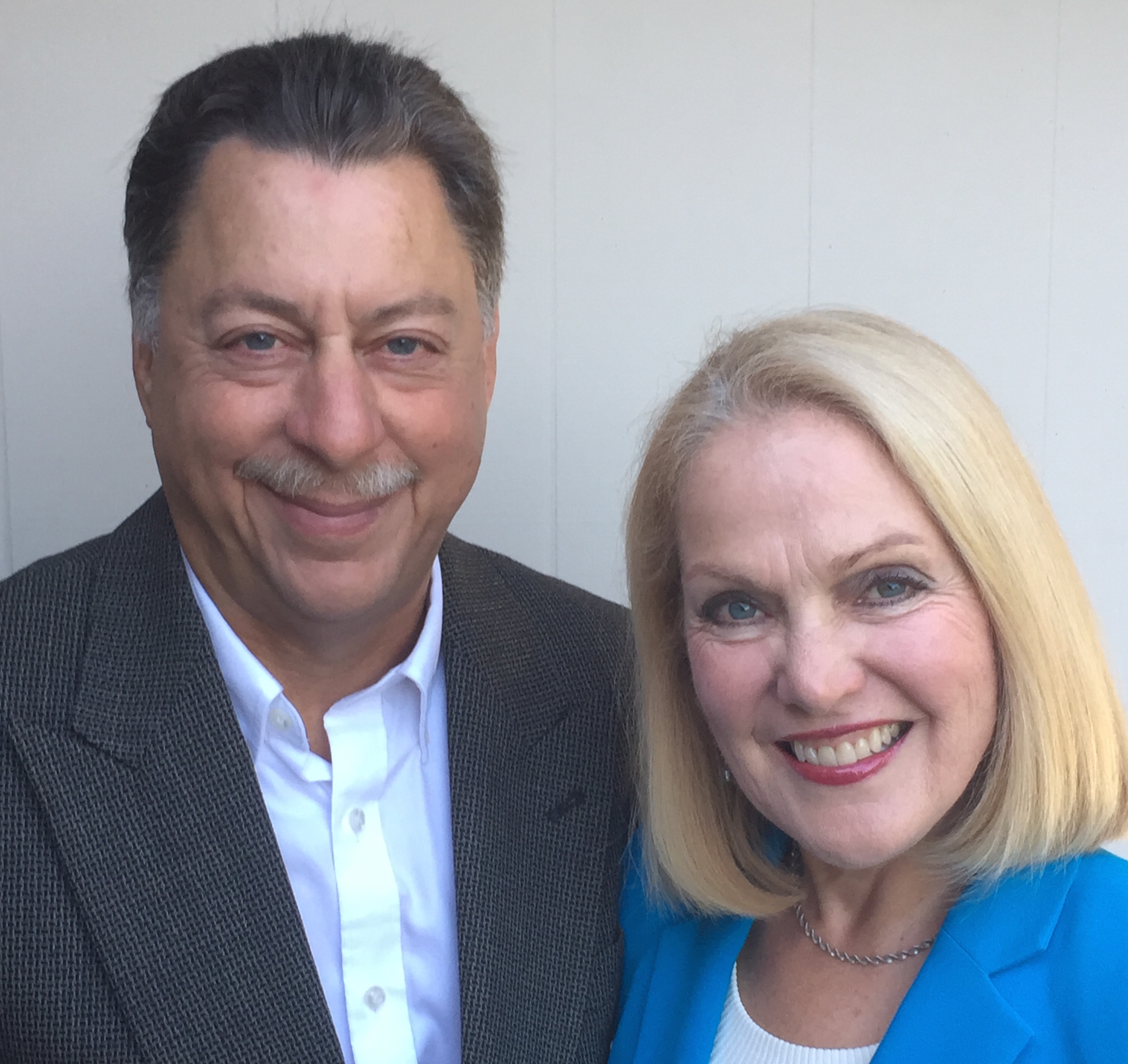
 

Dr. Mikol Davis and Carolyn Rosenblatt, co-founders of AgingInvestor.com

Carolyn Rosenblatt, RN, Elder Law Attorney offers a wealth of experience with aging to help you create tools so you can skillfully manage your aging clients. You will understand your rights and theirs so you can stay safe and keep them safe too.

Dr. Mikol Davis, Psychologist, Gerontologist offers in depth of knowledge about diminished financial capacity in older adults to help you strategize best practices so you can protect your vulnerable aging clients.

They are the authors of "Succeed With Senior Clients: A Financial Advisors Guide To Best Practice," and "Hidden Truths About Retirement And Long Term Care," available at AgingInvestor.com offers accredited cutting edge on-line continuing education courses for financial professionals wanting to expand their expertise in best practices for their aging clients. To learn more about our courses click HERE

Are Your Own Clients Being Ripped Off By Scammers?

Are Your Own Clients Being Ripped Off By Scammers?

Is financial abuse happening to your clients right now? Of course, it is. There is no escaping it. A recent study puts the amount stolen from elders every year in our country at over $36B. With a problem as big as this, no group of elders is immune. If you took a survey of your existing clients all age 65 or older and asked them how many have ever been taken advantage of financially, you would be sure to get some clients who would admit to this. If you look at your own experience and count up any instance you know of, whether it is in your family, your neighborhood or your book of business, you will likely find some financial abuse as well.

Why Is This Important for You?

The amounts stolen, fraudulently taken or just snatched from the unwary, are shocking. Remember that when your client loses assets, you lose fees. Portfolios that shrink because of fraud from predators take money from you, a manager, too.

That is the most basic reason this should be important to you as a financial professional. Doing the right thing to keep your clients safe is certainly a motivator as well. It shows that you do care about them. And beyond that, the regulators are increasingly aware that financial professionals are in a position to take action and, sometimes, to stop and prevent financial abuse. They will soon get past merely urging you to take action and to report abuse. They will ultimately make it mandatory.

And we think you can do more proactively than merely to understand how to report abuse after the fact. It would be great to catch more criminals but that is extremely difficult in many cases because they are very clever at evading law enforcement. And since family members are the most frequent abusers, we have an added problem in that many elders are reluctant to report abuse by their own to law enforcement. Mom just won't call Adult Protective Services on her son, even when she knows he has stolen from her. We have seen this with our own eyes here at AgingInvestor.com.

There are many instances of scammers getting into relationships with aging folks by phone or on the internet. The "friendly" relationships become addictive. These thieves persuade the victim to withdraw funds from their accounts. This is where the advisor comes in. Unusual withdrawals are an important warning sign of elder abuse. And when the advisor notices this in a client's account there are choices available about stopping abuse. They include contacting a trusted other the elder has identified and warning them of what is happening. There should be more than one trusted person identified for every client. And by all means, contact Adult Protective Services and report it if you suspect fraud.

If you are worried about privacy rules, don't be. The regulators of your industry want you to report abuse. They want you to make every effort to keep aging clients financially safer. If you are not sure about privacy, create a special privacy document that specifically permits you to call a third party with your client's ok. We can help you do so if you need guidance or a model document.

Financial abuse of your aging clients is likely, sooner or later. Take a deeper dive in our book "Succeed With Senior Clients: A Financial Advisor’s Guide To Best Practices", written just for you, the financial advisor. See particularly the chapter "Financial Elder Abuse: How You Can Fight the Crime of the Century". It's available right now. Click HERE to get your copy today.

by Carolyn Rosenblatt, RN, Elder Law Attorney, & Dr. Mikol Davis, Gerontologist, co-founders of AgingInvestor.com


Dr. Mikol Davis and Carolyn Rosenblatt, co-founders of AgingInvestor.com

Carolyn Rosenblatt, RN, Elder Law Attorney offers a wealth of experience with aging to help you create tools so you can skillfully manage your aging clients. You will understand your rights and theirs so you can stay safe and keep them safe too.

Dr. Mikol Davis, Psychologist, Gerontologist offers in depth of knowledge about diminished financial capacity in older adults to help you strategize best practices so you can protect your vulnerable aging clients.

They are the authors of "Succeed With Senior Clients: A Financial Advisors Guide To Best Practice," and "Hidden Truths About Retirement And Long Term Care," available at AgingInvestor.com offers accredited cutting edge on-line continuing education courses for financial professionals wanting to expand their expertise in best practices for their aging clients. To learn more about our courses click HERE

Danger! Your Client Has Serious Memory Problems

Danger! Your Client Has Serious Memory Problems

Have you ever found yourself in a situation with an older client who can't seem to remember anything any more? You may have known the client over a number of years and feel responsible. But you are at a loss now. What are you supposed to do with this client? She's pleasant and just loves you. But you are worried.

You are pretty sure your client is experiencing a slow, but steady cognitive decline. She has a daughter in another state but maybe she isn't paying attention to what is going on with mom. She has a son she's not close to, though he lives in the same area she does. You asked her once if she had someone to be her agent, her power of attorney. She hadn't gotten around to that yet.

No one acts. No one insists that your client choose a relative or friend and sign the Durable Power of Attorney document. She says he doesn't want to talk about it and you just back off and never mention it again. You suspect she may have Alzheimer's disease, from your experience with your own family member.

Here is what can happen to your client.

She steadily loses judgment about what is a good thing to spend money on or invest in; therefore, bad decisions happen. We have observed savvy and intelligent clients who were once financially comfortable start falling for obvious scams. They buy worthless coins or stamps or fly-by-night property investments that take their money and disappear. Perhaps no one knows because the elder is in the secrecy habit. Time passes and the client's cognitive ability declines even more. There is no stopping dementia caused by Alzheimer's disease.   The predators find an easy mark. As long as there is cash to spend or credit cards to run up, the elder keeps getting into deeper and deeper trouble. Unquestionably, financial decimation can result.

These situations are real. Here at AgingInvestor.com, we're in the consulting business. We have talked to the families of elders who have probably been impaired for years, hearing them say they wished someone had done something sooner. No one but the financial professional knew what the client had nor where his money was going. The family thought the elder's finances were fine. Now, with too much drained out by excessive giving, the family may well end up having to support their aging relative just at the time when extensive care is needed and the expense of it skyrockets.

How do you prevent the worst? By engaging in discussion with your client's family or appointed other early in your relationship. If you have an ongoing connection with that trusted person in your client's life, you stand a better chance of protecting her from dumb and destructive decisions if her mind starts to go, later on in life. Even if you can't imagine how a perfectly alert, intelligent person could get dementia, it happens to millions of people as they live longer. 5.6 million of them are diagnosed with the disease right now in the U.S. alone. The risk rises with age.

If you have never had conversations with your older clients' families, now is the time to start. You need to educate your client about the importance of having someone else named by her for you to reach out to if she gets sick or has an accident.

You need to develop the skill of conducting family meetings while each client is fully competent. Even if a client has a few memory lapses now it is not too late to have a meeting with family to figure out the path forward in case of trouble ahead. This is a "soft skill" every advisor needs. If you want to learn how to conduct a family meeting or get better at this, you can learn the techniques in a hour.

Putting these skills to work takes some practice. It is especially important to know what to do when a client's family is difficult, or there is a history of conflict among them. That's tricky and you will need some outside help. Get a one hour accredited crash course on conducting successful family meetings by clicking here.


By Carolyn Rosenblatt, RN, Elder Law Attorney, & Dr. Mikol Davis, Gerontologist co-founders of AgingInvestor.com

The Elephant In The Room: Financial Professionals With Diminished Capacity

The Elephant In The Room: Financial Professionals With Diminished Capacity

Every profession is facing a common dilemma: what to do about your own impaired colleagues. When there is no mandatory retirement age, there is no one to say, it's time to quit. Do you think a colleague has dementia?

People are living longer than ever, continuing in their work longer than ever and sometimes they start to "lose it" before they decide to retire. As none of us are absolutely immune from Alzheimer's or other dementia, or anything that causes cognitive decline, we all need to consider what we would want if it happened to us.

Would you want a friend or colleague to tell you that you've got a problem with memory and maybe it's time to hang it up and rest? Would you want your legal department to embarrass you and tell you to stop handling other people's money because everyone knows you're no longer competent? It's a frightening thought.

Longevity can be great, but not when you are impaired. As a consultant with expertise in aging, I have seen cognitive impairment to a dangerous level in numerous professionals. One was a trial lawyer colleague, high profile and famous. No one stopped him from practicing law until he had nearly destroyed things. I have seen it in a business owner who founded his company and had been going to the office for 50 years. He was kicked out of his favorite restaurant and was physically harassing employees, his Alzheimer's had gotten so bad. No one made him stop until outsiders (myself and my partner, Dr. Davis) came in and created a plan to prevent him from entering the office again.

I have seen a judge with dementia fall asleep on the bench in the middle of lawyerly argument in court.

I spoke with the sister of a former bank president who had become a financial advisor. He had lost most of his wealth because he could no longer keep track of it and he was being taken advantage of. He was living in squalor before family intervened. During that time, he was still working as a wealth manager.

These are real cases. The message is that we need a strategy and a policy in any office with advisors who work into their senior years, to address the possible impairment that might occur.

There is a way to do this so as not to needlessly embarrass the affected person. There is a way to require that a person with memory loss confirmed by colleagues should step down and give up managing anyone's assets. This should thought out in every office. Clients need protection. It takes construction of a reasoned policy to address the impaired advisor confidentially by first requesting retirement and then mandating retirement if the advisor refuses to go along.

Pilots have a mandatory retirement age of 65. That would not work for many other kinds of professionals. But something has to be done. If you want some concrete action steps to put in place in your office, you will find them in our book, Succeed With Senior Clients, A Financial Advisor's Guide to Best Practices. Get your copy today by clicking here.

By Carolyn Rosenblatt, RN, elder Law Attorney, & Dr. Mikol Davis, Gerontologist co-founder of AgingInvestor.com

What Does It Really Mean to “Know Your Client”?

What Does It Really Mean to “Know Your Client”?

Every advisor understands that you are theoretically required to know your client. But does one or two contacts a year after you do retirement planning suffice? When it comes to aging clients we at AgingInvestor.com think it takes a lot more than that. Here's a real case that illustrates the problem with an advisor not really meeting this obligation.

Nigel is 80 and his wife, Berta is 84. Each had a large estate of separate property when they got married. Nigel owned a home in an expensive county and Berta had her own inheritance. They had had the same financial firm in a different state from where they now live for decades.

We got involved at the point of a desperate call from Nigel. His wife was being discharged from the rehab facility, he was told and he wasn't sure what to do. He had the means to pay for private care and that was what he wanted. I consulted with him at some length and asked about the medical records. He obtained them at my request. The news was not good. His wife was terminally ill and plans for how to manage her had not been discussed with anyone: not the doctors, not the rehab folks, no one.

A person's choices about care are driven largely by how much they have in assets that can be spent on care. I asked. He contacted his financial advisor and we all spoke together. There was plenty to cover the need, but at that point I learned that Nigel and Berta had never done any estate planning. No will, no trust, no beneficiary designation on any account naming the other as a recipient when one passed.

Where was the financial advisor in all this? Ignorant. Not involved in encouraging her clients to do what would benefit both of them. She apparently did not keep in touch with them, despite that Berta had been ill for over a year. She did not know that Berta was gravely ill and going into hospice care (comfort measures only for the terminally ill). She did not know that they were about to incur a daily cost for a private room in a well appointed nursing facility at a cost of $430 a day.

Scrambling to find an estate-planning attorney and get advice, we did accomplish what the advisor could have urged her clients to do long before this crisis. Nigel does not use a computer. The advisor emailed the power of attorney and beneficiary designation form to me and I ensured that it was signed and sent back. Now Nigel is on his wife's account, and can access her funds, should she lose consciousness. Why, I asked did this long time advisor not do this much earlier in the planning process? At least Nigel, who needs a trust for his estate, will now have one done, no thanks to any advice from his long time advisor.

Adding value for your clients takes more than the latest algorithm and getting the best returns. It takes knowing them, their life situations, the risks posed by aging and the skill to look at the anticipated expenses of care as clients near the end of the road. The nursing home cost for what Berta needs now is not covered by Medicare.

The simplest takeaway from this: contact your clients every six months if they are at retirement age. Keep in communication and know them, not just their assets. It's the least you can do.

Learn about the actual cost of care and how to help your clients with long term care planning in Succeed With Senior Clients: A Financial Advisor's Guide to Best Practices. Click here to download your copy today.

Carolyn Rosenblatt, R.N., Elder Law Attorney & Dr. Mikol Davis

co-founders of AgingInvestor.com and AgingParents.com