

If You Wanted To Report Financial Abuse, Would You Know How?

If You Wanted To Report Financial Abuse, Would You Know How?

In a recent issue of Investment News, a study of financial advisors looked at this question. 591 advisors were asked about their experiences with elder financial abuse. One of the surprising findings focused on those advisors who knew or suspected abuse but did not report it.

A significant percentage of those who did not report abuse gave as a reason that they did not know who to contact. What is most troubling about this finding is that not knowing who to contact is such a simple problem to solve. Historically your regulators have never required that you have the name of a trusted contact for your client in order to open a file for that person. Here at AgingInvestor.com and AgingParents.com, where elder financial abuse comes up often, we think it is extremely short-sighted to be without a trusted contact or two in every client's file. Isn't it obvious that you need someone to call if a client gets into danger, whether it's elder abuse or not? No one gets out of here alive and a client can live for quite a long time, developing cognitive impairment along the way. That puts a person at much higher risk for financial abuse.

New FINRA rules will require that you make "reasonable efforts" to get a trusted contact from your clients. We assure you, reasonable efforts are a lot easier to make when your client is signing up than they are when your client is 92 and forgetful or suspicious of everyone's motives.

From us, two professionals who have worked with countless elders and their families over the last 10 years, we have three tips for every financial professional handling a client's finances:

  1. You can't ensure that your client will be competent for financial decisions forever. Be realistic! People are living longer and they may develop dementia or other cognitive impairment. Get at least two trusted contacts in every file for every client age 65 or older. Why two or more? One trusted contact might end up being the very person who is abusing your client--a family member.
  1. Get smart about the basics of recognizing red flags of diminished capacity. We offer a simple free checklist to help you. Click on the green button here to get yours now. These signs are warnings that your client is more vulnerable to manipulation by others.
  1. Know how to report financial elder abuse. You don't have to be certain that abuse has occurred. You do need to know who may be doing it, when and how, in general (e.g., pushing your client into large, unexplained withdrawals). A reasonable suspicion is enough. It's ok if you're wrong. And you can do it anonymously. Call Adult Protective Services in the county where your client lives if you think someone is ripping off your vulnerable client.

Some advisors are worried that they'll get sued for reporting suspected financial abuse. This is incorrect. Your regulators want you to report it. If you do what is reasonable, you are not a target. However, if you know that your impaired client is being financially abused and you do absolutely nothing, liability for failure to act is certainly possible.

by Carolyn Rosenblatt, RN, Elder Law Attorney, & Dr. Mikol Davis, Gerontologist, co-founders of AgingInvestor.com
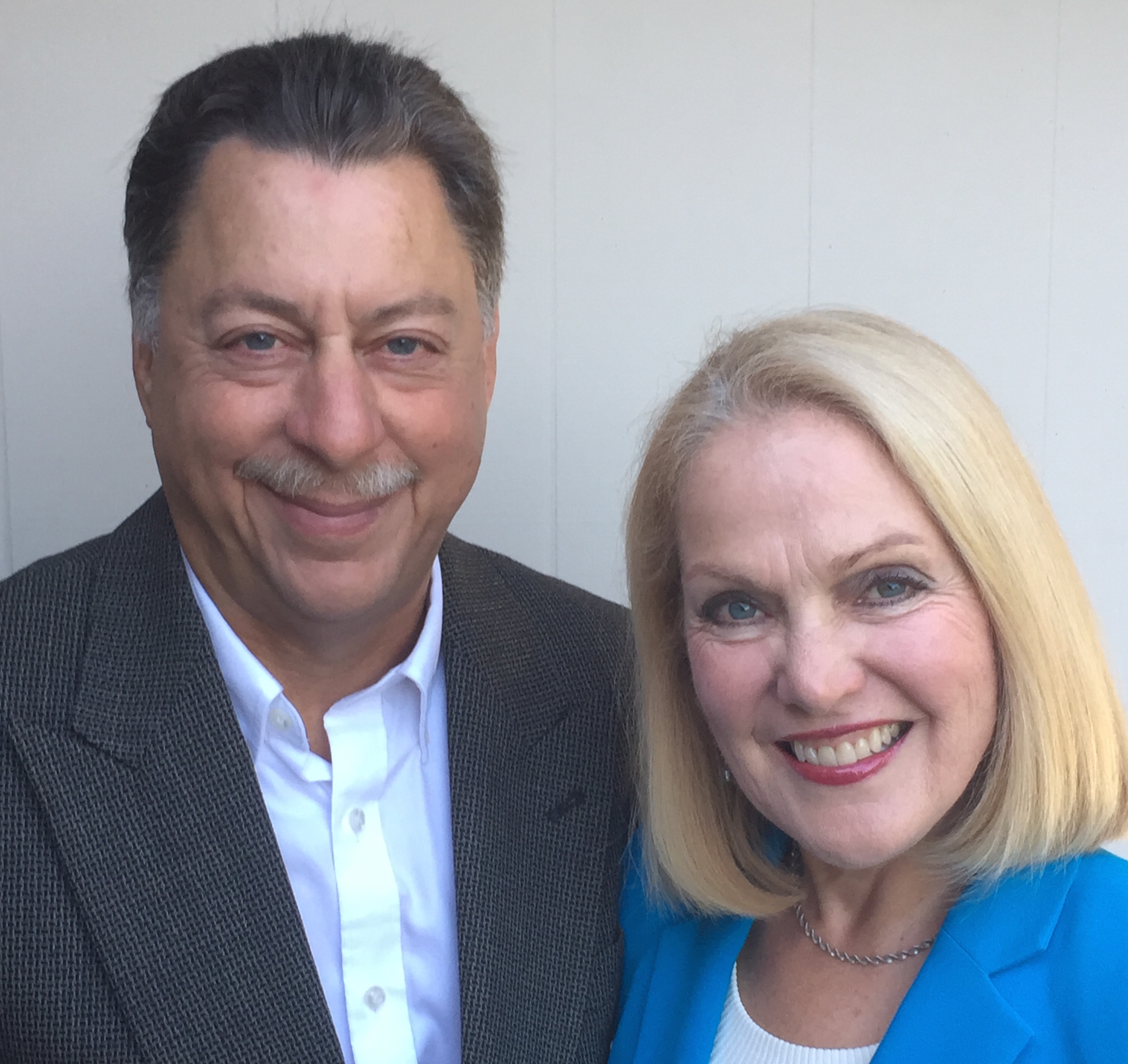
 

Dr. Mikol Davis and Carolyn Rosenblatt, co-founders of AgingInvestor.com

Carolyn Rosenblatt, RN, Elder Law Attorney offers a wealth of experience with aging to help you create tools so you can skillfully manage your aging clients. You will understand your rights and theirs so you can stay safe and keep them safe too.

Dr. Mikol Davis, Psychologist, Gerontologist offers in depth of knowledge about diminished financial capacity in older adults to help you strategize best practices so you can protect your vulnerable aging clients.

They are the authors of "Succeed With Senior Clients: A Financial Advisors Guide To Best Practice," and "Hidden Truths About Retirement And Long Term Care," available at AgingInvestor.com offers accredited cutting edge on-line continuing education courses for financial professionals wanting to expand their expertise in best practices for their aging clients. To learn more about our courses click HERE

This Small Step Can Prevent Financial Disaster For Your Aging Clients

This Small Step Can Prevent Financial Disaster For Your Aging Clients

Do you have older clients who seem to be doing really well physically? Some of our aging folks are remarkably sharp and we can all be lulled into a false sense of security with them. This is a heads up warning about a real situation that you can perhaps help clients avoid by a simple step. Bear in mind that your older clients may be alert but still have trouble keeping track of the occasional bill. That can lead to a true financial disaster. Here's what happened to one person we met at AgingInvestor.com who could well be your client.

Ruth is 88, still quite independent, taking care of herself at home. She does her own shopping and cooking, drives and pays her own bills. Great at her age, right? But when it comes to memory, that's a problem from time to time. And forgetfulness plus an unforeseen glitch caused a financial nightmare for her. Here is what happened.

Ruth has Medicare and supplemental insurance. That extra 20% the supplement pays doesn't sound like a lot, unless you have a crisis and have to go to the hospital.

Ruth paid her bills by check each month. But sometimes her mail carrier made mistakes and put envelopes in the wrong box. That's just what happened with Ruth's supplemental insurance bill. She didn't pay the bill one month because she never got it. That was the glitch. Unfortunately that is exactly the month that she had a major health crisis and had to be hospitalized. She never knew that her supplemental insurer had missed a premium payment from her until they denied payment to the hospital for the amount due after Medicare paid the hospital in full. She was very upset and called them but they brushed her off when she told them what happened. She had never paid late nor had she ever missed a payment. They didn't care. Her bill for the amount Medicare didn't cover was over $80,000. They flatly refused to pay it.

She tried to call again and again but got nowhere. She sent a letter but received no response. Ruth's case is not the first time we've seen a situation when an older person fails to pay an insurance premium notice either because of illness, dementia, not receiving the bill or other valid reason. Some companies will allow reinstatement of coverage when the amount owed is paid in full. But Ruth's former insurer has been horrible; clearly to get out of the large bill they would have had to pay. They're probably happy about it but of course Ruth is distraught.

Now imagine that Ruth is your client. Most write checks by hand for paying bills, as they have done all their adult lives. Lots of people in their 80s don't use a computer or are only able to do so with many limitations. They don't use auto debit for paying bills automatically.

There is one thing you, the advisor, can do to prevent a disaster like Ruth's. Work with your aging client and their family to get them set up so that payments for ongoing, recurring expenses are auto debited from a bank account. This applies most especially to insurance premiums. As long as you are overseeing the finances for these older clients, think about this simple preventive strategy you can urge them to use to protect their financial safety. Sometimes no one thinks of it. Sometimes the family is also lulled into a false sense of security because the elder is so independent in other ways. Bill paying is a vulnerability and you can think of measures to make it less so.

That medical bill coming to a client because of a simple error, forgetfulness, or glitch can be a source of extreme stress. Take the time now to talk with your client about the prospect of auto pay for all of their recurring bills. Even if they are unsure of how to set it up, a family member, a friend or money manager can offer to do this for them. It's a small, basic measure but hugely helpful to prevent financial loss

What Is The Real Cost of Long Term Care For Aging Clients?

What Is The Real Cost of Long Term Care For Aging Clients?

Are you doing retirement planning with your clients? Do you understand the real dollars involved in long term care? It goes way beyond out of pocket medical expenses for Medicare premiums, supplemental insurance and medicines. You need to help them free up enough to pay for it.

We are indeed living longer now due to advances in medicine and technology but what is the condition we're in with longevity? It's not true that we're living healthier than the prior generation.

No one wants to talk about the reality that things like obesity, in 30-35% of Boomers are going to affect whether they need to pay for lots of things Medicare does not cover. Obesity is frequently associated with significantly greater risk for heart disease, strokes and diabetes. Boomers have the highest rates of obesity of any age group in the U.S. If you want to pick conditions that are most likely to result in the need for long term care, all of these are among them.

Retirement planning can be very tricky when it comes to considering the cost of long term care. Most people don't want to have a conversation about what would happen if they became disabled. Most would rather change the subject quickly if the issue of possible diminished capacity is raised. "That's NOT going to happen to me!" is the expected response. But the risk is real, and there are plenty of statistics to support an analysis of what it costs to care for a person with disabling health conditions.

According to the Genworth Cost of Care Survey, which comes out annually, 70% of people over the age of 65 will need some kind of long term support as they age. At AgingInvestor.com, we recommend that every financial professional have the latest study on hand and that you share it with your clients when you do retirement planning. Chances are they are not as healthy as their parents were. And what kind of care will they need?

Most people want to stay at home as they age. Many will use home care services to be able to stay at home. Here's an example. My now 94 year old mother in law, Alice, had numerous hospitalizations for a couple of months, for blood pressure issues, the flu and other problems. She simply wasn't safe living independently in her apartment as she recovered. A home care worker came in every day for a cost of $25 per hour, initially for 12 hours a day. That cost is not paid by Medicare.

She's a good example of how we can need care with advanced age even if we do things right. She has always taken good care of herself, doesn't smoke, doesn't abuse alcohol, exercises regularly and keeps her weight in normal range. And yet, after illness she needed 24/7 care. The overall out of pocket costs associated with that bout of illness approached $10,000. She's fairly tough and did recover fully. However at her age that is not what usually happens. Home care could be needed indefinitely at a cost even part-time of at least $20,000 per year.

The extra $20,000 a year any less resilient elder could need is for someone who has neither heart disease nor diabetes. Chronic illnesses put a person at even greater risk of needing expensive care. Full time around the clock help can run $250,000 per year and up, depending on geographic area market rates.

Here's the takeaway: Expect that anyone who reaches the age of 80 is much more likely than not to need cash to pay for help of some kind. If your client is overweight or obese, the risk is very high. Ditto if your client smokes. Be sure to plan for making cash available to cover your client's likely needs in his later years. Most of what is usually required is not covered by either Medicare nor supplemental "Medigap" insurance.

By Carolyn Rosenblatt, RN, Attorney, AgingParents.com and AgingInvestor.com

A Lurking Danger You Need To Warn Your Clients About

A Lurking Danger You Need To Warn Your Clients About

A Lurking Danger You Need To Warn Your Clients About

There is nothing wrong with putting on a dinner or lunch for prospects while you give them a pitch about a product you like. But unfortunately, a free meal brings people out, especially older folks and they become sales targets for unscrupulous people. FINRA, in seeing how these seminars are too often a vehicle for fraud and exaggeration preying on unsuspecting elders, has issued a warning to seniors. You can be the messenger to provide a heads-up for your own clients about this.

Too many unethical people are using the setting of a free lunch to sell inappropriate investments.  The annuity scams are notorious for this. And the scammers love impaired elders who are so easy to fool.

As people age, about a third of them will develop Alzheimer’s Disease. Most of the victims of this insidious disease are women.  When the earliest signs of the disease emerge, research tells us that impairment of financial judgment is already underway. The predators have no trouble talking a senior who lacks the ability to see a scam coming into buying whatever they're selling. It happens every day, not just in the free lunch seminar.

FINRA's alert for investors about “free lunch” investment seminars is specific. Your older clients might not get that alert unless it comes through you. Here’s the gist of what FINRA wants seniors to know.

The FINRA Investor Education Foundation researched people over 40 to find out how many have been solicited with offers for a free meal seminar.  64 percent of respondents had been solicited, which means that the odds are, your clients will be among them. What the research also showed was that half of the sales materials contained claims that were apparently exaggerated, misleading or otherwise unwarranted. 13 percent of these seminars appeared to involve fraud, such as unfounded projections of returns and sales of nonexistent products

Slick and unscrupulous “advisors” and sellers have been at this for years, pitching unsuitable products. They’ve stepped up their game as the population ages. They want every target they can get. An easy way to warn your clients is to give them a one-sheet Client Update we have created for you. Get yours here or by clicking below and send it out to everyone in your book of business. Some of them are older clients and some have aging parents or grandparents who need to know about this.

You'll look good by showing that you care about what happens to your clients and they'll appreciate the message.

You can improve your expertise with your older clients in a book written especially for you, Succeed With Senior Clients, A Financial Advisor's Guide to Best Practices. Get your copy by clicking here.

Carolyn Rosenblatt, RN, Elder Law Attorney, AgingInvestor.com and AgingParents.com

Great handout: client update on the Free Lunch Investment Seminar

Aging Clients and Secrecy About Finances

Aging Clients and Secrecy About Finances

Have you ever had a stubborn older client who told you he'd never talk about his assets with anyone but you? He doesn't think he'll ever need help in his life and he wants to be in charge. When you suggest a family meeting to let someone else know what to do in case he ever became ill and unable to communicate, he shuts you down.   This is all too common.

A consistent obstacle to communication we see in our work is the resistance of the older person to discuss finances with anyone, including their adult children or other heirs. The Great Depression led to secrecy about finances for many, as fortunes were lost sometimes overnight and once proud people became impoverished. Talking openly about money was just not done for those who grew up in this time of widespread devastating and sometimes life-ending financial losses. To this segment of our population, openly discussing money was considered rude, unseemly. Some of these Depression-era survivors remain reluctant to tell anyone in their families where their accounts are, what their assets are and what they want done with their assets in the event of incapacity.

Presumably when you have a long-term relationship with your client, she trusts you and trusts your judgment. That gives you leverage. You may know more about her finances than her family, her friends or anyone in her life. You are charged with the task of long range planning and you look ahead. In doing so, it is up to you to urge your client, gently, repeatedly and with ongoing persistence that she find someone she can trust to appoint to protect her if she has an accident, falls ill, or can't speak for herself.

Sometimes persistence pays. The power of your relationship is a tool to persuade your client to come around. This is not a situation to ignore just because your client resists. The older she is, the more there is at risk. Anything can happen to her health at any time.

If your client resists, we encourage you to repeat your requesting a week or a month. Do it in a tactful way and paint a verbal picture for her of what would happen if she were no longer able to speak for herself. Tell her how frustrating it would be to have to refer her account to your legal department for a decision about getting a court involved if she could no longer communicate. Tell her how upset that would make you feel. Express your own concerns and make it your problem.

We hope that every single person in your book of business has an appointed trusted other for you to contact. You may well need that and it can be up to you to urge your client to take care of that most important piece of legal business, the Durable Power of Attorney, if she has not done this. Diminished capacity can sneak up on your client and you'll need help.

It's a new role you have with the oldest clients. They are living longer than they thought they would and with longevity come the risks of impairment in all ways.

If you'd like to take a little deeper dive into managing clients with diminished capacity, you can get a lot of expertise in a one hour online course by clicking here.

By Carolyn Rosenblatt, RN, Elder Law Attorney

AgingParents.com and AgingInvestor.com