

Are Your Own Clients Being Ripped Off By Scammers?

Are Your Own Clients Being Ripped Off By Scammers?

Is financial abuse happening to your clients right now? Of course, it is. There is no escaping it. A recent study puts the amount stolen from elders every year in our country at over $36B. With a problem as big as this, no group of elders is immune. If you took a survey of your existing clients all age 65 or older and asked them how many have ever been taken advantage of financially, you would be sure to get some clients who would admit to this. If you look at your own experience and count up any instance you know of, whether it is in your family, your neighborhood or your book of business, you will likely find some financial abuse as well.

Why Is This Important for You?

The amounts stolen, fraudulently taken or just snatched from the unwary, are shocking. Remember that when your client loses assets, you lose fees. Portfolios that shrink because of fraud from predators take money from you, a manager, too.

That is the most basic reason this should be important to you as a financial professional. Doing the right thing to keep your clients safe is certainly a motivator as well. It shows that you do care about them. And beyond that, the regulators are increasingly aware that financial professionals are in a position to take action and, sometimes, to stop and prevent financial abuse. They will soon get past merely urging you to take action and to report abuse. They will ultimately make it mandatory.

And we think you can do more proactively than merely to understand how to report abuse after the fact. It would be great to catch more criminals but that is extremely difficult in many cases because they are very clever at evading law enforcement. And since family members are the most frequent abusers, we have an added problem in that many elders are reluctant to report abuse by their own to law enforcement. Mom just won't call Adult Protective Services on her son, even when she knows he has stolen from her. We have seen this with our own eyes here at AgingInvestor.com.

There are many instances of scammers getting into relationships with aging folks by phone or on the internet. The "friendly" relationships become addictive. These thieves persuade the victim to withdraw funds from their accounts. This is where the advisor comes in. Unusual withdrawals are an important warning sign of elder abuse. And when the advisor notices this in a client's account there are choices available about stopping abuse. They include contacting a trusted other the elder has identified and warning them of what is happening. There should be more than one trusted person identified for every client. And by all means, contact Adult Protective Services and report it if you suspect fraud.

If you are worried about privacy rules, don't be. The regulators of your industry want you to report abuse. They want you to make every effort to keep aging clients financially safer. If you are not sure about privacy, create a special privacy document that specifically permits you to call a third party with your client's ok. We can help you do so if you need guidance or a model document.

Financial abuse of your aging clients is likely, sooner or later. Take a deeper dive in our book "Succeed With Senior Clients: A Financial Advisor’s Guide To Best Practices", written just for you, the financial advisor. See particularly the chapter "Financial Elder Abuse: How You Can Fight the Crime of the Century". It's available right now. Click HERE to get your copy today.

by Carolyn Rosenblatt, RN, Elder Law Attorney, & Dr. Mikol Davis, Gerontologist, co-founders of AgingInvestor.com
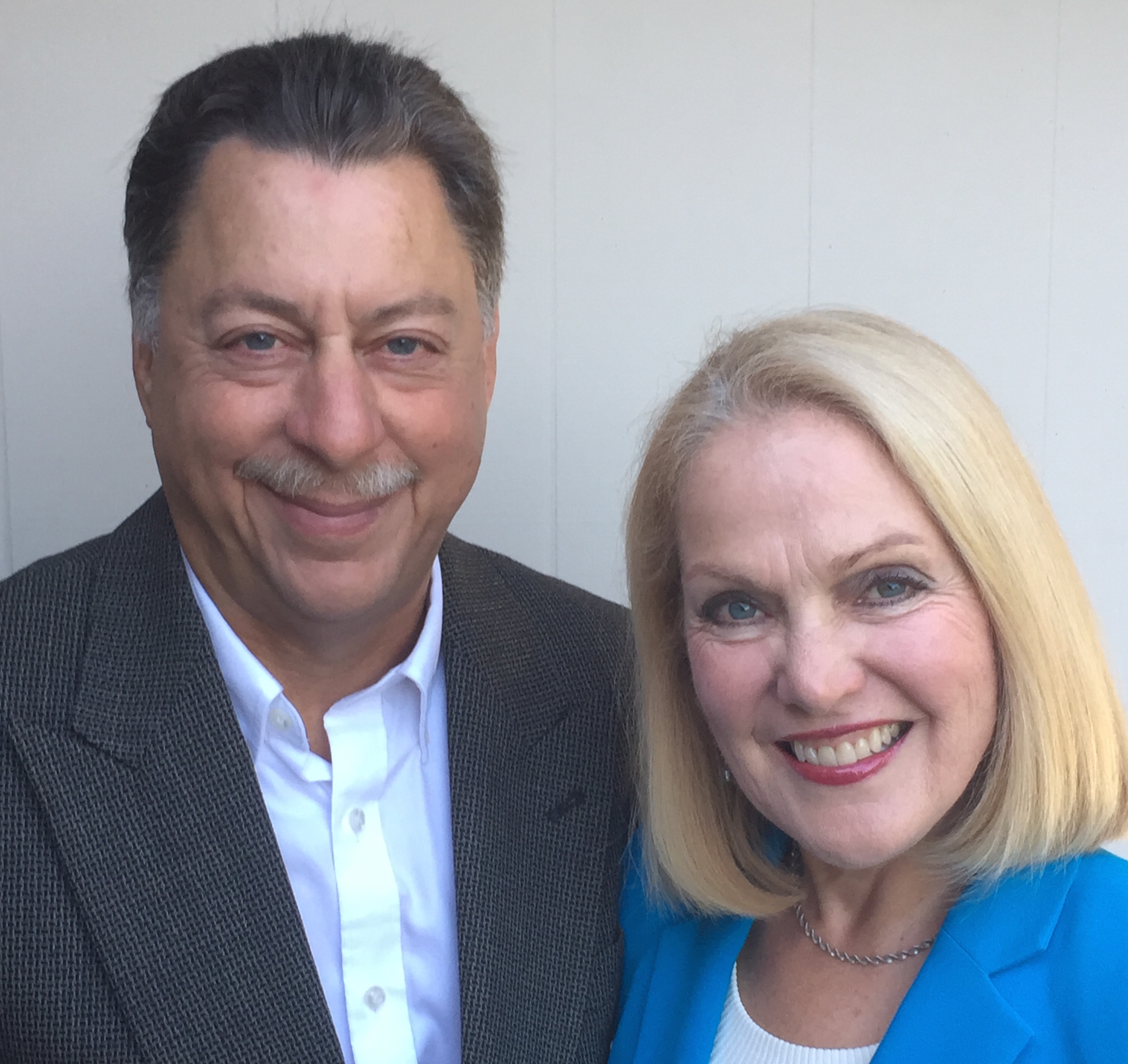
 

Dr. Mikol Davis and Carolyn Rosenblatt, co-founders of AgingInvestor.com

Carolyn Rosenblatt, RN, Elder Law Attorney offers a wealth of experience with aging to help you create tools so you can skillfully manage your aging clients. You will understand your rights and theirs so you can stay safe and keep them safe too.

Dr. Mikol Davis, Psychologist, Gerontologist offers in depth of knowledge about diminished financial capacity in older adults to help you strategize best practices so you can protect your vulnerable aging clients.

They are the authors of "Succeed With Senior Clients: A Financial Advisors Guide To Best Practice," and "Hidden Truths About Retirement And Long Term Care," available at AgingInvestor.com offers accredited cutting edge on-line continuing education courses for financial professionals wanting to expand their expertise in best practices for their aging clients. To learn more about our courses click HERE

Danger! Your Client Has Serious Memory Problems

Danger! Your Client Has Serious Memory Problems

Have you ever found yourself in a situation with an older client who can't seem to remember anything any more? You may have known the client over a number of years and feel responsible. But you are at a loss now. What are you supposed to do with this client? She's pleasant and just loves you. But you are worried.

You are pretty sure your client is experiencing a slow, but steady cognitive decline. She has a daughter in another state but maybe she isn't paying attention to what is going on with mom. She has a son she's not close to, though he lives in the same area she does. You asked her once if she had someone to be her agent, her power of attorney. She hadn't gotten around to that yet.

No one acts. No one insists that your client choose a relative or friend and sign the Durable Power of Attorney document. She says he doesn't want to talk about it and you just back off and never mention it again. You suspect she may have Alzheimer's disease, from your experience with your own family member.

Here is what can happen to your client.

She steadily loses judgment about what is a good thing to spend money on or invest in; therefore, bad decisions happen. We have observed savvy and intelligent clients who were once financially comfortable start falling for obvious scams. They buy worthless coins or stamps or fly-by-night property investments that take their money and disappear. Perhaps no one knows because the elder is in the secrecy habit. Time passes and the client's cognitive ability declines even more. There is no stopping dementia caused by Alzheimer's disease.   The predators find an easy mark. As long as there is cash to spend or credit cards to run up, the elder keeps getting into deeper and deeper trouble. Unquestionably, financial decimation can result.

These situations are real. Here at AgingInvestor.com, we're in the consulting business. We have talked to the families of elders who have probably been impaired for years, hearing them say they wished someone had done something sooner. No one but the financial professional knew what the client had nor where his money was going. The family thought the elder's finances were fine. Now, with too much drained out by excessive giving, the family may well end up having to support their aging relative just at the time when extensive care is needed and the expense of it skyrockets.

How do you prevent the worst? By engaging in discussion with your client's family or appointed other early in your relationship. If you have an ongoing connection with that trusted person in your client's life, you stand a better chance of protecting her from dumb and destructive decisions if her mind starts to go, later on in life. Even if you can't imagine how a perfectly alert, intelligent person could get dementia, it happens to millions of people as they live longer. 5.6 million of them are diagnosed with the disease right now in the U.S. alone. The risk rises with age.

If you have never had conversations with your older clients' families, now is the time to start. You need to educate your client about the importance of having someone else named by her for you to reach out to if she gets sick or has an accident.

You need to develop the skill of conducting family meetings while each client is fully competent. Even if a client has a few memory lapses now it is not too late to have a meeting with family to figure out the path forward in case of trouble ahead. This is a "soft skill" every advisor needs. If you want to learn how to conduct a family meeting or get better at this, you can learn the techniques in a hour.

Putting these skills to work takes some practice. It is especially important to know what to do when a client's family is difficult, or there is a history of conflict among them. That's tricky and you will need some outside help. Get a one hour accredited crash course on conducting successful family meetings by clicking here.


By Carolyn Rosenblatt, RN, Elder Law Attorney, & Dr. Mikol Davis, Gerontologist co-founders of AgingInvestor.com

How Can You Tell If Your Client Has Diminished Capacity?

How Can You Tell If Your Client Has Diminished Capacity?

How good are you at spotting the telltale signs of diminished capacity in an older client? Many older people have a bit of difficulty remembering. We often dismiss this when we see it, thinking it's "just getting old". It may be part of aging, as we do process things more slowly as we age and recall may take longer. But, there is a point when a problem recalling things should be a red flag for diminished capacity for you, the advisor.   What are those red flags anyway? How do we label them? There are numerous signs of diminished capacity, more extensive than this article allows, but we'll look at one category, which we call cognitive signs. Here's a breakdown of what you should look for when your client has a lot of difficulty remembering things.

What to note and document about memory loss

This is one of the first things most advisors may notice in a client that causes concern. Perhaps she does not remember important meetings, decisions and discussions. Here are some examples of what you may see:   Multiple telephone calls in one day that are repetitive and do not make sense. The client forgets that she has already talked with you and is calling about the same thing in another call to you. She repeats a question she already asked you and that you already answered.   Client forgets why he has an appointment with you. This can be by telephone or in person. Perhaps the client himself asked for the meeting but then he forgets why. Or perhaps you wanted to discuss a proposed transaction with him and told him that, but when you call or he comes into your office, he has no idea why he is there. Trying to refresh his memory about it does not help.   Complete forgetting of an event that just took place. You just spent a hour with your client telling her some important information about upcoming changes to her portfolio. She seemed to understand when you were talking but an hour later she asks you questions as if the meeting you just had never took place. She had totally forgotten about it.   No shows. You have arranged meetings, appointments with others or events that require your client's participation. He agrees on the pre-arranged date and time but then does not show up. When you call him, he has no recollection of the event, that others are involved nor that he had agreed to this.

If your client demonstrates any of these indicators you need to be paying close attention and make an effort to contact your client more often than you did before you noticed these problems. Any or all of them might be warnings of developing dementia. There could be other reasons for memory loss, but you won't know unless you are keeping good records. The only way to determine if you have a serious problem here is to track these signs over time and document each instance you see.   If the problem gets worse, it is time to take it to the next level. In your organization that might mean escalation, or having the documentation reviewed by a committee. Ideally, as we see it, the next step should include contacting the client's appointed trusted third party who would step in when the client became impaired.   To learn more about diminished capacity and just what you should do about it, click here. An hour of accredited learning on the course Best Practices for Clients With Diminished Capacity will make you a lot wiser in your approach.

By Carolyn Rosenblatt, RN, Elder Law Attorney, & Dr. Mikol Davis, Gerontologist co-founder of AgingInvestor.com

How Much Retirement Income Will Aging Clients Need? More Than You Think!

How Much Retirement Income Will Aging Clients Need? More Than You Think!

How Much Retirement Income Will Aging Clients Need? More Than You Think!

Financial professionals do their best to guesstimate how much income a person will need to maintain a client's lifestyle in retirement. Figures vary, with averages being $50,000 a year and up. They are based on various median ranges of things like out of pocket medical expenses, cost of living and the like. But you can't predict how long your aging client will live. All your calculations can be for naught if you totally miss how much it really costs to live to be in one's 90s.

Let's look at a real person who is in some ways atypical in that she is in pretty good health at 94 and can still get around on her own. A lot of those who are 90+ can't. They need more help and help costs more than most retirement calculators accurately predict. Could you do the math on this one, in advance?

"Evelyn" was widowed 8 years ago. She lived in a big house in a lovely gated seniors' community with all the amenities: golf courses, pools, recreation centers, clubhouses, restaurants and many activities. But after she lost her husband three pivotal things happened. First, she became more isolated. Some of her friends moved away to assisted living or to be closer to family.  Next, she got more and more lonely. And third, her own health began to decline in that it was harder to walk and use her hands due to arthritis. She decided to move.

She sold her free and clear house and invested the cash. One would think that the proceeds of over $350,000 would be a nice cushion to pay for her move to a smaller seniors' apartment where help was available, even though she was still able to do her own personal care unassisted. Moving from a 2800 square foot home to an 800 square foot apartment should be a savings, right? In the seniors' complex, meals, linen changes, cleaning and transportation to appointments are provided, along with many social activities on site and in the community. The transportation service allowed her to give up driving, which it was time to do at her age. It also eliminated the struggle of having to shop, do housekeeping and cook all the time. She had a community now. But at what cost?

In the four years since she sold her house, she depleted all of the sales proceeds from the home. Why? She has expenses she didn't really plan for. She was not able to predict these expenses accurately. Her out of pocket medical costs were for things not covered by either Medicare or supplemental health insurance. In a single year, that figure was over $2000.  The medications she takes for her blood pressure, heart and other chronic health conditions are keeping her going but the part not covered by insurance cost her another $5000.  A premium for her supplemental insurance (also called Medigap coverage) is almost $3000 a year.

The lowest level of "care" in the seniors' apartment means that no help is needed with bathing, walking, dressing, eating, bathroom, and moving from bed to chair and back.  The rent and services in a high-value real estate area where her apartment is located started at $5000 a month. Last year it cost $66,000 for the year and it increases every year. This year's rent is $300 a month more than it was in 2016. And that is without assisted living, which would cost at least another thousand dollars each month.

Evelyn had a hospitalization last year due to her blood pressure. After she came home, she needed a helper, whom she hired independently for a few weeks. That cost was also not covered by any insurance. In the years since her husband passed, Evelyn also had to get a lot of dental work done. In the space of a few years, she spent over $50,000 on her teeth, with implants and several surgeries to get it right. And it was harder to hear. She spent $5000 on hearing aids with the ongoing expense of battery replacements.  Dental and hearing aids are also not covered by Medicare or supplemental insurance.

What will it cost Evelyn to live an enjoyable but not extravagant life in a modest seniors' apartment next year, assuming she is still able to do her personal care independently? The tab will be at least $97,000 without dental and hearing aid expenses. Do you and your clients plan for that?

The long-term health conditions Evelyn has will likely push up the out of pocket expenses she faces as she reaches 95. She says she wants to live to be 100. She is a fortunate person in that her investment income is about the same as her cost of living.  But not every client you have is so blessed.

Sure some of Evelyn's costs of living are cheaper where real estate costs less. Medical costs may be somewhat less too in other parts of the country and you plan according to where your client lives. But the reality is that there are likely to be huge out of pocket medical cost with aging. When you do retirement planning it's not only about the calculator. It's about the very real, somewhat unpredictable effects of living a long time and the toll it takes financially on your aging investors.

Here are the important takeaways:

  1. Widowhood changes the picture. Discuss with your clients what they would want if widowed. Where would they live? What would they need to be comfortable and safe?
  2. Expect everything about living to age 90 and above to cost more than anyone says it will.3. Be sure your older clients understand that Medicare does not cover dental, hearing aids, much medical equipment, home-helpers, transportation and certain medications. They must be ready to cover these expected costs that are part of aging for almost everyone.
  3. The cost of living in retirement does not go down, as people get older. The supports they are likely to need cost more over time, not less.

Learn more about the psychology of aging clients, how to communicate better with them and how to best deal with typical problems aging clients present in Succeed With Senior Clients: A Financial Advisor's Guide to Best Practices. Click here to get your digital or hard copy today!

Carolyn Rosenblatt, R.N., Elder Law Attorney, & Dr. Mikol Davis, Gerontologist co-founder of AgingInvestor.com

Is There A Test for An Aging Client’s Diminished Capacity?

Is There A Test for An Aging Client’s Diminished Capacity?

Diminished capacity is sort of a catchall term that can mean different things. A person can have the capacity, for example to create a will or a trust, but at the same time that person might not have the capacity to understand the risks of buying a complex financial investment. Capacity is on a continuum. The more sophisticated the decision needed the more capacity it takes.

Is there any way to measure capacity? Is there a blood test or any other test? We have a number of things in the medical field that help give us clues and data, but there is no one, single thing that tells us for sure. We can't see inside a person's thoughts. What we do have is testing of the various areas of the brain, with standardized instruments, that give us information about how a person thinks. We call it neuropsychological testing.

What is neuropsychological testing?

Neuropsychological testing (using groups of related paper and pencil and verbal question and answer tests) can provide useful information to take the question of capacity outside the realm of speculation. Test data provides numbers, scores, something specific.

This kind of testing can give useful information about which tested parts of a person's cognitive function do or do not compare normally with the tested function of people of similar age and education. When a person falls below a measure of what is normal, and we have test scores to tell us where and how, it can give us guidance about whether to allow a person to keep making financial decisions.

Testing is underused in helping us find out about a person's mental capacity for numerous kinds of things, such as memory, following verbal instructions, understanding information and learning a new task. Not enough families know about it and request it and not enough others refer clients to the right source for considering it as a tool to give us more information. Perhaps older people resist it out of fear not "passing the test". If clients secretly know that they are losing their memory and do not want to be found out, they will strongly resist any suggestion of testing.

What can the advisor do?

If you are worried about a client who seems to be "losing it" and you aren't sure you have enough information about that, you can suggest that the client get a medical checkup, and that he ask the doctor to check into his memory. This is not a sure path to neuropsychological testing, to be sure. Unfortunately, doctors spend very little time with patients these days and a brief visit may not result in the follow-up testing you would like to have done. But in some cases, clients are willing, particularly when encouraged to do so by a concerned spouse or other family member. In spite of obstacles, know that this objective way of measuring things does exist and it can help everyone involved in the senior's life.

The client's primary care doctor may refer your client to a neurologist. The neurologist may prescribe this testing which is done by a licensed psychologist or neuropsychologist, who gives the results back to the neurologist.

You're not a doctor. But you don't have to be one to see the red flags of diminished capacity. If you are not sure just what to look for, learn all you need to know in an hour by clicking here. Learning best practices for diminished capacity can help you right away.


By Carolyn Rosenblatt, RN, Elder Law Attorney & Dr. Mikol Davis, Gerontologist co-founders of AgingInvestor.com