Feb 21, 2019 | aging, aging investor, cost of aging, cost of long term care, declining health, elderly, finances for elders, financial advisors, handling money for aging parents, handling money for seniors, health, long term care insurance, resources for senior, resources for seniors, retirement planning, senior citizen investor, senior investor, seniors finances
It used to be that we could think of retirement in a kind of predictable way. People lived into their 70s perhaps, and we measured retirement by that. We used tables, algorithms and other tools to tell us how much we should save and how much we could spend in retirement. And it was all based on assumptions that may no longer apply.
Life expectancy for a woman in the U.S. in 2018 was 84 years. For a man, the figure is 80 years. Those averages do not take into account the fact that well educated and financially secure people live longer than average. This is presumably based on the notion that people who know what a healthy lifestyle is and who can afford the best medical care will outlive those who do not have those advantages. In my own county, for example, which has a high proportion of elders compared to other counties in California, one wealthy city shows a life expectancy for men of 93 years.
Suppose that your aging client lives to be 93, having retired at age 65. That's 28 years of retirement. What the algorithms don't clarify is what you, the advisor needs to plan for with your client during the last decade of life, from 83-93. No formula is going to help you with the individual discriminations you need to make concerning your client's risks for care and how to assess and plan for them. They can be a substantial cost, out of pocket, not covered by Medicare, and absolutely necessary.
The way we age is determined by two main factors: hereditary tendency and lifestyle. Our genetic makeup directs only about 30% of the equation. The other 70% is driven by the way we choose to live our lives. There are plenty of folks who think that a healthy lifestyle is just too much bother. They avoid exercise, eat whatever they feel like eating, never learn to manage stress and say they'd rather die a few years sooner than give up their habits, which their doctor advises against.
Here's the problem with that belief. Leading an unhealthy lifestyle does not just cause you to "die sooner". Rather, it may likely cause you to live with impairments, disabilities and a need for expensive long term care for chronic health conditions. These can go on for decades.
Take obesity, for example. Over two-thirds of Americans are overweight or obese. Obviously excess weight increases our risks for all manner of health issues, including diabetes, heart disease, high blood pressure, and strokes. When a doctor makes a diagnosis of one of these, the person doesn't typically just die on the spot and save a lot of expense later on. No. The medical providers will keep the person going with medications, surgery in some cases, lots of diagnostic monitoring and trips to the doctors. These chronic conditions usually lead to disability late in life, particularly when more than one of them exists in the same person.
If you have aging clients, you definitely need to understand health risks in a basic way, so that you can help your clients set aside funds for the care they are likely to need in the last years of their retirement lives. All of the chronic conditions I mentioned are manageable with an effort toward a healthy lifestyle but for those who do not wish to do the work involved, you can bet on a likely need for long term care. While you can't predict the future, you can plan for risk. It's what you do.
My own mother in law had high blood pressure and chronic kidney disease for decades. She worked vigorously at diet, exercise, social activities and other components of a healthy lifestyle. Heredity was not on her side. She lived to be 96. During the last 3 years of her life, she needed help. She moved to a seniors' community where help was available and eventually, she paid for private caregivers. Her cost of living at the last part of her life was $120,000 a year. If this were your client, would he or she have at the ready $360,000 to pay for care? How about if there was no pursuit of a great lifestyle? The care expense could easily be 10 years.
The takeaway here is that advising for longevity needs to include the skill of assessing fundamental health risks that create a need for out of pocket, long term care. You don't need to be a doctor and you can't predict everything, but you can do what is reasonable to help your client plan. Ask the right questions. Keep track of your client's general health picture.
To learn more about what to look for and what to ask, get Hidden Truths About Retirement & Long Term Care, available at AgingInvestor.com and on Amazon.
By Carolyn L. Rosenblatt, RN, Elder law attorney, AgingInvestor.com

Feb 13, 2019 | ageist, aging investor, elder investor, elderly, finances for elders, financial advisors, handling money for aging parents, handling money for seniors, investor, retirement planning, senior citizen investor, senior investor, seniors finances
In a conversation with a prominent retired financial advisor from a large institution, I heard the following:
“Financial advisors are not interested in retired people. They’re taking money out. The advisors are interested in investors who are putting money in, not the other way around.”
Just hearing this generalization, whether true or not, gave me a kind of sick feeling in the pit of my stomach. Millions of Boomers fall into this category of retired. If their advisors lose interest in them when they are no longer increasing their investments, where does that leave the retired person in need of advice? The generalization sounded like age discrimination.
As a professional devoted to the well-being, financial safety and quality of life of older adults, I can only hope the statements I heard about lack of interest are untrue. I have met plenty of financial advisors who are indeed interested in maintaining their relationships with their oldest clients, not just based on whether the portfolio is increasing. They actually do care about the clients. For them, it’s not just an empty advertising slogan. I hope this is the majority!
Millions of clients served by advisors will retire soon enough or these clients are already in that phase of their lives. Competent financial advisors who have the ethics they hold themselves out as having will increase their skills in planning for lifespans for some of their clients who will live into their 90s and beyond. No logarithm nor mathematical table will do a complete job of this.
Here are some of the areas involved in longevity planning that the best advisors will fully understand by their increased training and preparation:
- Social Security, and how to maximize the benefit.
Particularly with married couples, this requires specialized knowledge in order to give appropriate advice. When I asked my own long time B-D at our financial institution about it, he was very vague and couldn’t even refer me to anyone who could answer questions my husband and I raised. We fired him. We found an independent advisor who was very knowledgeable about Social Security. We referred three other people to this new advisor in the meantime and all became his clients. Take heed. Word spreads.
- Long term care planning.
Telling a client who is reluctant to purchase long term care insurance that self-insuring is a choice is fine, but the longevity advisor understands how to address the risk of needing long term care and has actual figures at hand to spell this out for the client. If this is not your area of expertise, you can get a clear understanding of the costs of all types of long term care in my book, Hidden Truths About Retirement & Long Term Care. About 70% of people will need some long term care at some point. Know what it costs.
- The nexus between financial planning and estate planning.
It never fails to surprise me about the disconnect between the financial advisor and the client’s estate planning attorney. Both should be working together to ensure that the client’s later years are financially safe. Successor trustees should be known by both the advisor and the lawyer, so that if a client begins to show cognitive decline, they can coordinate efforts to have the named successor take over decision making at the appropriate time. If you are worried about confidentiality of protected information, get the client’s permission in advance of any impairments, to communicate with the attorney involved. In other words, do this at the time of retirement.
- Targeting relationship building with the next generation.
- A loss of interest in a retired client deprives the advisor of a huge opportunity. That is, to establish a connection to and trust with your retired client’s heirs. Have you even spoken with any of them at the point of the aging investor’s retirement? If not, you have an explanation for the reason why about 80% of the heirs move their inherited assets to someone else after the patriarch or matriarch dies. The heirs can get to know you well in advance if you invite them, with your client’s permission of course, into the planning conversations. Don’t lose that chance.
In a nutshell, the older client needs the skill the financial advisor has and retirement should not change the advisor’s interest level. Keeping clients for life takes an understanding of longevity. Make it your business to do just that.
Carolyn L. Rosenblatt, RN, Elder law attorney, AgingInvestor.com

Nov 15, 2018 | aging, aging investor, cost of aging, cost of long term care, custodial care, declining health, elder investor, elderly, finances for elders, financial advisors, financial capacity, financial judgement, handling money for aging parents, handling money for seniors, health, investor, long term care, seniors finances
Your clients are getting ready for retirement. You’ve done the calculations, balanced the portfolio and advised them of what income to expect. You’ve discussed how much spending is ok. You used your program and your analysis was thorough. You’ve done your job, right?
Not exactly. There is probably no algorithm nor program that will calculate your client’s individual profile of health risks that will likely lead to the expense of long term care. That can be a whopper. Maybe you’ve suggested long term care insurance. Most people don’t choose to buy it. For those who do, the benefits are limited and the “elimination period” (deductible) is thousands of dollars. There go your careful calculations. At least 90% of folks don’t have that coverage. Now what?
But how can you predict what’s going to happen to anyone’s health in retirement, you ask. You can’t be precise, but you surely can make some rational observations and give advice accordingly. Those observations consist of two parts: what you can see with your own eyes and what you can glean by asking a few basic questions. If you think asking any client about their health conditions is too nosy or not your job, consider that if the client needs long term care and runs out of money because of it, they’re not going to think much of you. And the cost can wipe out their security.
Asking about health issues is not nosy at all. Rather, it’s what any smart advisor planning for longevity must do. Let’s not keep pretending that everyone stays the same physically and mentally from the start of retirement to end of life. Our bodies go through wear and tear and things break down. Cognitive decline affects at least a third of people who reach the age of 85. The risk of Alzheimer’s disease keeps climbing after that. Now, what was that life expectancy you were using in your calculation? Was it age 99?
Let’s start with what you can see in your client with your own eyes. (If they’re not in front of you, perhaps Skype is an option). Is your client obese, as about 40% of the U.S. population is? This leads to heart disease, stroke, and diabetes, among other diseases and conditions. The medical care people receive in many cases will save them from dying but they then live with disabilities. And yes, they will be very likely to need expensive long term care. Neither health insurance nor Medicare will cover long term care. Such help as a part time caregiver at home is how most folks start out with long term care. Your client pays out of pocket most of the time. Did you calculate how much it costs as well as how long they will likely need it? If they have multiple medical conditions, and have started long term care, they’ll probably continue to need some form of it for all their remaining years.
Find out what you may not know from simply observing your client’s appearance by asking questions. You can make your own list or get a health care provider to help you with a few targeted questions. You will need to educate your client as to the reason why you need this information. It’s to help them plan for how much to save in their retirement years.
Here are some examples of basic questions that can help you predict the need for possible long term care:
- How’s your health these days? Has a doctor told you that you have any long term conditions?
- Are you taking medications? What are they for?
- Do you smoke?
- Are you concerned at all about any health issues you have at this time?
- Do you recall your parents’ ages when they died?
Your aging clients will not be eager to talk about the potential need for long term care. When you told them about what to expect for “out of pocket medical costs in retirement”, you did not give them a figure that included long term care. Long term care is not “medical” according to Medicare. Rather, it is called “custodial care”. The client probably will not bring it up, so you must do this.
When you have done your observations and gotten answers to your health-risk related questions at least there is a place to start a meaningful conversation. You can give them figures as to the cost of typical kinds of care, such as a non-medical home care worker. We at AgingInvestor.com recommend starting your projections at age 80 as to when a person might need physical help. Many of us know someone who did require help with at least some part of his or her life at that age. Then you can talk about how any condition your client identifies for you, such as high blood pressure, diabetes, etc. as shortening normal life expectancy and increasing the risk for needing help. If your client already has difficulty with some normal daily activity such as walking or bathing, they are definitely at high risk for needing paid help sooner than a person without these problems.
Clients may be completely unaware of such things as the hourly cost of a home care worker, what assisted living costs each month and what home modifications cost if they are able to remain in their own home. You can find a thorough discussion of these and many other parts of long term care in our book, Hidden Truths About Retirement & Long Term Care, written specifically for financial advisors like you.
Every conscientious advisor needs to wake up to the reality that your retirement income calculator omits the reality check of health problems. We’re not talking about nursing homes, but every other kind of care and help most people will need as they age. If you do want to help clients who are reaching retirement age to plan realistically, include the health risks you can see or learn about by asking.
By Carolyn L. Rosenblatt, RN, Elder law attorney, AgingInvestor.com

Aug 9, 2018 | aging investor, cost of aging
Whether your older clients have family or not, living alone can lead to increasing social isolation and higher risks of health problems. The case study here is based on a true story involving a 75-year old that was very independent until a crisis. Imagine that she is your client with a multi-million dollar portfolio.
Brenda is single and never had kids. She has one family member two thousand miles away. Few friends live in her area. She rents a two-story condo with steep stairs, in a largely inaccessible hillside area. She has been driving herself places though she admits she shouldn't drive. Brenda is also in chronic pain, even after two surgeries and she feels ready to give up. She takes multiple medications.
With multiple medications, things can go wrong. They interact, they have side effects, and they can cause chemical dependency. All of these things happened and one day Brenda could not get out of bed. An emergency room visit, hospitalization, and rehab followed. She acknowledged that she could no longer live alone in her unsafe condo. She was just too weak to keep managing the stairs.
What happened next is something we at AgingInvestor.com personally witnessed. Brenda was referred to us just before the crisis. We had established a trusting relationship by phone but first met her in the hospital. Without professional help and a transition team of committed people, she would most likely have gotten stuck in the healthcare system until her only relative could fly across the country and rescue her. She needed a suitable apartment in a seniors' community with help at hand found in assisted living. The healthcare folks were not going to offer a transition team.
Brenda got a great deal of assistance from us, as we were able to assemble a team consisting of a psychologist, geriatric care manager, nurse-attorney (myself), mover, and a personal assistant, just to line up a plan. She needed to complete physical therapy to strengthen her so she could walk around and get settled in a new apartment. Without that, what would have happened? If statistics tell the story, she would have returned to her unsafe condo. She probably would have fallen there and ended back in the hospital, perhaps in worse shape than when she left there a few weeks earlier.
When you have a very independent older client, alone, who has the means to retain professionals to help plan for the next phase of their lives, it's good advice to urge that planning on them. Making a change of one's living arrangement in a crisis is uncomfortable and leaves few choices. Finding a suitable assisted living apartment alone can be a daunting task. In Brenda's case, the change was thrust on her without time to consider it, think of all options and prepare emotionally for losing her independence. We were able to help her, but not everyone can immediately access and hire the right people to make such a transition easier. Brenda, on her own, would have had no idea what to do after she left the rehab facility. Going home again would have been asking for a repeat crisis, or worse.
The Takeaways:
- Consider every aging client in your book as having risks associated with getting older. Living alone typically can't go on forever. Plan with them about their options.
- Cost of various choices such as assisted living is a factor that drives decisions. Plan with them. What budget is reasonable? Brenda's assisted living costs over $6000 a month for basic services, which include meals and laundry but no personal care. That's extra, as are all outside professionals.
- Even if your aging client is not ready to think about giving up living alone, it should be part of your job to help the client plan for the possibility. It's real.
We hope Brenda's story will encourage you to bring up the topic of what help an aging client in your book might need in the future. A good plan can make all the difference and you can be the guide. You need to do more than just manage the money with isolated elders. If you aren't sure how to approach this, we offer advice at AgingInvestor.com, a nurse-lawyer, and geriatric psychologist team.
|
|
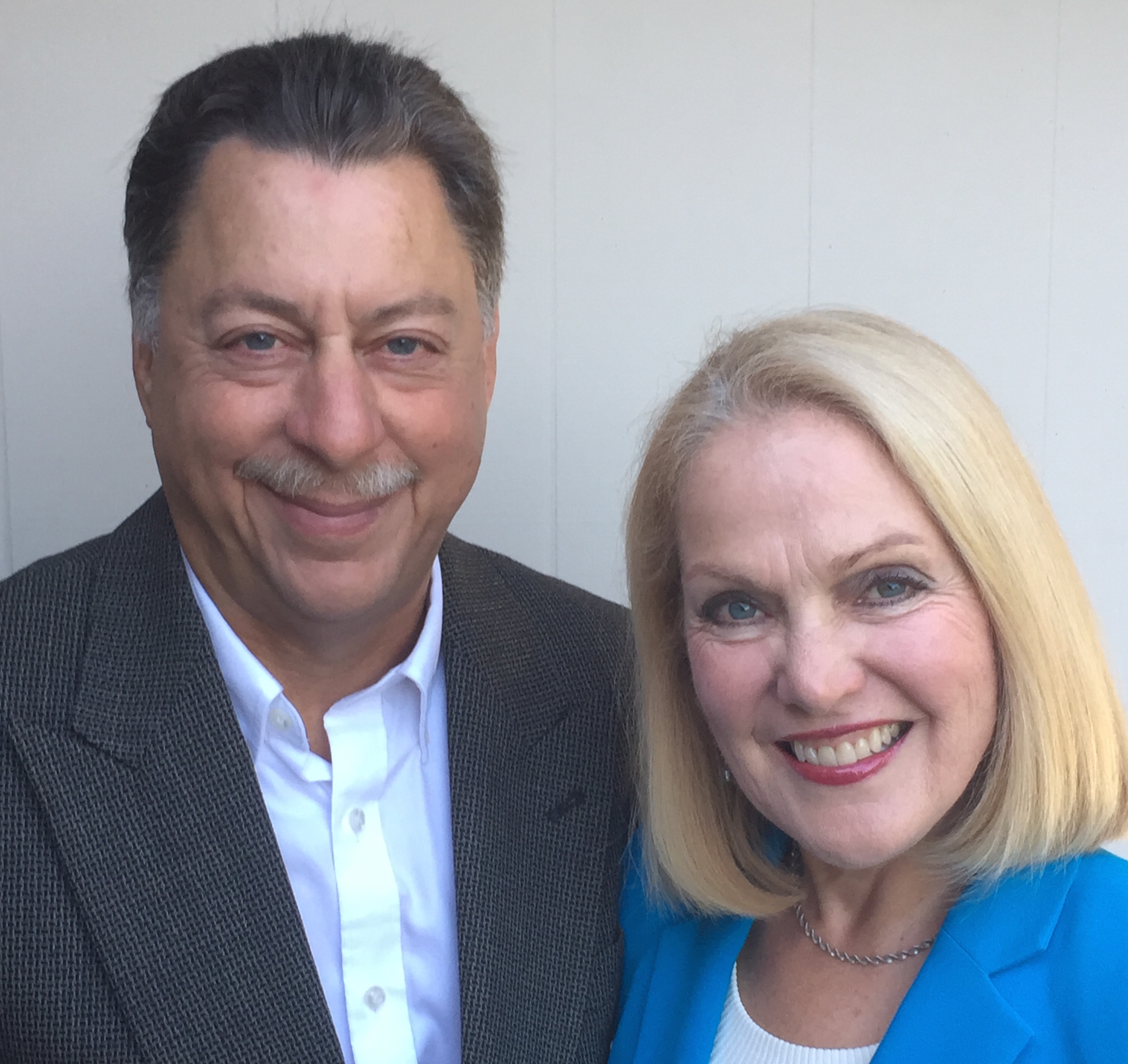
Dr. Mikol Davis and Carolyn Rosenblatt, co-founders of AgingInvestor.com
Carolyn Rosenblatt, RN, Elder Law Attorney offers a wealth of experience with aging to help you create tools so you can skillfully manage your aging clients. You will understand your rights and theirs so you can stay safe and keep them safe too.
Dr. Mikol Davis, Psychologist, Gerontologist offers in depth of knowledge about diminished financial capacity in older adults to help you strategize best practices so you can protect your vulnerable aging clients.
They are the authors of "Succeed With Senior Clients: A Financial Advisors Guide To Best Practice," and "Hidden Truths About Retirement And Long Term Care," available at AgingInvestor.com offers accredited cutting edge on-line continuing education courses for financial professionals wanting to expand their expertise in best practices for their aging clients. To learn more about our courses click HERE
|

Jun 6, 2018 | aging investor
Most advisors understand that your aging clients have done estate planning and that at least some of their assets are in a family trust. If you have never discussed this state plan and trust with any client 65 and up, it's a necessity. Why?
Every person is at risk, at some point for losing the capacity to do the job of managing that family trust. The risk rises directly with aging. No matter how healthy and competent your client may be right now, and no matter how educated about finances, the risk remains. No one is immune. There could be a stroke, heart attack or other disabling illness that renders the client unable to do the tasks necessary for making financial decisions. And that most dreaded of all diseases, Alzheimer's can sneak up on anyone, with the chances of it being especially bad for a person 85 and up. Did you know that the odds of having Alzheimer's disease are about one in three, at least, by age 85? It’s downright scary.
Here is what every advisor needs to know about your client's appointed successor on the trust: you have to meet that person and establish a relationship with him or her. Otherwise, you will be groping in the dark if an emergency or cognitive impairment happens to your client.
When is the right time to find out who the successor trustee is if you don't already know? We recommend bringing up the subject at or near retirement. Your client is very unlikely to say to you, "Hey advisor, I'm retiring soon and we'd best discuss what happens if I lose my marbles". Not a chance of that, so we suggest you take the lead.
Here are the points that your client may resist, but that you need to bring up and some suggested ways to do that. This is a script you might use:
- At retirement, we all need to take a look at the long run, and how we could age. It is possible that any of us could become physically or mentally disabled at some point in the future. I need to know which people you trust and have appointed to take over for you in the event of an emergency or disability.
- Let's talk about the last time your estate plan was reviewed or updated. Are you still comfortable with the person you appointed to be your successor trustee? If so, I need to meet him/her at least by phone. In case of emergency, I need to be able to discuss your portfolio with your appointee.
- As a responsible person, I'm sure you would not want to leave managing your portfolio to chance should you have an accident or disabling illness. I need to get your written permission to communicate with your estate planning attorney and your successor trustee. I have a sample letter here for you to sign, granting that permission to me in case of emergency or illness. Does this look all right to you?
You can learn more about best practices with your aging clients at AgingInvestor.com where we cover the gamut of things you are likely to see. Get your Ten Red Flags of Diminished Capacity Checklist here.
|
|
Dr. Mikol Davis and Carolyn Rosenblatt, co-founders of AgingInvestor.com
Carolyn Rosenblatt, RN, Elder Law Attorney offers a wealth of experience with aging to help you create tools so you can skillfully manage your aging clients. You will understand your rights and theirs so you can stay safe and keep them safe too.
Dr. Mikol Davis, Psychologist, Gerontologist offers in depth of knowledge about diminished financial capacity in older adults to help you strategize best practices so you can protect your vulnerable aging clients.
They are the authors of "Succeed With Senior Clients: A Financial Advisors Guide To Best Practice," and "Hidden Truths About Retirement And Long Term Care," available at AgingInvestor.com offers accredited cutting edge on-line continuing education courses for financial professionals wanting to expand their expertise in best practices for their aging clients. To learn more about our courses click HERE
|