Nov 15, 2018 | aging, aging investor, cost of aging, cost of long term care, custodial care, declining health, elder investor, elderly, finances for elders, financial advisors, financial capacity, financial judgement, handling money for aging parents, handling money for seniors, health, investor, long term care, seniors finances
Your clients are getting ready for retirement. You’ve done the calculations, balanced the portfolio and advised them of what income to expect. You’ve discussed how much spending is ok. You used your program and your analysis was thorough. You’ve done your job, right?
Not exactly. There is probably no algorithm nor program that will calculate your client’s individual profile of health risks that will likely lead to the expense of long term care. That can be a whopper. Maybe you’ve suggested long term care insurance. Most people don’t choose to buy it. For those who do, the benefits are limited and the “elimination period” (deductible) is thousands of dollars. There go your careful calculations. At least 90% of folks don’t have that coverage. Now what?
But how can you predict what’s going to happen to anyone’s health in retirement, you ask. You can’t be precise, but you surely can make some rational observations and give advice accordingly. Those observations consist of two parts: what you can see with your own eyes and what you can glean by asking a few basic questions. If you think asking any client about their health conditions is too nosy or not your job, consider that if the client needs long term care and runs out of money because of it, they’re not going to think much of you. And the cost can wipe out their security.
Asking about health issues is not nosy at all. Rather, it’s what any smart advisor planning for longevity must do. Let’s not keep pretending that everyone stays the same physically and mentally from the start of retirement to end of life. Our bodies go through wear and tear and things break down. Cognitive decline affects at least a third of people who reach the age of 85. The risk of Alzheimer’s disease keeps climbing after that. Now, what was that life expectancy you were using in your calculation? Was it age 99?
Let’s start with what you can see in your client with your own eyes. (If they’re not in front of you, perhaps Skype is an option). Is your client obese, as about 40% of the U.S. population is? This leads to heart disease, stroke, and diabetes, among other diseases and conditions. The medical care people receive in many cases will save them from dying but they then live with disabilities. And yes, they will be very likely to need expensive long term care. Neither health insurance nor Medicare will cover long term care. Such help as a part time caregiver at home is how most folks start out with long term care. Your client pays out of pocket most of the time. Did you calculate how much it costs as well as how long they will likely need it? If they have multiple medical conditions, and have started long term care, they’ll probably continue to need some form of it for all their remaining years.
Find out what you may not know from simply observing your client’s appearance by asking questions. You can make your own list or get a health care provider to help you with a few targeted questions. You will need to educate your client as to the reason why you need this information. It’s to help them plan for how much to save in their retirement years.
Here are some examples of basic questions that can help you predict the need for possible long term care:
- How’s your health these days? Has a doctor told you that you have any long term conditions?
- Are you taking medications? What are they for?
- Do you smoke?
- Are you concerned at all about any health issues you have at this time?
- Do you recall your parents’ ages when they died?
Your aging clients will not be eager to talk about the potential need for long term care. When you told them about what to expect for “out of pocket medical costs in retirement”, you did not give them a figure that included long term care. Long term care is not “medical” according to Medicare. Rather, it is called “custodial care”. The client probably will not bring it up, so you must do this.
When you have done your observations and gotten answers to your health-risk related questions at least there is a place to start a meaningful conversation. You can give them figures as to the cost of typical kinds of care, such as a non-medical home care worker. We at AgingInvestor.com recommend starting your projections at age 80 as to when a person might need physical help. Many of us know someone who did require help with at least some part of his or her life at that age. Then you can talk about how any condition your client identifies for you, such as high blood pressure, diabetes, etc. as shortening normal life expectancy and increasing the risk for needing help. If your client already has difficulty with some normal daily activity such as walking or bathing, they are definitely at high risk for needing paid help sooner than a person without these problems.
Clients may be completely unaware of such things as the hourly cost of a home care worker, what assisted living costs each month and what home modifications cost if they are able to remain in their own home. You can find a thorough discussion of these and many other parts of long term care in our book, Hidden Truths About Retirement & Long Term Care, written specifically for financial advisors like you.
Every conscientious advisor needs to wake up to the reality that your retirement income calculator omits the reality check of health problems. We’re not talking about nursing homes, but every other kind of care and help most people will need as they age. If you do want to help clients who are reaching retirement age to plan realistically, include the health risks you can see or learn about by asking.
By Carolyn L. Rosenblatt, RN, Elder law attorney, AgingInvestor.com

Jun 6, 2018 | aging investor
Most advisors understand that your aging clients have done estate planning and that at least some of their assets are in a family trust. If you have never discussed this state plan and trust with any client 65 and up, it's a necessity. Why?
Every person is at risk, at some point for losing the capacity to do the job of managing that family trust. The risk rises directly with aging. No matter how healthy and competent your client may be right now, and no matter how educated about finances, the risk remains. No one is immune. There could be a stroke, heart attack or other disabling illness that renders the client unable to do the tasks necessary for making financial decisions. And that most dreaded of all diseases, Alzheimer's can sneak up on anyone, with the chances of it being especially bad for a person 85 and up. Did you know that the odds of having Alzheimer's disease are about one in three, at least, by age 85? It’s downright scary.
Here is what every advisor needs to know about your client's appointed successor on the trust: you have to meet that person and establish a relationship with him or her. Otherwise, you will be groping in the dark if an emergency or cognitive impairment happens to your client.
When is the right time to find out who the successor trustee is if you don't already know? We recommend bringing up the subject at or near retirement. Your client is very unlikely to say to you, "Hey advisor, I'm retiring soon and we'd best discuss what happens if I lose my marbles". Not a chance of that, so we suggest you take the lead.
Here are the points that your client may resist, but that you need to bring up and some suggested ways to do that. This is a script you might use:
- At retirement, we all need to take a look at the long run, and how we could age. It is possible that any of us could become physically or mentally disabled at some point in the future. I need to know which people you trust and have appointed to take over for you in the event of an emergency or disability.
- Let's talk about the last time your estate plan was reviewed or updated. Are you still comfortable with the person you appointed to be your successor trustee? If so, I need to meet him/her at least by phone. In case of emergency, I need to be able to discuss your portfolio with your appointee.
- As a responsible person, I'm sure you would not want to leave managing your portfolio to chance should you have an accident or disabling illness. I need to get your written permission to communicate with your estate planning attorney and your successor trustee. I have a sample letter here for you to sign, granting that permission to me in case of emergency or illness. Does this look all right to you?
You can learn more about best practices with your aging clients at AgingInvestor.com where we cover the gamut of things you are likely to see. Get your Ten Red Flags of Diminished Capacity Checklist here.
|
|
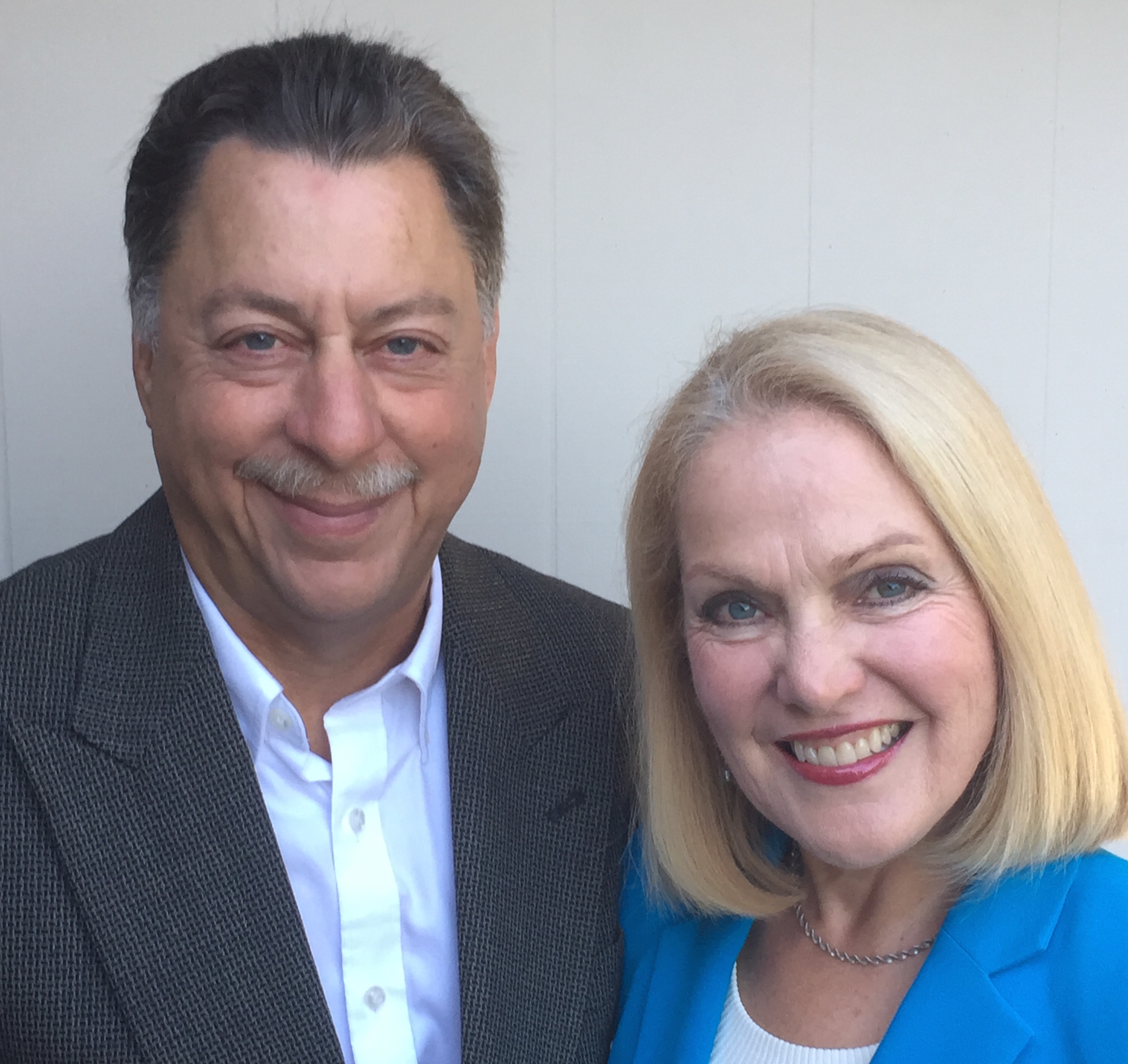
Dr. Mikol Davis and Carolyn Rosenblatt, co-founders of AgingInvestor.com
Carolyn Rosenblatt, RN, Elder Law Attorney offers a wealth of experience with aging to help you create tools so you can skillfully manage your aging clients. You will understand your rights and theirs so you can stay safe and keep them safe too.
Dr. Mikol Davis, Psychologist, Gerontologist offers in depth of knowledge about diminished financial capacity in older adults to help you strategize best practices so you can protect your vulnerable aging clients.
They are the authors of "Succeed With Senior Clients: A Financial Advisors Guide To Best Practice," and "Hidden Truths About Retirement And Long Term Care," available at AgingInvestor.com offers accredited cutting edge on-line continuing education courses for financial professionals wanting to expand their expertise in best practices for their aging clients. To learn more about our courses click HERE
|

Apr 18, 2018 | aging, aging investor, diminished cognition, elder investor, elderly, finances for elders, financial advisors, financial capacity, financial elder abuse, financial judgement, handling money for aging parents, handling money for seniors, seniors finances
It seems that regulators are fond of creating new mandates for you without telling you how to implement them and what risks might be involved. The new FINRA rule that says you must "try" to get a trusted contact person (TCP) for new clients is illustrative.
First of all there is no firm requirement that you actually get a TCP for anyone. All you have to do is make an attempt. If the client says "no", you're out of luck in trying to solve any problem that may exist without anyone to call in the event of an issue you see. Such issues might include someone ripping off your client or your client really losing his marbles. The intent of the rule was good. The idea was to increase protections for vulnerable elders. It's just that the way clients act and the issues you are sure to see with one TCP have been ignored in regulators' creation of this mandate.
Research has given us important information about protecting elders from financial abuse. We know that family members are the most frequent abusers of elders. Guess who most elders would think of as a TCP? The family member, of course. The idea of a single TCP is flawed from the outset. If the idea is to keep your client financially safer, you don't want to be limited to the potential abuser as the TCP. That defeats the purpose.
Here at AgingInvestor.com we are on a mission to keep elders safer. We make every effort to fill in the blank places your regulators leave when they come up with a mandate like getting a TCP for your clients. Here are our recommendations on this subject and why we say what we say about TCPs.
First, we believe every advisor should not only "try" to get a TCP for every client--we think you should insist on it as a matter of your intelligent, proactive senior office policy. Every client, new and existing should be approached with a courteous, respectful explanation and request to name a TCP you can contact in case of need. You let clients know that you have a policy to protect them from potential predators who are out there trolling for your clients, particularly the seniors. You could write this explanation and request up and send it around or bring it up at every portfolio review.
Next, we recommend that you get not just one TCP for every client, but three. The reason for this is that since family members are often the abusers of vulnerable people, you need someone else to call if "sonny boy" is ripping off dad's account and dad is too impaired to realize it. "Sonny boy" just might be the one TCP his dad, your client named and you would then be stuck with no way to protect your client in that situation. Someone outside the family would be ideal. This could be the estate attorney, a competent friend, or a clergy person your client trusts. Any of them would need to be able to intervene when learning of suspected financial abuse of your client. A third TCP could be another family member your client also sees as trustworthy. With information going from the advisor to three people at once, the risk of abuse is lessened and the chances of effective action in the event of abuse are increased.
Finally, we recommend that you consider all the risks involved in a decision to reach out to the TCP when you see red flags of diminished capacity in your client, or when you see warning signs of financial abuse of your client. You do need a written internal office policy that directs you as to the observations, documentation and steps to take when an issue comes to your attention. Legally, you are probably on firm ground, carrying out the intent of the FINRA regulation. However, you don't want to set your client up for harm.
For instance, if the client is in the middle of a contentious divorce and the ex- spouse is the TCP, do you want to release information about your client's finances that could harm your client in the divorce proceeding? Give yourself time to discuss the options with other, knowledgeable people in your office, or group. The value of having a proactive office policy for aging clients in this situation is that you have others to ask and weigh in with their points of view.
If you are not sure about the red flags of diminished capacity and what you should look for, get your free downloadable checklist here. Likewise if you are not clear about classic warning signs of financial abuse get your free checklist for those here too.
Need help with that smart, proactive senior office policy? Ask for a consultation at AgingInvestor.com and get the guidance you need from our nurse-lawyer, geriatric psychologist team
Carolyn Rosenblatt, RN, Elder law attorney, AgingInvestor.com
<p><code> </code></p><div class="signature"><table style="border: 2px solid #999; border-style: solid; background-color: #f5fff5;"><tbody><tr><td style="width: 110px; vertical-align: text-top; align-content: center;"><div style="border: 1px solid #eee;"><img class="alignleft" src="http://www.aginginvestor.com/wp-content/uploads/2015/04/DavisRosenblattPublicityPhoto.jpg" alt="" width="123" height="116"></div></td><td><h4>Dr. Mikol Davis and Carolyn Rosenblatt, co-founders of AgingInvestor.com</h4><p>Carolyn Rosenblatt, RN, Elder Law Attorney offers a wealth of experience with aging to help you create tools so you can skillfully manage your aging clients. You will understand your rights and theirs so you can stay safe and keep them safe too.</p><p>Dr. Mikol Davis, Psychologist, Gerontologist offers depth of knowledge about diminished financial capacity in older adults to help you strategize best practices so you can protect your vulnerable aging clients.</p><p><a href="http://www.aginginvestor.com" target="_blank" rel="noopener">AgingInvestors.com</a> offers accredited cutting edge on-line continuing education courses for financial professionals wanting to expand their expertise in best practices for their aging clients. To learn more about our courses click <a href="https://agingparents.leadpages.co/ceu-choices/" target="_blank" rel="noopener">HERE</a></p></td></tr></tbody></table></div>

Mar 16, 2018 | cost of aging, cost of long term care, financial advisors
With the recent Texas Court of Appeals decision striking down the authority of the DOL to enforce its fiduciary standard, the industry remains enmeshed in its own conflict. Some firms embraced the concept of acting in a client's best interests for retirement accounts. Others fought it tooth and nail. What about your own clients if you are a broker and do not have to follow the DOL rule? Do you think no one is going to question you, your advice, or your commissions and fees?
With the amount of publicity generated in the long fight to get the rule passed in the first place, and the aftermath efforts to have it overturned, the public is more aware than ever of the need for transparency in what you recommend and in what advice you offer. Some clients may trust you and never ask a question about why you suggest a product, but don't count on that being universal. The public's perception of what you do is changing and in a sense, the cat is out of the bag.
In their marketing, firms that embraced the fiduciary standard can brag about it and when you have rejected the premise of prioritizing a client's best interest, you can't brag about it. In fact, prospects may be asking more and more often whether you are a fiduciary. What are you going to tell them?
Here at AgingInvestor.com, we educate advisors of all stripes about managing aging clients, particularly those with diminished capacity. Our associated site, AgingParents.com, is a resource for those with aging loved ones. At AgingParents.com, we advise and counsel families about watching over their aging parents' finances and we strongly encourage them to review what their elders are doing with their money. When they follow our advice, they are going to be looking at what you've done with the elder's portfolio. If you adhere to a fiduciary standard, no problem is likely. If you don't, beware. Your client's heirs are gradually assuming power over their parents' investments as their loved ones age and become less capable of financial decision making. Dementia is a frequent cause of loss of capacity. Often the adult children can take over as successor trustees or agents who are appointed as power of attorney long before the parent passes.
About 70% of women change advisors after the death of their spouses. Their adult kids will be encouraging them to find someone with a fiduciary standard. Perhaps large numbers of adult children will switch advisors before the death of the patriarch, once they scrutinize what choices you have recommended. They may even get a second opinion about your work.
This is merely a caution to any advisor who does not adopt a fiduciary standard, regardless of whether it is mandated legally. The next generation is looking at a parent's portfolio with fresh eyes and you may lose clients because of this. Keep the older clients in your book for life and future generations by staying the course as an advocate and making decisions in their best interest, always.
<a href="https://agingparents.lpages.co/leadbox/14351a433f72a2%3A160053496b46dc/5696133603000320/" target="_blank" style="background: rgb(50, 100, 163); color: rgb(255, 255, 255); text-decoration: none; font-family: Helvetica, Arial, sans-serif; font-weight: bold; font-size: 16px; line-height: 20px; padding: 10px; display: inline-block; max-width: 300px; border-radius: 20px; text-shadow: rgba(0, 0, 0, 0.25) 0px -1px 1px; box-shadow: rgba(255, 255, 255, 0.5) 0px 5px 3px inset, rgba(0, 0, 0, 0.5) 0px 5px 3px;">10 Hidden Truths of Retirement and Long Term Care - Checklist</a><script data-leadbox="14351a433f72a2:160053496b46dc" data-url="https://agingparents.lpages.co/leadbox/14351a433f72a2%3A160053496b46dc/5696133603000320/" data-config="%7B%7D" type="text/javascript" src="https://agingparents.lpages.co/leadbox-1522784019.js"></script>

Feb 13, 2018 | aging, aging investor, cost of aging, elder investor, finances for elders, financial advisors, financial capacity, financial elder abuse, financial judgement, finra, handling money for aging parents, handling money for seniors, investor, power of attorney, senior investor, seniors finances
The regulators are trying. They want to help advisors protect aging clients from financial abuse. They don't want you to fear doing something wrong if you refrain from handing over assets to what looks like an abuser. But not living in the real world of how to stop abuse by determined abusers has its disadvantages. The new rule tells you who is at risk (elders and other impaired adults). It tells you that you just need a reasonable suspicion of abuse, not unquestioned evidence. It tells you what a temporary hold is and how long it can be: 15 days, 25 at max. Sounds ok. Until you actually know how long it takes for the legal steps to halt abuse.
Here at AgingInvestor.com we see this problem in the world of families and those who want to rip them off, not from inside an institutional setting or financial services firm. The world from here looks different from what FINRA imagines. There is usually no way anyone can stop abuse in 15 days or even in 25. We explain. In a real case, the kind this rule is designed to affect, we worked with family in an unfortunately typical situation of an unscrupulous son trying to squeeze money out of his 90 year old father who had dementia. The advisor had seen the pattern. He knew the son never did well on his own and he had been given handouts from dad for years. Dad, whom we'll call Joe, lived in a nursing home. He needed help with everything and his memory was shot. He was easily confused. Yet his advisor never questioned his ability to effect financial transactions. But when the son, we'll call Jake, brought his frail father into the advisor's office demanding $50,000 plus access to the cash management account, the advisor was sure it was abuse. He knew his client was too confused to disagree with Jake. The advisor dragged his feet and didn't provide the check his client had asked for, pushed by Jake, Over a month later, he felt obligated to give his client the $50K, which of course Jake got right away from Joe. The advisor didn't have Rule 2165 but he knew that Joe's daughter Rhoda was the appointed person as power of attorney and successor trustee. He didn't have permission to contact her, so he did it, as he said "on the QT". Rhoda was upset. She called us for advice. She found us through her own advisor who had the sense to send her to a resource who could answer her questions and guide her.
First we looked at the trust and what it said about Joe being removed as trustee or resigning as such. Two doctor's letters were needed, verifying that he was no longer competent to manage finances if he was to be removed as trustee. We advised her to get those letters asap. Rhoda lived out of state from Joe. She found the doctors and flew into town to take him to the appointments. Fortunately the doctors were able to say that Joe had indeed lost his capacity for handling his money. A couple of weeks after the appointments, Rhoda got the letters she needed. She then had to take them to Joe's estate planning attorney, who met with her and eventually gave her a Certificate of Trust, showing that she was now the successor to Joe and was in charge of his money. She then had to get the Certificate to his advisor's firm, which had to review it and after two weeks, they accepted it. Only then was Rhoda able to stop any further disbursements from Joe's account without her permission. Her brother was furious. His gravy train had stopped. The advisor had sent a debit card for the cash management account Joe requested under pressure to Rhoda, not to Joe. Rhoda destroyed it. Abuse stopped in its tracks.
Reality check: this scenario of stopping abuse involved a lawyer, an elder willing to go to two doctors, the cooperation of two doctors, travel between states, the approval of the Certificate of Trust with Rhoda's name on it through a process by the advisor's firm and a lot of time spent by Rhoda. The entire matter of protecting Joe from abuse took three months. Rule 2165 supposedly authorizes advisors to "take immediate action" when abuse is reasonably suspected. What is myth rather than reality is how long it takes to actually protect the elder and stop a predator. This was a case of undue influence by Jake who had a history of manipulating his father. And the new rule would not have helped at all. Jake would have happily waited for a mere 15 days to get his hands on the cash. Rhoda couldn't possibly get Joe removed as his own trustee without the doctors' letters. This sort of prerequisite of needing doctors to verify incapacity is commonly required in typical trusts. Perhaps the drafters of Rule 2165 never had to go through the process described here in their own lives. If they had, the new rule would provide for a 90 day authorization to hold transactions, rather than a maximum of 25 days. Maybe going forward when the myth gives way to reality, the rule will be revised. For now it is inadequate.
|
|
Dr. Mikol Davis and Carolyn Rosenblatt, co-founders of AgingInvestor.com
Carolyn Rosenblatt, RN, Elder Law Attorney offers a wealth of experience with aging to help you create tools so you can skillfully manage your aging clients. You will understand your rights and theirs so you can stay safe and keep them safe too.
Dr. Mikol Davis, Psychologist, Gerontologist offers in depth of knowledge about diminished financial capacity in older adults to help you strategize best practices so you can protect your vulnerable aging clients.
They are the authors of "Succeed With Senior Clients: A Financial Advisors Guide To Best Practice," and "Hidden Truths About Retirement And Long Term Care," available at AgingInvestor.com offers accredited cutting edge on-line continuing education courses for financial professionals wanting to expand their expertise in best practices for their aging clients. To learn more about our courses click HERE
|