Do Your Older Clients A Favor: Warn Them About This Scam

Do Your Older Clients A Favor: Warn Them About This Scam

Attempts to scam money from seniors never stop. And the thieves keep getting better at thinking up ways to extract information from older folks. Here’s another one—a different phony Medicare trick.

People hear ads on TV about genetic testing and how it can predict disease and protect them. They also hear ads that they’re not getting all the Medicare benefits they deserve. Who doesn’t want to get all the benefits they should get? It’s a perfect moment for scammers.

They may call your retirement-aged client and tell them that new genetic testing is available that Medicare will pay for, worth thousands of dollars. Of course, all your client has to do is to give them their Social Security number and the free testing kit, signup papers, or other inducement will be mailed to them immediately.

Let’s be clear: Medicare does not pay for genetic testing as a “new benefit”. If for any reason such testing were needed, a physician would order it and explain why it was needed. Such testing would not be ordered without any discussion with one’s MD.

Your client should never, ever give out a Social Security number or other personal information such as date of birth or address over the phone. Your client must never accept a genetic testing kit not ordered by one’s own doctor. If it is accepted and the cheek swab, DNA test or anything else is given to the sender, your client may be billed directly, potentially incurring a debt for thousands of dollars. It would be a sad day for your client to mail in a claim for reimbursement to Medicare for a fake benefit and realize that the claim is denied. They’re on the hook for the full price.

These kinds of scams are used to get information to commit identity theft and Medicare fraud. No matter how smart your client is, anyone can be caught off guard and tricked.

What Advisors Can Do

Here are some ways to let your client know you care about their financial safety.

  1. Prepare a friendly form letter to send to all clients over age 65 and inform them about this scam. Warn them not to fall for it.
  2. Keep abreast of all the latest scams in over 30 categories at the Federal Trade Commission, which explains what they are and how they work. Keep clients advised.

If identity theft has happened, direct your client to the Federal Trade Commission website for instruction on what to do.

Carolyn Rosenblatt, RN, Elder law attorney, AgingInvestor.com

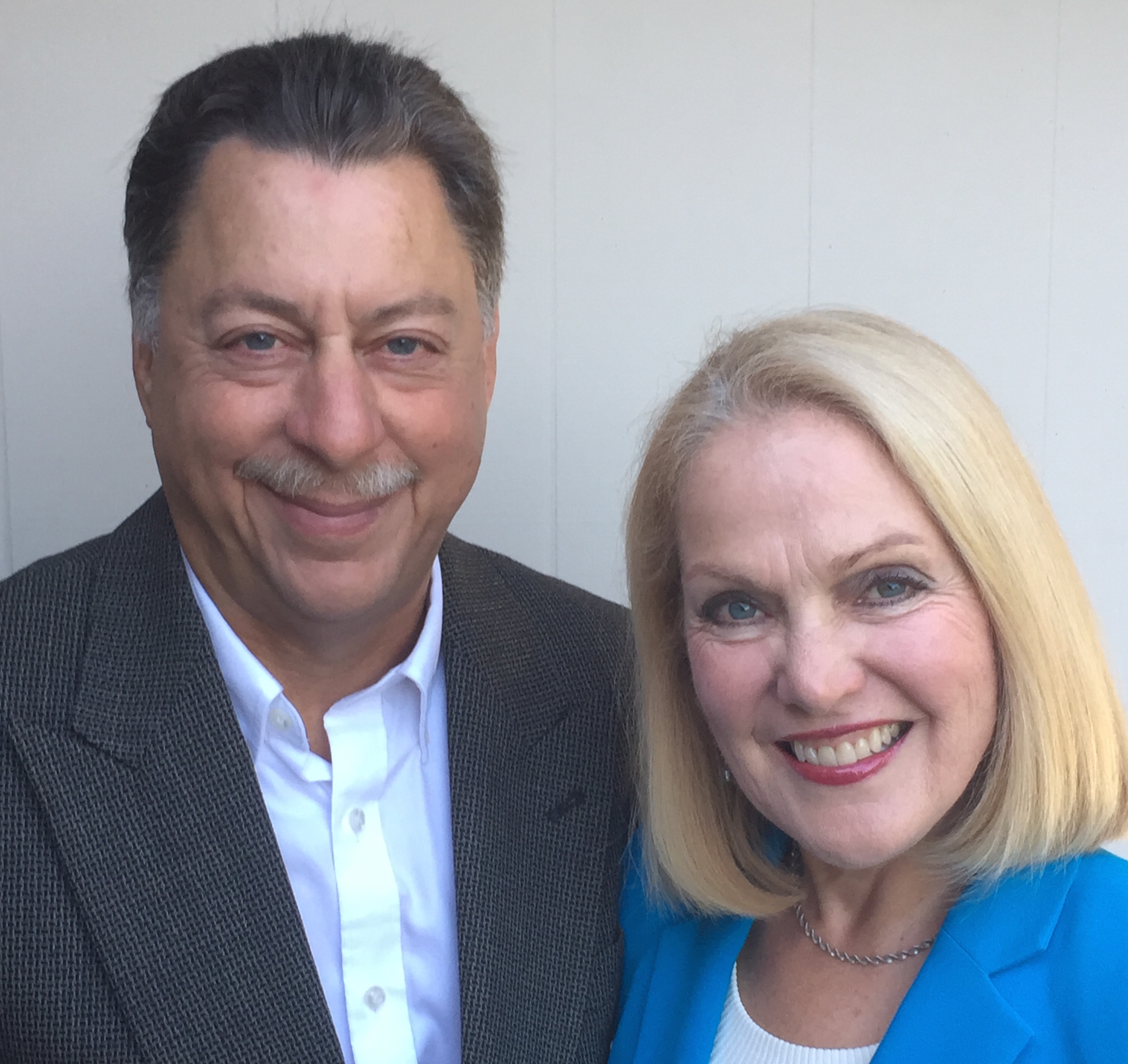
About Carolyn Rosenblatt and Dr. Mikol Davis

Carolyn Rosenblatt and Dr. Mikol Davis are co-authors of The Family Guide to Aging Parents (www.agingparents.com) and Succeed With Senior Clients: A Financial Advisors Guide To Best Practices. Rosenblatt, a registered nurse and elder law attorney, has more than 45 years combined experience in her professions. She has been quoted in the New York Times, Wall Street Journal, Money magazine and many other publications. Davis, a clinical psychologist and gerontologist, has more than 44 years experience as a mental health provider. In addition to serving his patients, Davis creates online courses and products to assist professionals and the public with understanding aging issues. Rosenblatt and Davis have been married for 34 years.


The Hole in The Senior Safe Act: Why Briefly Holding Transactions Is Not Enough To Stop Abuse

The Hole in The Senior Safe Act: Why Briefly Holding Transactions Is Not Enough To Stop Abuse

 The Senior Safe Act allows you to hold transactions when you suspect financial abuse of a client. The Act is designed, at least in theory, to allow time for the trusted contacts you have on file to take appropriate action. Many of those victimized by predators or manipulated by unscrupulous family have dementia and have lost their judgment about what makes sense financially. The Act urges you to get trusted contacts and provides that you are not breaking privacy rules to contact them in the reasonable belief that your client is being financially abused. The length of time you can hold a requested transaction can be as long as a month. This is where the Senior Safe Act has missed the mark.

 Let’s look at the reality of impaired elders who are in charge of their wealth on the family trust. The trust is in order, and if the elder recognizes that he or she is experiencing decline in mental ability, that trustee may choose to resign. Simple. But that is not what happens in too many cases. For many persons who have cognitive decline and dementia, the elder does not recognize that he is impaired at all. “I feel fine!” he tells his worried family. When asked to resign as trustee, having total control over (theoretically) millions of dollars in a trust, the elder flatly and stubbornly refuses. Meanwhile, financial abuse by predatory people can continue unabated.

 When an older person experiences cognitive decline, it typically has a very slow onset. Short-term memory loss does not raise enough red flags for those closest to the elder to take any action. “She’s just getting old” they say dismissively. But memory loss is often the first and earliest warning sign of Alzheimer’s disease, the most common form of dementia. The odds of having Alzheimer’s disease by age 85 are at least one in three.  Think about your own older clients. Some live well beyond age 85. The risk of dementia rises with age. Short-term memory loss interfering with daily life is not a normal part of aging.  Financial abuse and cognitive impairment often go together.

 When financial abuse reaches a visible level, the advisor may do what the law allows and call the trusted contact person, usually an adult child.  The advisor hopes that the call will somehow trigger something and the abuse will be stopped. But here is a reality check: The family can’t accomplish anything needed in two weeks or even a month if you hold transactions then. Here is a real case example of just such a situation, showing how long it really did take.

 In our work with a family at AgingParents.com we saw rampant financial abuse of an elder by a family member. The elder had dementia but had not been formally diagnosed by his doctor. Over 70% of his income was going to the predator. He was asked to resign as trustee by his two adult children, who were reasonably worried that he was going to give away all his cash and further encumber his home. The dad, whom we’ll call Gene, had been developing dementia for at least two years. He felt obligated to the predator and was totally powerless in resisting her demands for money. He just kept writing checks, draining his own resources. It was clearly a case of financial manipulation.

 We were involved in working to persuade Gene to allow what his family trust provided: to have his daughter, Jennie, become the successor trustee.  He agreed, then reneged. He accepted the logic and then refused to accept it. The kids had no choice but to use the law to take over control. Their father was too stubborn to resign as trustee when asked, even with the entire family presenting a united front, asking and respectfully begging.

 The trust, like many such documents provided that Gene could be removed as trustee by his appointed successor, his daughter, after two physicians had declared him to be incapacitated for handling his own finances. A court decision was not required. However, getting him to two doctors willing to assess him and put their observations in writing was a challenge that took months to accomplish. The total time spent getting the change of trustees accomplished according to the terms of Gene’s trust was eight months.

 His children were the trusted contacts in the advisor’s file. They knew about the abuse and were in agreement with the advisor that Gene had to stop being the trustee. The adult children had to hire consultants (AgingParents.com), have meetings, hire an attorney, and try various methods to get the job done.  Their time energy and thousands of dollars were expended to prevent an even worse outcome, which was being left to support their aging father if he were to totally deplete his own funds.

The takeaways:

  1. Though well intended, we do not expect that the Senior Safe Act will do much to stop financial abuse because of the short time allowed for a financial professional to hold transactions. In Gene’s case, the predator would have been happy to wait a mere two weeks or a month before resuming the financial manipulation of Gene.
  2. Know that any older impaired client may not understand that he or she is cognitively impaired and will ignore pleas to resign as trustee with total control over any family trust.
  3. If you see that an older client is showing signs of cognitive decline, do not wait until it gets worse. Reach out at the time of your first suspicions of trouble.  The family or other trusted persons may well have a better opportunity to persuade an elder to transfer power over finances to the appointed successor before complete loss of capacity. Expect this to take time.

In the case described above as a result of ongoing financial abuse, nearly all of Gene’s cash was depleted during the eight months of effort on the part of his adult children to have him removed.  The advisor did the right thing but too much of Gene’s cash was depleted in the period when the abuser could keep manipulating him for those months of effort by family to have him removed as trustee.

By Carolyn L. Rosenblatt, RN, Elder law attorney, AgingInvestor.com 

If you are seeing abuse and feel lost about how to stop it, contact us at AgingInvestor.com for a confidential consultation with our nurse-lawyer, geriatric psychologist team so you can do everything possible to protect your vulnerable client.


Three Things Every Advisor Must Do With Cognitively Impaired Clients

Three Things Every Advisor Must Do With Cognitively Impaired Clients

Everyone is going to have someone in your book, sooner or later, who has cognitive decline. Studies tell us that the average advisor has at least 7 clients with some form of cognitive impairment now. We’d bet that when you became an advisor, your education did not give you guidance about what to do when you see the warning signs of decline in a client’s mental function. With increasing longevity, we have a problem like never before.

What are you supposed to do about it? Isn’t this the family’s problem? In truth, it’s not just the family’s issue—it’s an issue for everyone in an elder’s life, including the financial advisor. There are three essentials everyone should be doing to keep yourself and your client safer.

  1. For openers, you, the advisor must be familiar with the warning signs of cognitive impairment. At AgingInvestor.com, we offer a free downloadable checklist of these red flags, so you can keep it and use it as a guide. Please do. You can’t ignore these signs, as they are very likely to worsen over time. When your client is too “out of it” to make decisions, you are in trouble.
  2. Have two or three trusted contacts in your client’s file. If you have never asked for even one, now is the time. Make it part of your office policy, your task at a portfolio review, or what you decide to do this week because you are a smart, plan-ahead person. Why two or three? Because family members are often named first and family, unfortunately, are the ones who steal from aging folks most often. One of the contacts should be outside the family.
  3. Get written permission from your client to speak to their estate planning attorney, their accountant and any other professional involved in managing their affairs. This can be extremely helpful to you as a client begins to show those red flags. All of the professionals can act together to protect the client, get an appointed surrogate decision maker in place or otherwise reduce the risks of financial fraud and abuse. All it takes to give permission is a letter from your client, a simple but very important step you must take. Draft it for the client, ask him or her to sign and do it. 
                                                                                                                     
    The point of this action is to protect a vulnerable client from getting ripped off, from failing to attend to financial business, and from the neglect of basics that often accompanies this kind of mental impairment. You don’t need to be a hero. You do need to be a professional in the way you treat these older clients. And remember that if the client is “losing his marbles” and money gets drained by predators, decimating the portfolio, the family may look to you if you failed altogether to act. Remember, their inheritance could be at stake.

For more on working with your aging clients, check out our book, Succeed With Senior Clients: A Financial Advisor’s Guide to Best Practices.


Dr. Mikol Davis and Carolyn Rosenblatt, co-founders of AgingInvestor.com

Carolyn Rosenblatt, RN, Elder Law Attorney offers a wealth of experience with aging to help you create tools so you can skillfully manage your aging clients. You will understand your rights and theirs so you can stay safe and keep them safe too.

Dr. Mikol Davis, Psychologist, Gerontologist offers in depth of knowledge about diminished financial capacity in older adults to help you strategize best practices so you can protect your vulnerable aging clients.

They are the authors of "Succeed With Senior Clients: A Financial Advisors Guide To Best Practice," and "Hidden Truths About Retirement And Long Term Care," available at AgingInvestor.com offers accredited cutting edge on-line continuing education courses for financial professionals wanting to expand their expertise in best practices for their aging clients. To learn more about our courses click HERE

The Truth About Getting A Trusted Contact Person for Your Clients

The Truth About Getting A Trusted Contact Person for Your Clients

It seems that regulators are fond of creating new mandates for you without telling you how to implement them and what risks might be involved. The new FINRA rule that says you must "try" to get a trusted contact person (TCP) for new clients is illustrative.

First of all there is no firm requirement that you actually get a TCP for anyone. All you have to do is make an attempt. If the client says "no", you're out of luck in trying to solve any problem that may exist without anyone to call in the event of an issue you see. Such issues might include someone ripping off your client or your client really losing his marbles. The intent of the rule was good. The idea was to increase protections for vulnerable elders. It's just that the way clients act and the issues you are sure to see with one TCP have been ignored in regulators' creation of this mandate.

Research has given us important information about protecting elders from financial abuse. We know that family members are the most frequent abusers of elders. Guess who most elders would think of as a TCP? The family member, of course. The idea of a single TCP is flawed from the outset. If the idea is to keep your client financially safer, you don't want to be limited to the potential abuser as the TCP. That defeats the purpose.

Here at AgingInvestor.com we are on a mission to keep elders safer. We make every effort to fill in the blank places your regulators leave when they come up with a mandate like getting a TCP for your clients. Here are our recommendations on this subject and why we say what we say about TCPs.

First, we believe every advisor should not only "try" to get a TCP for every client--we think you should insist on it as a matter of your intelligent, proactive senior office policy. Every client, new and existing should be approached with a courteous, respectful explanation and request to name a TCP you can contact in case of need. You let clients know that you have a policy to protect them from potential predators who are out there trolling for your clients, particularly the seniors. You could write this explanation and request up and send it around or bring it up at every portfolio review.

Next, we recommend that you get not just one TCP for every client, but three. The reason for this is that since family members are often the abusers of vulnerable people, you need someone else to call if "sonny boy" is ripping off dad's account and dad is too impaired to realize it. "Sonny boy" just might be the one TCP his dad, your client named and you would then be stuck with no way to protect your client in that situation.  Someone outside the family would be ideal. This could be the estate attorney, a competent friend, or a clergy person your client trusts. Any of them would need to be able to intervene when learning of suspected financial abuse of your client. A third TCP could be another family member your client also sees as trustworthy.  With information going from the advisor to three people at once, the risk of abuse is lessened and the chances of effective action in the event of abuse are increased.

Finally, we recommend that you consider all the risks involved in a decision to reach out to the TCP when you see red flags of diminished capacity in your client, or when you see warning signs of financial abuse of your client.  You do need a written internal office policy that directs you as to the observations, documentation and steps to take when an issue comes to your attention. Legally, you are probably on firm ground, carrying out the intent of the FINRA regulation. However, you don't want to set your client up for harm.

For instance, if the client is in the middle of a contentious divorce and the ex- spouse is the TCP, do you want to release information about your client's finances that could harm your client in the divorce proceeding? Give yourself time to discuss the options with other, knowledgeable people in your office, or group. The value of having a proactive office policy for aging clients in this situation is that you have others to ask and weigh in with their points of view.

If you are not sure about the red flags of diminished capacity and what you should look for, get your free downloadable checklist here. Likewise if you are not clear about classic warning signs of financial abuse get your free checklist for those here too.

Need help with that smart, proactive senior office policy? Ask for a consultation at AgingInvestor.com and get the guidance you need from our nurse-lawyer, geriatric psychologist team


Carolyn Rosenblatt, RN, Elder law attorney, AgingInvestor.com

<p><code> </code></p><div class="signature"><table style="border: 2px solid #999; border-style: solid; background-color: #f5fff5;"><tbody><tr><td style="width: 110px; vertical-align: text-top; align-content: center;"><div style="border: 1px solid #eee;"><img class="alignleft" src="http://www.aginginvestor.com/wp-content/uploads/2015/04/DavisRosenblattPublicityPhoto.jpg" alt="" width="123" height="116"></div></td><td><h4>Dr. Mikol Davis and Carolyn Rosenblatt, co-founders of AgingInvestor.com</h4><p>Carolyn Rosenblatt, RN, Elder Law Attorney offers a wealth of experience with aging to help you create tools so you can skillfully manage your aging clients. You will understand your rights and theirs so you can stay safe and keep them safe too.</p><p>Dr. Mikol Davis, Psychologist, Gerontologist offers depth of knowledge about diminished financial capacity in older adults to help you strategize best practices so you can protect your vulnerable aging clients.</p><p><a href="http://www.aginginvestor.com" target="_blank" rel="noopener">AgingInvestors.com</a> offers accredited cutting edge on-line continuing education courses for financial professionals wanting to expand their expertise in best practices for their aging clients. To learn more about our courses click <a href="https://agingparents.leadpages.co/ceu-choices/" target="_blank" rel="noopener">HERE</a></p></td></tr></tbody></table></div>

Change Is Long Overdue For The Way You Manage Aging Clients

Change Is Long Overdue For The Way You Manage Aging Clients

Recently, we were invited to speak at the Buckingham Alliance annual conference where we gave the keynote address on the issues of managing aging clients. The average advisor has at least 7 clients right now with some form of cognitive impairment. Because of this, older clients often lack the ability to make safe financial decisions. This is why a change in the way advisors manage these clients must start now. We found that many conference attendees told us they were reluctant about bringing up the subject of their client's getting older and specifically when they had concerns about changes in their financial decision-making abilities. Most of us are conflict-averse when it comes to bringing up something like this that can be controversial.

With increasing longevity and its attendant risks, particularly of cognitive decline, it is imperative that advisors change the way business is done with the older client. Change isn’t easy for anyone. When advisors get used to doing things the way they've always done them, a shift can feel overwhelming. Most of us prefer to stick with what we know. If business is good, and no disasters have happened with the older folks in your book yet, you may think it’s ok just wait until "something happens" and then figure out what to do then.

Spoiler alert! "Something" is already happening! As people live longer and longer, we see more and more age-related brain changes, such as Alzheimer's disease or other forms of dementia. These changes in cognitive ability sneak up on you. The onset of dementia takes years in most cases. You might not even know what to look for. Don’t make the mistake of waiting until disaster strikes. Shouldn’t planning for the unexpected in all cases be a part of your job?

Here's the nitty-gritty: your clients are getting older and some of them, no matter how smart or accomplished, are going to be unable to make financial decisions. When they show signs of impairment, ignoring them and carrying on as if everything is fine is a dangerous risk. Here are some things that can happen if you don't take action.

You can get fired. If a family member of your clients tells you that the patriarch is making terrible decisions with money and money is being spent at a ridiculous rate, they may ask for your help. If you say, "I just manage the money" you will not look good. Adult children with the patriarch's power of attorney can and will get rid of you. This has really happened and with a HNW client's portfolio to boot.

You can be exposed to liability. You are supposed to know your client. That means you must be aware of things not being right with his decision-making. If you do nothing, thinking it's not your problem, an heir of that client could come after you because you failed to take any steps to keep your client financially safe. If the assets get drained, relatives will get angry. You must act reasonably. Doing nothing is unreasonable when you strongly suspect or know that a client is cognitively impaired.

Making basic changes in how you plan ahead for aging clients does not have to be extremely complicated. It does require that you identify all the clients over age 65, for example, and that you monitor them and their portfolios more often than you would younger clients. It requires that you learn what to look for when you think the older client is slipping. And it requires that you and your organization develop a clear path for escalation of a problem before financial abuse or other negative consequence happens.

If those in attendance at the conference went back to their offices and did just a few things differently than before, that is change. We hope raising the issues about older clients isn't just a conversation. More than thinking and talking is needed. We want you to ask yourself, "am I willing to change?" If you are and you need a start, use the free, downloadable checklist, The Ten Red Flags of Diminished Capacity so you can spot the warning signs. Those signs can be telling you, no more business as usual with this clients.


Dr. Mikol Davis and Carolyn Rosenblatt, co-founders of AgingInvestor.com

Carolyn Rosenblatt, RN, Elder Law Attorney offers a wealth of experience with aging to help you create tools so you can skillfully manage your aging clients. You will understand your rights and theirs so you can stay safe and keep them safe too.

Dr. Mikol Davis, Psychologist, Gerontologist offers in depth of knowledge about diminished financial capacity in older adults to help you strategize best practices so you can protect your vulnerable aging clients.

They are the authors of "Succeed With Senior Clients: A Financial Advisors Guide To Best Practice," and "Hidden Truths About Retirement And Long Term Care," available at AgingInvestor.com offers accredited cutting edge on-line continuing education courses for financial professionals wanting to expand their expertise in best practices for their aging clients. To learn more about our courses click HERE