

Are Your Own Clients Being Ripped Off By Scammers?

Are Your Own Clients Being Ripped Off By Scammers?

Is financial abuse happening to your clients right now? Of course, it is. There is no escaping it. A recent study puts the amount stolen from elders every year in our country at over $36B. With a problem as big as this, no group of elders is immune. If you took a survey of your existing clients all age 65 or older and asked them how many have ever been taken advantage of financially, you would be sure to get some clients who would admit to this. If you look at your own experience and count up any instance you know of, whether it is in your family, your neighborhood or your book of business, you will likely find some financial abuse as well.

Why Is This Important for You?

The amounts stolen, fraudulently taken or just snatched from the unwary, are shocking. Remember that when your client loses assets, you lose fees. Portfolios that shrink because of fraud from predators take money from you, a manager, too.

That is the most basic reason this should be important to you as a financial professional. Doing the right thing to keep your clients safe is certainly a motivator as well. It shows that you do care about them. And beyond that, the regulators are increasingly aware that financial professionals are in a position to take action and, sometimes, to stop and prevent financial abuse. They will soon get past merely urging you to take action and to report abuse. They will ultimately make it mandatory.

And we think you can do more proactively than merely to understand how to report abuse after the fact. It would be great to catch more criminals but that is extremely difficult in many cases because they are very clever at evading law enforcement. And since family members are the most frequent abusers, we have an added problem in that many elders are reluctant to report abuse by their own to law enforcement. Mom just won't call Adult Protective Services on her son, even when she knows he has stolen from her. We have seen this with our own eyes here at AgingInvestor.com.

There are many instances of scammers getting into relationships with aging folks by phone or on the internet. The "friendly" relationships become addictive. These thieves persuade the victim to withdraw funds from their accounts. This is where the advisor comes in. Unusual withdrawals are an important warning sign of elder abuse. And when the advisor notices this in a client's account there are choices available about stopping abuse. They include contacting a trusted other the elder has identified and warning them of what is happening. There should be more than one trusted person identified for every client. And by all means, contact Adult Protective Services and report it if you suspect fraud.

If you are worried about privacy rules, don't be. The regulators of your industry want you to report abuse. They want you to make every effort to keep aging clients financially safer. If you are not sure about privacy, create a special privacy document that specifically permits you to call a third party with your client's ok. We can help you do so if you need guidance or a model document.

Financial abuse of your aging clients is likely, sooner or later. Take a deeper dive in our book "Succeed With Senior Clients: A Financial Advisor’s Guide To Best Practices", written just for you, the financial advisor. See particularly the chapter "Financial Elder Abuse: How You Can Fight the Crime of the Century". It's available right now. Click HERE to get your copy today.

by Carolyn Rosenblatt, RN, Elder Law Attorney, & Dr. Mikol Davis, Gerontologist, co-founders of AgingInvestor.com
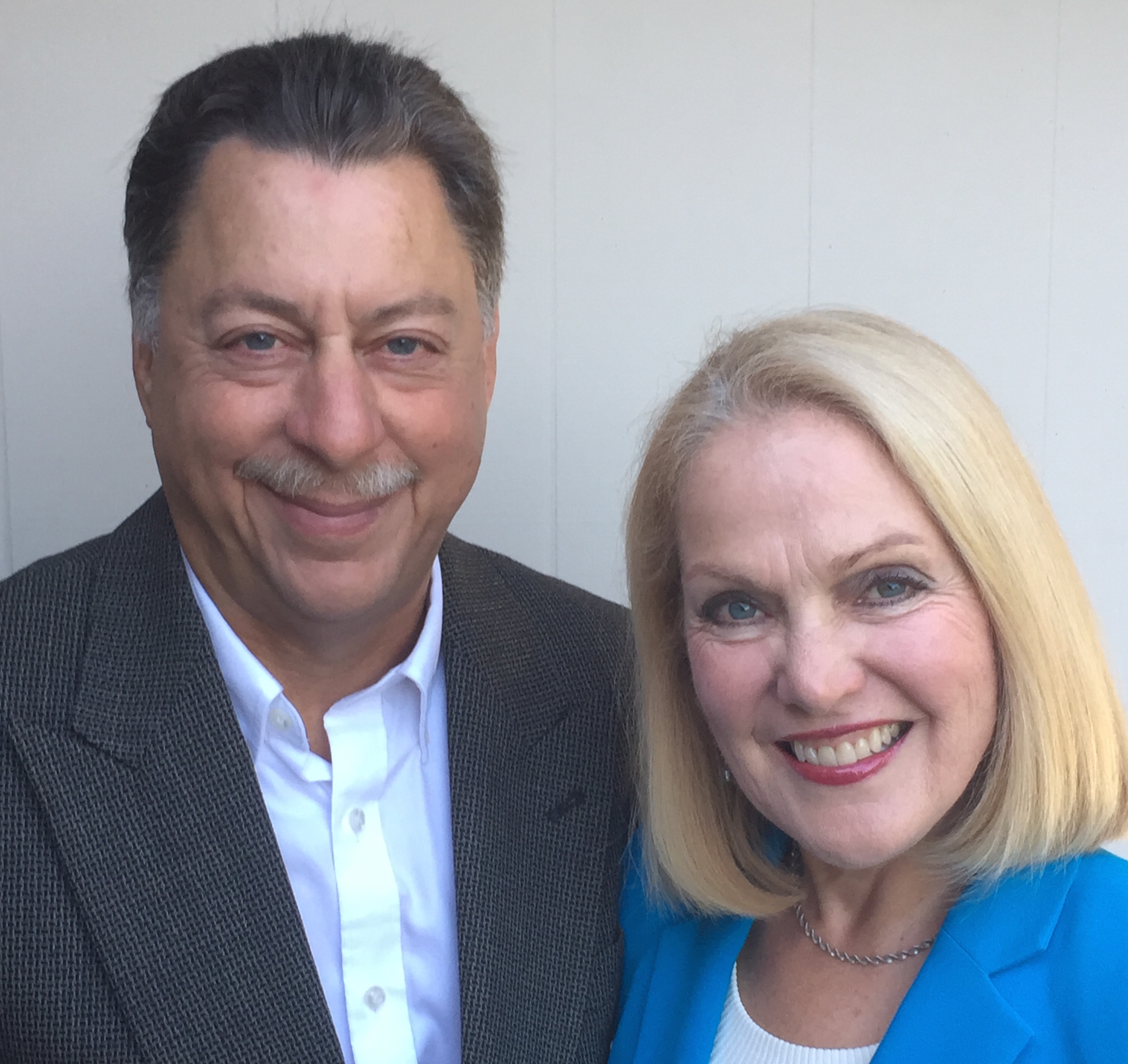
 

Dr. Mikol Davis and Carolyn Rosenblatt, co-founders of AgingInvestor.com

Carolyn Rosenblatt, RN, Elder Law Attorney offers a wealth of experience with aging to help you create tools so you can skillfully manage your aging clients. You will understand your rights and theirs so you can stay safe and keep them safe too.

Dr. Mikol Davis, Psychologist, Gerontologist offers in depth of knowledge about diminished financial capacity in older adults to help you strategize best practices so you can protect your vulnerable aging clients.

They are the authors of "Succeed With Senior Clients: A Financial Advisors Guide To Best Practice," and "Hidden Truths About Retirement And Long Term Care," available at AgingInvestor.com offers accredited cutting edge on-line continuing education courses for financial professionals wanting to expand their expertise in best practices for their aging clients. To learn more about our courses click HERE

What Should You Say To A Client With Diminished Capacity?

What Should You Say To A Client With Diminished Capacity?

We've all had them. Those clients who seem to be more and more forgetful. They're with it some of the time and other times, not so much. They call you multiple times asking the same questions. They repeat their stories to you. It gets scary is when they start wanting to do dumb things with their money.

Unfortunately most firms do not have clear and specific protocols for you to follow when a client begins to show those telltale signs that he's slipping mentally. Or that she is flat out vulnerable to manipulation by some unscrupulous person. You see it, but what can you say? You just carry on hoping it will get better or that family will take care of it. But that doesn't happen. Then what?

At AgingInvestor.com we think it is far too dangerous for you to simply ignore the problem, or expect someone else to take care of it for you. If a scammer takes Dad, you will know when those strange and unexplained large withdrawals start coming out of his account. Family can reasonably expect that you will do something to keep your client, their father safe financially. That's fair enough, but how do you start?

First, you need to document every instance of anything that you observe that shows you that your client's ability to make financial decisions is becoming impaired. You don't need to be an expert to see what's obvious. Multiple phone calls in one day with the same question is an example. When you explain something slowly and clearly enough for a high school kid to understand and your formerly sharp client doesn't get it at all, that's another example: easily confused. There are numerous signs.

When you have collected the signs over a period of say, six months or more, and you have carefully recorded them somewhere, it's time to bring your client in for a face-to-face conversation. If you are at a distance, this may have to be by phone but it has to happen.

Start with your concerns. For instance, you can say "Jack, I'm getting concerned about some things I've noticed with you over the last few months. I've heard you ask the same thing multiple times in the same day. I have noticed that you are forgetting some important things I've explained to you about your portfolio." Jack may push back and probably will. You follow up by calmly showing him or describing to him the dates and your documentations of instances. "See here's what I mean. This is worrisome to me Jack. My job is to be sure your money is safe and that no one tries to rip you off. When you forget a lot, predators are waiting to target you".

Then you bring the conversation to the ask. "Whom do you trust that we could involve in being a backup safety person with you, or just joining in on the decisions about your investments here that might be a reassurance for me that you are ok?"

If you were smart before the diminished capacity issue came up long ago, you would have had Jack identify two trusted others you could contact in this situation. You would have had Jack give you permission to disclose protected information with the trusted others and thus dispose of the barrier that stops so many: the privacy issue. All this would be in your client file.

People respond to this approach in various ways. If you know your client, you will know some words that may work best with him or her. The point here is that you need to have this conversation, which may initiate a series of steps to keep that vulnerable client with diminished capacity as safe from predators or his own foolish decisions as you can.

Here are some takeaways from AgingInvestor.com, where you can learn more on this subject.

  1. Face the issue that you have to address this, awkward or not. Diminished capacity must not be ignored.
  2. Document each and every sign of diminished capacity as you communicate with your client. Here's a checklist to help you.
  3. Open the conversation by making it your concern. You are worried about the client. You want to keep him/ her safe. You want to do your professional job.
  4. Have at the ready your trusted 3d party contacts for your client. Get your client's permission to involve the trusted others at the earliest opportunity.

Does this expand your role as a financial professional? You bet. But there is no escaping aging clients and the issues longevity brings. Be ready for them.

Carolyn Rosenblatt, R.N., Elder Law Attorney, & Dr. Mikol Davis, Gerontologist co-founder of  AgingInvestor.com

The Hidden Truth About Adult Protective Services

The Hidden Truth About Adult Protective Services

In all the proposed rules by FINRA and the SEC to address financial exploitation of seniors, advisors are urged to report suspected abuse to the local Adult Protective Services or to call the police. Unfortunately that is not always a solution. There seems to be a lack of clarity about how things work. Here's a typical scenario that illustrates an issue.


Myra is 87 and her daughter, Lexie has been taking advantage of her for years. Myra feels sorry for her daughter because she can't seem to hold a job. Never mind she has a drug habit. Myra has means and she often gives Lexie "loans" that are never repaid.


Lexie gets a power of attorney from Myra, goes with Myra to her financial advisor and tells the advisor that Myra needs $80,000 for a trip they are going to take. Myra is disabled and never travels. The advisor knows this. Advisor decides after seeing several of these demands for withdrawing Myra's funds under suspicious circumstances that Lexie is abusing Myra. The total amount withdrawn at Myra's request is over $150,000 in six months, which is highly unusual.


Advisor calls the police. They refer her to Adult Protective Services. APS takes a report over the phone, asks questions and then asks Advisor to fill out a report form. She fills it out and reports the recent questionable $80K demand and withdrawal and she lists the total taken of $150K. She puts Lexie's name on it as the person suspected of financially abusing Myra.


APS sends a social worker out to investigate the complaint and to visit Myra at home. Myra finds the worker to be very nice and they chat. "Has your daughter ever pressured you to give her money?" the worker asks. "No", says Myra. "Do you remember giving her gifts or loans totaling $150K this year?" the worker asks. "I don't think I did that"Myra says. The worker asks if she is in the habit of giving money gifts to Lexie and Myra says yes, that Lexie is her daughter and she needs some help sometimes. The worker concludes that giving money to Lexie is what Myra wants and the case does not go any further. No one has tested Myra to see if she is competent to understand the consequences of giving her assets to Lexie, particularly since she has two other adult children.


In this case the facts are not clear enough to prove that a crime was committed. APS will not recommend that Lexie be prosecuted because even though giving away money is not in Myra's best interests, she is assumed to be competent to do so. In this case APS is not solving any problem and takes no further action. If Myra did not want the funds to be given to Lexie it would be different and elder abuse could be proven perhaps. As is there is too much doubt about Myra agreeing to be taken advantage of by Lexie, no prosecutor could meet its burden of proof.


The Other Option

Lexie's other two siblings were not initially aware of the abuse by Lexie. Their potential inheritance is directly affected by their sister's actions and when they find out they call APS also. The case is closed and they get nowhere. They are furious.


They consider another option. If there is no crime here that can be proven, there may be a civil case. They contact an attorney who handles civil cases of elder financial abuse.   The attorney does an investigation and finds out that Lexie has bought a condo with the money taken from Myra. The attorney successfully proves that Myra was duped by Lexie and the matter is settled by Lexie's attorney agreeing to sell the condo and give the proceeds back to a fund set up for Myra in case she needs more cash as she ages. And the settlement agreement says that Lexie will inherit no part of the fund. Further, the power of attorney Lexie got is torn up and Myra appoints a more responsible agent, another daughter who now oversees all of Myra's finances.


With a misunderstanding of how law enforcement works, there is a belief that all one must do is report to APS and somehow, financial abuse will be stopped. But when APS finds insufficient proof, or a wiling victim like Myra, they do not intervene. They are essentially reporters to law enforcement but APS does not prosecute anything. A civil case is outside their sphere and a civil attorney must be consulted to explore whether one can pursue that possible way of recovering an elder's assets that have been wrongfully taken.


The Takeaway

The important thing to know here is that APS is limited in what it can do. A criminal case of any kind has to be proven "beyond a reasonable doubt." Any advisor who wants to keep senior clients safer needs to understand that a willing victim will pretty well destroy a criminal case of abuse. A civil case is a possibility as long as there is an asset (in Lexie's case, a condo) to get and someone who is not a willing victim (in Lexie's case, her siblings). One should know a competent elder abuse attorney to consult and find out if your client has that choice in taking legal action or if her heirs do. Making a few calls is the least you can do to protect your client.


By Carolyn Rosenblatt, RN, Elder law attorney, AgingInvestor.com

The Worst Misconception About Advisors and Elder Financial Abuse

The Worst Misconception About Advisors and Elder Financial Abuse

Imagine this: your aging client is 86 years old, slightly grumpy, and he thinks he knows better than just about everyone else on nearly everything. He's quite willing to follow your advice, though and that's what makes a good relationship with him.


Lately, he's got you worried. He is obsessed with the internet. He spends many hours a day on it and he tells you about this man he met online who has an amazing investment he wants to get into. When he starts telling you about it, it sounds like a scam of the worst kind. You warn him not to do it and he says you don't understand.


He asks you to liquidate one of his investments you manage. You do it. He tells you how happy he is that he's got this great thing going now. A month later he calls you and wants to liquidate a lot of his funds to raise some significant cash for his "friend" who has the scammer-sounding "investment". You say, "don't do this!" He won't follow your advice. This is new, and puzzling. What should you do?


Rules tell you that you must follow your client's instruction and that you are not supposed to reveal his financial information to anyone. Should you call Adult Protective Services? Can you? You are not sure what to do.


Here's the answer: you are permitted to report financial elder abuse. According to the regulators' Interagency Guidance on Privacy Laws and Reporting Financial Abuse of Older Persons, which discusses the issue in detail, you are also permitted to disclose this information to protect against or prevent actual or potential fraud.


But what if your client think his internet "friend" is fine even if you are seeing telltale signs of fraud in your client's interactions with the scammer? You can report the apparent crime in an online form to the FBI as long as you know enough detail from your client. I think anyone who suspects internet fraud should do this, even if it turns out to be some legitimate thing in the end. It probably isn't. And your client's money could all be gone if you do nothing. Would that be okay with you?


Financial professionals need to be clear about your role in preventing and stopping elder abuse. Law enforcement can't always stop the criminals but sometimes they do. No one can stop what is never reported to them. Do not be misled by the misconception that protecting your client's private information is supposed to stop you from reporting apparent fraud and abuse.


You could be the difference between your client's safety and your client being wiped out financially. Take a deeper dive and get very smart in an accredited one hour online course about stopping financial abuse. Click here now.

Carolyn Rosenblatt, R.N., Elder Law Attorney & Dr. Mikol Davis

co-founders of AgingInvestor.com and AgingParents.com


Two Things Professionals Can Do About Elder Financial Abuse

Two Things Professionals Can Do About Elder Financial Abuse

Two Things Professionals Can Do About Elder Financial Abuse

It's vicious and pervasive. It's growing. It has been called "the crime of the century". Elder financial abuse, according to a study by True Link Financial, costs seniors in the U.S. over $36B a year. But can financial professionals do anything about it? We say definitely yes.

Most of us have encountered this kind of opportunistic crime at some point, among family, neighbors or friends. When we at AgingInvestor.com present to groups of professionals we ask how many have had witnessed this kind of abuse with anyone known to them. Almost every hand goes up. The question is, what can you do about it?

Many professionals are either hesitant to get involved because they think privacy concerns should stop them, or they want to take action but are unsure about what to do. Let's clear away those concerns now.

First, remember that when your client gets ripped off and cash is drained out of the account you manage, you are losing fees for those AUM. If that isn't incentive enough to be involved note that NASAA has already developed model rules which will require that you report abuse to authorities. Those are likely to become mandates soon enough.

Let's look at two basic steps any professional can take now to improve your response and protect your clients from financial abuse.

Get third party contacts on file

One, you need to get from your retirement-age clients the names of several trusted others whom you can call in the event that you see red flags that abuse could be going on. Remember that family members are the most frequent abusers of aging folks. Perhaps that favorite one, Sonny Boy is taking advantage of a vulnerable parent or other relative. Be sure one of the contacts you get from your clients is not a family member, but a trusted friend, colleague or professional. Age makes all of us more vulnerable to financial manipulation for many reasons. Next time you review an older client's portfolio, get this necessary information about whom to call if you get concerned and keep it on record.

Get permission from your client to call the third parties under certain circumstances

Two, you need not consider privacy rules a barrier if you have your client's permission to contact the designated third parties he has identified. A legally sufficient privacy document will help you. This is an area where both legal and compliance departments should assist you to get the right paperwork in order. At AgingInvestor.com, we developed just such a model document, a product we offer to overcome the confidentiality barrier to taking action. It's part of a senior-specific policy. And you can do it in-house on your own too with legal input. Get one done for every aging client. It resolves the question of giving private information to the designated third party. You will have the ok to act when you need to.

Caution: we do not recommend that you use an informal letter to for your client to give up the right to privacy. Consider that in our society, we use things like a durable power of attorney to give up the right to solely manage one's finances, and an advance healthcare directive to give up the right to make end of life or care decisions alone. We don't use mere letters for these things. You need papers that are standardized, formal and that will stand up to scrutiny should anyone question them.

Surely you do not want predators to take advantage of your clients, particularly when they suffer from any cognitive decline. That increases their vulnerability. And the integrity of their portfolios is enhanced by your own vigilance over them as they get older.

Take a deeper dive into the elder abuse subject in our book Succeed With Senior Clients: A Financial Advisor's Guide to Best Practices. We offer you a handy checklist with the 7 warning signs of financial elder abuse, more practical tips and some true stories of how a financial professional did or didn't get involved at the right time.

The most forward thinking financial advisors will be early adopters of these means to keep clients financially safer. Be one of those leaders!

by Carolyn Rosenblatt, RN, Elder law attorney, AgingInvestor.com