Best Practices For Managing Clients With Diminished Capacity – CFP Approved Course

Best Practices For Managing Clients With Diminished Capacity – CFP Approved Course

“Best Practices For Managing Clients With Diminished Capacity”

Register NowMore Information
Summary of course:

Our population is living longer than ever. The risk of dementia rises with age. That means that most of us are going to encounter problems of aging in our clients.

We need to recognize the red flags of impairment that will affect financial capacity.  These include:

  1. Cognitive signs, such as memory loss and difficulty understanding the conversation
  2. Communication, calculations and orientation problems
  3. Emotional signs that are out of character for your client.

It is essential for every financial professional to understand the complexity of financial capacity and appreciate how many parts it has. There are 9 domains of financial capacity.  You cannot determine if a person is impaired or not just by talking on the phone with her or having a brief meeting in which you  give information.

A normal social conversation with the client is not a measure of whether or not the client has diminished financial capacity.
The more aware you are as a professional, the better chance you have of protecting your client from loss and protecting yourself as well.
 Learning objectives:
  1. Prepare yourself for the wave of aging clients by understanding the demographics of our aging population and the risks of dementia associated with aging.
  2. Understand the 9 domains of financial capacity and learn how to spot problems with any one of them.
  3. Be able to identify red flags of impaired cognition that should prompt you to act.
  4. Develop a personal plan for what to do when you see warning signs of diminishing financial capacity

Caution Your Boomer Clients: Their Aging Loved Ones May Need Help Handling Money

Caution Your Boomer Clients: Their Aging Loved Ones May Need Help Handling Money

When your clients spend time during this season with their aging loved ones, let them know that it’s an opportunity to look out for signs that a loved one needs help. Some things are possible tipoffs that they should get involved in helping monitor their aging parents’ spending, giving and susceptibility to scams.  Educating them about these signs gives the client the impression that you understand and that you care. Your Boomer clients may have parents or other relatives in their 80’s, 90’s and beyond.  You can help both clients and their aging family members stay safer.
Encourage them to watch out for these three signs when they see loved ones at their parents’ homes:
  1.  Evidence of unpaid bills. Older folks begin to lose the capacity to keep track of finances very early in the process of any form of dementia.  If bill collectors are calling, or they see dunning notices, that is a red flag.  They could be forgetting what to pay or when to pay a bill.  Insurance can be cut off, utilities can be stopped and a lot of other consequences flow from this forgetfulness.  Adult children can help by offering to do the bill paying, putting it online or otherwise keeping watch over bills.  Your Boomer clients could be stuck with having to support their aging parents if the elders lose the ability to manage their money.
  2. Too much “charitable” giving to anyone who asks.  Scammers call seniors and pose as anybody from anywhere.  Unsuspecting elders believe them and do not check out the validity of the charity they claim to represent.   Remind your clients to caution their senior loved ones to ask for detailed information about anyone who solicits them, including name, address and phone number.  They should to call the charity and verify that the solicitation was from them.
  3. Evidence of a new “friend” who seems overly involved in an aging parent’s life, especially if he or she has access to personal information such as Social Security number, credit cards and bank accounts.   There are predators out there waiting for a chance to get to the money and run.   Particularly with a parent who has memory loss, manipulation and theft are all too easy for a person just hanging around waiting for an opportunity to steal.  At AgingInvestor.com we suggest that adult children closely monitor seniors’ accounts and question anything odd immediately.
Client education needs to be about more than what products will yield the best return and how to make money last. It has to be about your client’s life too.  And since regulators want all advisors to educate clients about issues that affect them, this is one perfect for the educational effort.  Feel free to copy this email and send it out modified a bit, with your name on it.  Your clients will appreciate you!
Two Big Flaws In FINRA’s Proposed Rule to Protect Seniors from Financial Exploitation

Two Big Flaws In FINRA’s Proposed Rule to Protect Seniors from Financial Exploitation

FINRA, together with the SEC and NASAA are on a joint mission to keep seniors and impaired adults from being financially abused. FINRA has proposed new rules that will allow a firm to put a temporary hold on financial transactions when abuse is suspected, and will allow the firm to contact a trusted other during this hold period.

Where’s the flaw? No rule yet mandates that every financial firm and every individual advisor obtain information for a trusted contact person for every client. Not only should this be required for all new accounts, it should be mandated that such trusted others be identified for every client over age 65. As the risk of dementia doubles approximately every five years after age 65, the reasons for the advisor to have someone to call when concerns arise is obvious.

As to the subject of the trusted other, the elder usually names an adult son or daughter as the trusted one. Sometimes that is all the information the advisor has. At the same time, the studies on elder financial abuse show us that family members are the most frequent abusers. Do you see the contradiction here? Every advisor should be required to obtain not only one “trusted person” but two or three so that if abuse is going on or seems to be a threat, the advisor can involve more than one person in the effort to stop it.

Another flaw in the proposed rule is that is it assumed that something helpful will occur during the hold period when the institution is excused from liability for not acting. But there is no clear evidence that either advisors or institutions are being trained to spot financial abuse warning signs before the money is all drained from the account. As we see it, the proposed rule focuses on doing something after abuse is clear and the institution has “a reasonable belief” that financial abuse is occurring. We think the industry can do much better than reacting by being required to call someone after the client has been taken advantage of or had the portfolio plundered.

Here’s the truth: getting an unwilling aging person to step down from financial authority over his portfolio takes more than a few days or a couple of weeks. If there is a trust in place and the elder is the trustee, the terms often state that at least one doctor, or two must say that the client is no longer capable of handling financial matters. Getting a doctor or two to see the client, do an assessment and produce something in writing with the needed findings can take months. And we’ve witnessed this exact scenario when it did take three months to oust the impaired, demented senior who wanted to give his predatory adult child a debit card for his cash management account.

At AgingInvestor.com, where we educate both financial institutions and independent advisors about stopping financial abuse, we think the effort to keep elders financially safer needs to go to the front end of abuse, not the back end after it has happened. Proactive steps can be taken. We urge every financial professional to know the warning signs of diminished capacity so you can engage the trusted third party when the signs emerge, rather than waiting until someone, whether family or outside predator seizes the opportunity to exploit diminished capacity.

To learn more about what you or your institution can do that we think is much better than simply being allowed to hold transactions for a bit when you believe abuse is going on, contact us at AgingInvestor.com. We have an entire program outline ready for you with focus on prevention.

If your client is being manipulated, holding transactions when you’re pretty sure it’s gone on can do little to protect your client. The predators and thieves can empty an account faster than it would take you to fill out the forms FINRA will inevitably give you. Think the way you are trained to think about finances generally: plan ahead, anticipate problems before they get here, and take protective action.

Carolyn Rosenblatt, RN, Elder Law Attorney, Founder AgingInvestor.com

What to Do When Your Client Says “Mind Your Own Business”

What to Do When Your Client Says “Mind Your Own Business”

3 Ways To Talk With Aging Parents About Finances

One benefit of the increasing life expectancies for Americans is that more people have bonus years for enjoying the company of their aging parents.

But all is not rosy. Those extended years also boost the odds that parents could go broke or suffer from dementia and be unable to make financial decisions for themselves.

That can leave adult children perplexed about when and whether they should step in and find out what’s happening with their parents’ money, says Carolyn Rosenblatt, a registered nurse and elder law attorney.

“Unfortunately, it’s not always easy to have those conversations,” says Rosenblatt, co-author with her husband, Dr. Mikol Davis, of The Family Guide to Aging Parents (www.agingparents.com) and Succeed With Senior Clients: A Financial Advisors Guide To Best Practices.

“Some stubborn parents just refuse to talk about their money. No matter what their adult children say to them, they put it off, change the subject or tell their children it’s none of their business.”

Of course, many adult children aren’t in any particular hurry to broach the subject either, says Davis, a clinical psychologist and gerontologist.

“They have their own discomfort about it and procrastinate,” he says. “Then a crisis comes up and no one has any idea what the parents have or where to find important documents.”

But Rosenblatt and Davis say it’s critical that these conversations take place so that the offspring can gather information about such subjects as the parent’s income and expenses, where legal documents are kept, and what kind of medical or long-term-care insurance the parent might have.

The success of these conversations often comes down to how you approach the subject, Rosenblatt and Davis say. They offer a few tips:

  • End the procrastination by picking a date for the talk. Make an appointment with yourself to bring up the subject at a specific time. An opportune time to schedule this is after a birthday, a family event or a holiday where other family members are together who may share in the responsibility for the aging parents in the future.
  • Show respect. Tell your parents you understand and respect their reluctance to discuss their finances. You can even make the conversation about yourself rather than about them. Say that you’re concerned that if something went wrong, you would be completely lost as to how to help them.
  • Address their fears head-on. Let them know you understand they are worried that if they talk about their finances their independence might be taken away. You might add that you want them to maintain their independence as long as possible and you’re willing to help accomplish that, but you can’t do it without the correct information.

“Getting past an aging parent’s fear about talking about finances can be daunting,” Rosenblatt says. “But a well-planned strategy for approaching the subject will give you your best chance.”


About Carolyn Rosenblatt and Dr. Mikol Davis

Carolyn Rosenblatt and Dr. Mikol Davis are co-authors of The Family Guide to Aging Parents (www.agingparents.com) and Succeed With Senior Clients: A Financial Advisors Guide To Best Practices. Rosenblatt, a registered nurse and elder law attorney, has more than 45 years combined experience in her professions. She has been quoted in the New York Times, Wall Street Journal, Money magazine and many other publications. Davis, a clinical psychologist and gerontologist, has more than 44 years experience as a mental health provider. In addition to serving his patients, Davis creates online courses and products to assist professionals and the public with understanding aging issues. Rosenblatt and Davis have been married for 34 years.




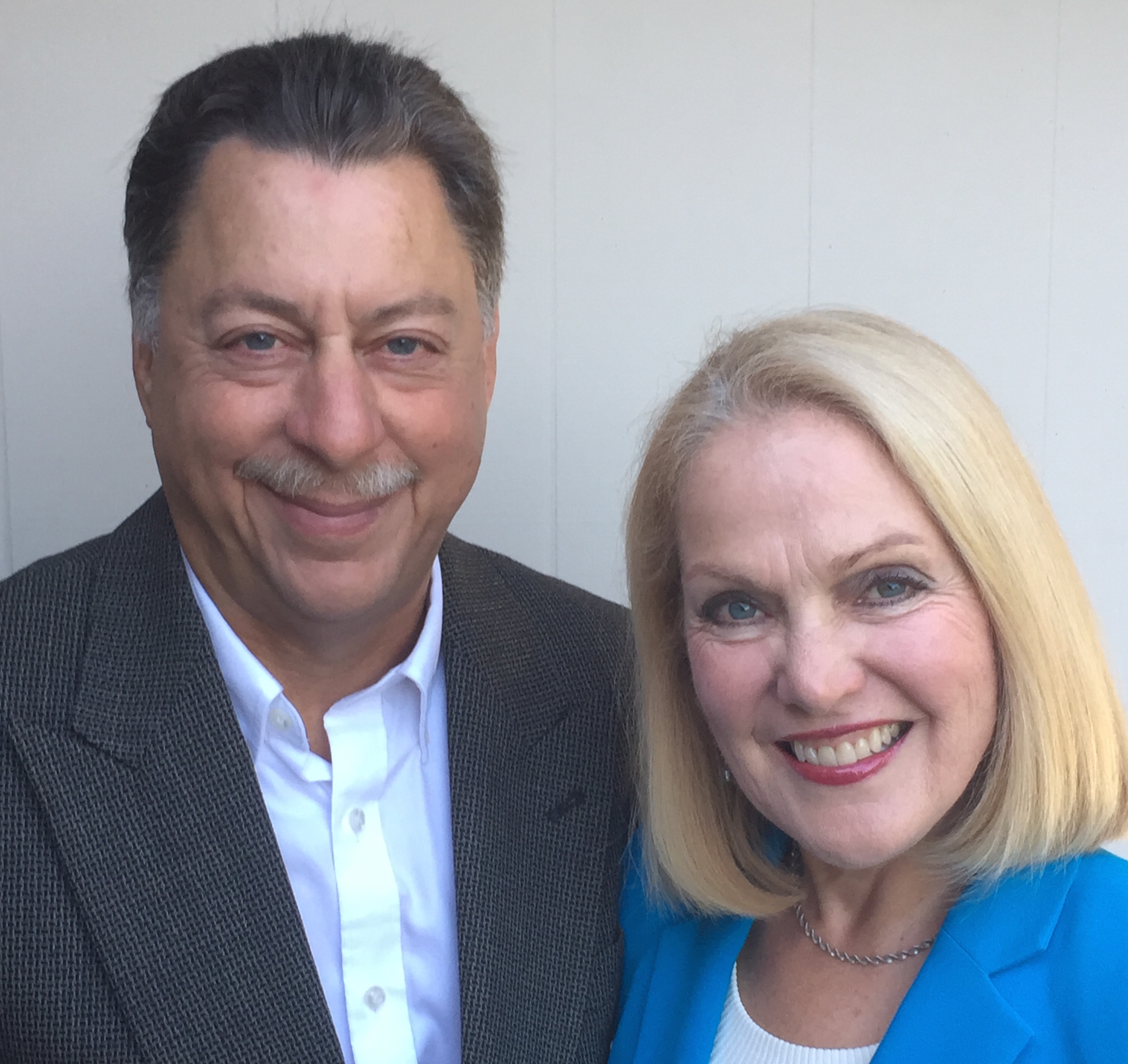
Dr. Mikol Davis and Carolyn Rosenblatt, co-founders of AgingInvestor.com

Carolyn Rosenblatt, RN, Elder Law Attorney offers a wealth of experience with aging to help you create tools so you can skillfully manage your aging clients. You will understand your rights and theirs so you can stay safe and keep them safe too.

Dr. Mikol Davis, Psychologist, Gerontologist offers in depth of knowledge about diminished financial capacity in older adults to help you strategize best practices so you can protect your vulnerable aging clients.

They are the authors of "Succeed With Senior Clients: A Financial Advisors Guide To Best Practice," and "Hidden Truths About Retirement And Long Term Care," available at AgingInvestor.com offers accredited cutting edge on-line continuing education courses for financial professionals wanting to expand their expertise in best practices for their aging clients. To learn more about our courses click HERE

A Financial Advisor Takes Advantage of 90 Year Old Alice – Watch Video

A Financial Advisor Takes Advantage of 90 Year Old Alice – Watch Video

So many professionals we talk to are worried about aging clients, those in their 80's, 90's and older. And for good reason.  Mikol's mother is now 92 and she lives independently.  She is not exactly a sophisticated investor or consumer. She is very sharp mentally, but that does not mean she could not be manipulated.  She has already been taken advantage of by one financial advisor. He got caught though.  By us. We took a quick video of Alice, and without naming any names, you can see what she has to say about what the investment this advisor put her into. Click on image to see Video.
We have a very special advantage with Alice. She is willing to let us watch over her investments and her day to day financial life.  Not only is she open to receiving this support, she generally welcomes it.  That is not an advantage every family has.  But even if your aging client or loved one is less than willing to allow those in their lives who can protect them from harm to discuss their financial business, they may be willing to make at least one concession. We recommend that you try for this, suggest it to all the aging folks in your world and take one small step in the direction of their protection.

(more…)