

The Way To Prevent Panic When Your Client Is Cognitively Impaired: Senior-Specific Policies

The Way To Prevent Panic When Your Client Is Cognitively Impaired: Senior-Specific Policies

You've probably had an aging client or a few of them who had you worried. They are increasingly forgetful. Maybe they called you multiple times a day and didn't remember that you had already answered their question. Perhaps they are not following anything in the conversations you have with them. After the fact, you are scratching your head, trying to figure out what to do with that client.

Regulators have not mandated that firms and individual advisors have policies that specifically address age-related issues with their clients, but they strongly urge it. One of the first things they want you to do is to have several trusted third party contacts in every client's file so you can contact someone in the event that your client becomes impaired.

Regulators want you to recognize the warning signs of financial abuse. They want you to keep your clients financially safer, mainly because they are more vulnerable than your younger clients. They want you to deal with privacy concerns but offer little guidance except for when you see abuse. What to do about financial abuse is not yet a regulation, though it will be.

How many firms have taken even these basic proactive policy steps to keep aging clients safer? From what we read and observe, not many. It takes time. You won't be directly paid for doing it. Maybe you think you can just wait until "something happens" before you do anything to change the status quo. That is a bigger risk than you want to take.

An aging client can fall into cognitive impairment without you noticing. They can be in a dire situation before you have had a chance to think about what to do proactively. Waiting for a crisis is not the style of a competent financial advisor nor any manager. What should you do?

First, you need to do as the regulators recommend: start putting together a plan for those clients who may become impaired for financial decisions. And plan for what to do when you see financial abuse happening. Next, you need to have a uniform path for escalation and contacting a third party. This requires more minds than one. Your mission of client protection needs to be clear and that must drive policy. Legal input is essential to this process. Privacy is a legal issue that can be dealt with when you have a legally sufficient privacy waiver in hand, standardized for every client. Finally, you need to commit your policy to writing and ensure that everyone you work with will follow it.

Develop this yourself or get a kit with the whole thing done for you in a template. Doing so will keep you alert for aging client issues at the beginning, not after things are a mess and you are trapped with that incapacitated client. Learn more about the policy-in-a-box, our Program Initiator at AgingInvestor.com.
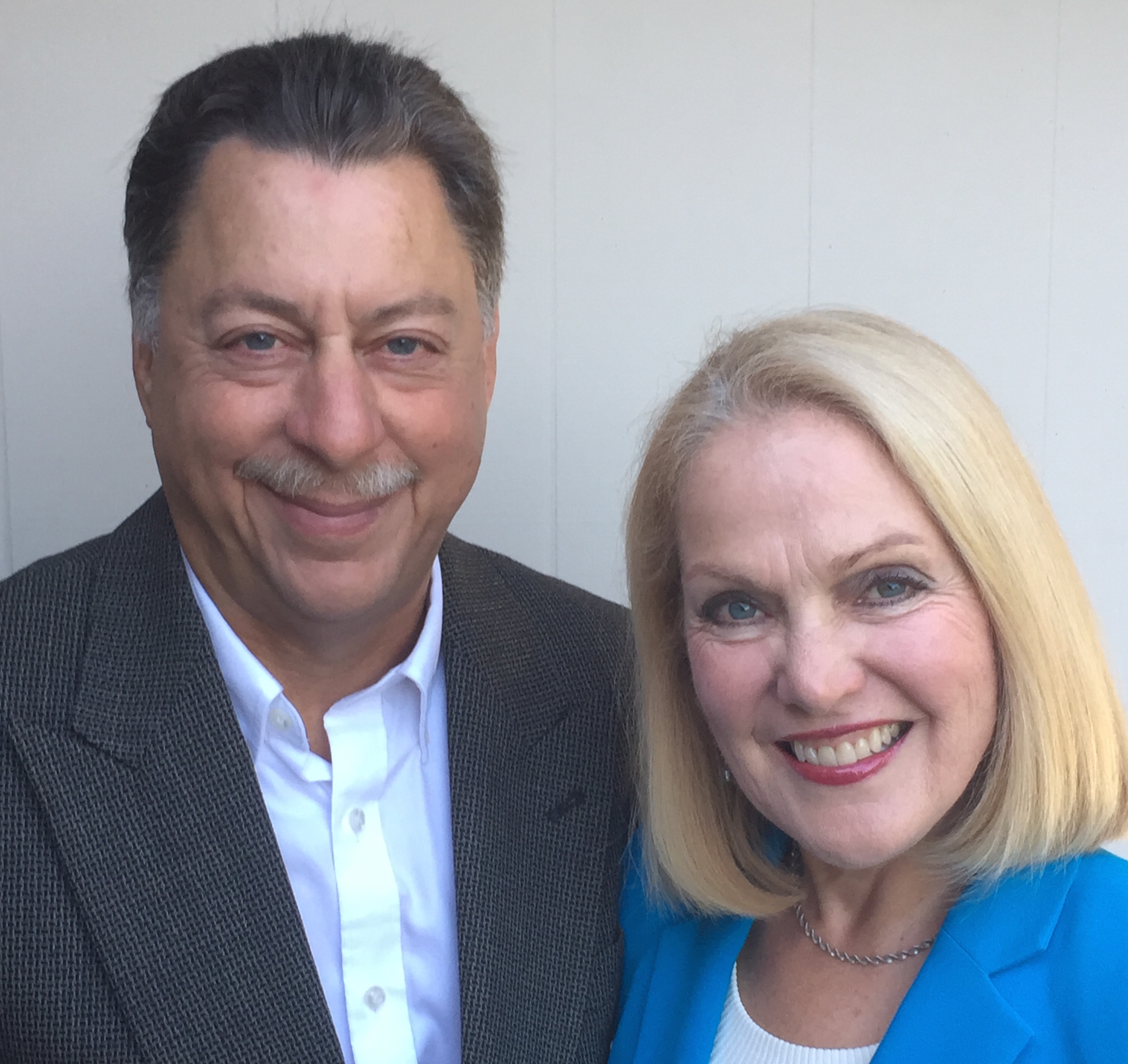
 

Dr. Mikol Davis and Carolyn Rosenblatt, co-founders of AgingInvestor.com

Carolyn Rosenblatt, RN, Elder Law Attorney offers a wealth of experience with aging to help you create tools so you can skillfully manage your aging clients. You will understand your rights and theirs so you can stay safe and keep them safe too.

Dr. Mikol Davis, Psychologist, Gerontologist offers in depth of knowledge about diminished financial capacity in older adults to help you strategize best practices so you can protect your vulnerable aging clients.

They are the authors of "Succeed With Senior Clients: A Financial Advisors Guide To Best Practice," and "Hidden Truths About Retirement And Long Term Care," available at AgingInvestor.com offers accredited cutting edge on-line continuing education courses for financial professionals wanting to expand their expertise in best practices for their aging clients. To learn more about our courses click HERE

Three Things You Need To Know About “Out Of Pocket Medical Costs” In Retirement

Three Things You Need To Know About “Out Of Pocket Medical Costs” In Retirement

You're trying to help the sixty-something clients plan for what they can anticipate spending for medical care in the future. You tell them about the average amounts a couple retiring at age 65 will need. The language seems fuzzy. Are you, the advisor, completely clear about what the term means when you say "out of pocket medical costs"?

That which is "medical" and what is paid by Medicare does not seem to be clear to many financial professionals we've interviewed. If you want to help your clients plan adequately for retirement, here are some critical points you need to make with them.

Medicare never paid for what it calls "custodial care". This is not medical care by Medicare's definition. It did not cover it in the past and it does not pay for it now. There is a distinct and very important difference between what it covers and what most people need over the long run in their retirement years. If your idea of "out of pocket medical costs" is hazy, let's clear it up right now. This is a list of things Medicare doesn't pay for, which just happen to be the most common things people need as they age. This is only a partial list.

 Nursing home ("rehab") after a limited number of days. The maximum coverage depends not on how sick the client is, nor how much help they really need due to such disabling conditions as a stroke, nor how they feel. It depends solely on what the nursing home administration decides about whether they are continuing to make the right kind of progress. That progress must require skilled care which can be nursing, physical, speech or occupational therapy. There may be 100 days available for coverage, but this does not mean that all of it will be covered or that the person will get that much in the rehab facility. If it is decided that there is not enough progress, the person's care is termed "custodial" and they are cut off from Medicare.

Home Care. Millions of people who are released from a nursing home after surgery, an emergency or a fall, for example, need help at home either short term or long term. Medical events change us and can rob us of complete independence. There is a false belief around that Medicare will cover what you need if you have to have home care. This is true only for a very short time and only if skilled, licensed nurses or therapists are needed at home. Most of the time, a person is cut off from help when leaving a facility and has to pay for home care out of pocket. The national average hourly rate is $20, which can eat up one's assets quickly in a fairly short time frame.

Help at home to stay out of a care facility. A lot of folks think they'll live to be 100 years of age. No one discusses with them what it would mean to live that long without being completely independent. Help costs money. Many people assume that family or someone will take care of them if care is needed. But not everyone is willing to or capable to undertake what is often a serious burden. Even when family does take on caregiving, they need a break, and relief. Then help from outside must be hired. Without constant help many older people would have to be in a care facility. Does it make sense that when assets are largely all spent, Medicaid will pay for a nursing home but Medicaid will not pay for preventing the need for a nursing home, a far more economical alternative? Of course not, but that's how it works.

The Takeaways

Fully two thirds of us will need long term care at some point in our lives. Unless the client is the rare one with long term care insurance, there is no way to pay for long term care other than to do so out of pocket. Sometimes this depletes all the client's assets and leaves them with no choices in the last part of their lives. For those who live into their 90s and beyond, the need for some kind of long term care by family or a facility seems almost inevitable. Your clients need to stop pretending that it's not going to happen to them, and you, the professional must steer them in the direction of saving and anticipating this need as much as you can. They will resist! Keep trying. Educate yourself first. You can get all the facts and figures you need to have a wise conversation with your older clients in our new book, Hidden Truths About Retirement & Long Term Care. Get your copy now and start adding value to those retirement discussions with your clients.

Click HERE to order.

By Carolyn Rosenblatt, RN, Elder law attorney, AgingInvestor.com


Dr. Mikol Davis and Carolyn Rosenblatt, co-founders of AgingInvestor.com

Carolyn Rosenblatt, RN, Elder Law Attorney offers a wealth of experience with aging to help you create tools so you can skillfully manage your aging clients. You will understand your rights and theirs so you can stay safe and keep them safe too.

Dr. Mikol Davis, Psychologist, Gerontologist offers in depth of knowledge about diminished financial capacity in older adults to help you strategize best practices so you can protect your vulnerable aging clients.

They are the authors of "Succeed With Senior Clients: A Financial Advisors Guide To Best Practice," and "Hidden Truths About Retirement And Long Term Care," available at AgingInvestor.com offers accredited cutting edge on-line continuing education courses for financial professionals wanting to expand their expertise in best practices for their aging clients. To learn more about our courses click HERE

The Gaping Hole In Retirement Planning: What Are You Missing?

The Gaping Hole In Retirement Planning: What Are You Missing?

Most financial professionals see themselves doing fine in helping their clients plan ahead for retirement. And their clients are probably in for a nasty surprise no one is talking about. The professionals have done the calculations, used the algorithms, had the conversations about their clients' goals. You may have forgotten something. Are you missing the elephant in the room: long term care?

At least a third of your clients are going to need it at some point. We're not talking about nursing home care here. We're talking about all the other out of pocket costs clients are not considering but that they will likely need as they age. Think about longevity today. Both men and women will probably live into their 80s at least. How many 85 year olds do you know who do not need any sort of help with anything in their lives? Not many, we'll bet.

As the body ages, it is harder to see, hear, get around physically, drive, and manage households and finances. Help with all of those things is actually an out of pocket cost we consider to be long term care. Medicare calls it "custodial care". That means all the kinds of support an aging person needs to stay out of a nursing home. The actual cost of a nursing home is another discussion altogether. When we talk about custodial care here we mean help with bathing, dressing, walking, eating, getting to the bathroom and getting out of bed onto a chair and back. These are called "activities of daily living" or ADLs. We are also talking about help with shopping, cooking, paying bills, cleaning the house and doing laundry. These are called "instrumental activities of daily living" or IADLs.

Your clients don't want to think about needing help. In this country, we insist on believing that we will always be independent--it's embedded in our culture and myths about aging. But those myths are not true. Independence declines with age for most of us. And help is expensive.

Consider that the averages you hear about do not address this at all when it comes to retirement planning. "The average couple age 65 will spend (fill in the blank here, anywhere from $265,000 to $400,000) on out of pocket medical expenses." OK. Custodial care is NOT medical care. Medicare does not cover it. Health insurance, including Medigap coverage does not pay for it. Who then does? Some long term care insurance policies cover some of it, with restrictions. Otherwise, it's all an out of pocket non-medical cost your client will have to cover. Imagine the costs when you calculate the "burn rate" of their retirement funds. Didn't factor that in? It's time for a second look at the plan.

if you have no idea how to calculate this or what your client's chances are for needing to pay for any kind of long term care, you can learn the basics and the costs in our newest book. Get the facts quickly that will help you in Hidden Truths About Retirement and Long Term Care: The Financial Advisors' Guide. Order your copy by clicking HERE.


Dr. Mikol Davis and Carolyn Rosenblatt, co-founders of AgingInvestor.com

Carolyn Rosenblatt, RN, Elder Law Attorney offers a wealth of experience with aging to help you create tools so you can skillfully manage your aging clients. You will understand your rights and theirs so you can stay safe and keep them safe too.

Dr. Mikol Davis, Psychologist, Gerontologist offers in depth of knowledge about diminished financial capacity in older adults to help you strategize best practices so you can protect your vulnerable aging clients.

They are the authors of "Succeed With Senior Clients: A Financial Advisors Guide To Best Practice," and "Hidden Truths About Retirement And Long Term Care," available at AgingInvestor.com offers accredited cutting edge on-line continuing education courses for financial professionals wanting to expand their expertise in best practices for their aging clients. To learn more about our courses click HERE

Intrusion or Just Being Safe?  Why You Need Closer Monitoring of Aging Clients

Intrusion or Just Being Safe? Why You Need Closer Monitoring of Aging Clients

Most financial advisors with aging clients often find themselves in the dilemma of just how involved they should get when it comes to their clients. You talk with them for portfolio reviews, but what if they show signs of diminished capacity in those conversations? Should you meet with them to talk about it or just wait until "something happens"? A critical point that every financial advisor needs to know: if your older client shows signs of mental decline, something is already happening. You don’t have the luxury of waiting. Research makes it clear that the ability to manage finances is the first thing to go downhill when a person begins to develop Alzheimer's disease or other forms of dementia. There could be other reasons for cognitive decline too. Don't make the mistake of ignoring it.

At AgingInvestor.com we recently heard a story that reinforces the importance of staying vigilant for your aging clients. Penny is 93 and until recently, the professionals in her life saw no particular reason to be concerned about her mental status. She was usually clear in conversation. Her accountant thought she was ok but failed to see mistakes and changes. But Penny was managing seven separate real estate investments and no one in her family, particularly her son, was helping her. Her son may have thought she was fully capable. She had been successful for decades. No one anticipated that she might become impaired late in life. But then her lawyer, living in a different city, wanted her to sign a document and have it notarized. She got confused and insisted that it be done incorrectly. The document came back a mess. Her lawyer did not heed these red flags that something was wrong and thought Penny was probably ok. He attributed the error to "normal" forgetfulness. Forgetfulness is a warning sign that closer monitoring of the older person needs to start right away.

Penny’s son eventually got her to a doctor who wrote a letter with the opinion that Penny was no longer able to manage her personal and financial affairs. Her son began taking over managing the property but was not prepared for what he found. Of the seven real estate holdings, five had IRS liens! One had become uninhabitable, the tenant had moved out and was billing Penny for the hotel stay, waiting for the home to be fixed. Penny had failed to pay the property taxes for several years.

Penny is a good example of a senior who is generally pretty clear but is definitely not able to handle complex finances any longer. The process of her cognitive decline did not happen overnight. It took several years. During that time she endangered her assets, lost track of her finances and could have lost most of her real estate to tax liens. Warning signs happened but no one paid attention to them.

Could this be prevented? Of course. Had her financial advisor kept a better eye on all of Penny’s assets, not just her stock account, he could have noticed the problem and contacted her son. The point is that wealthy clients may have assets you do not manage but also provide income. It is good practice to ask about all of your client's holdings. Penny's failure to pay property taxes and allowing the houses to fall into disrepair should have been seen by those close to her. Paying attention to those telltale signs of decline, which an alert advisor would have noticed, should have triggered reaching out to Penny's trusted contact person. Working with your clients' families is key to protecting their financial safety. Learn more about successful family meetings at AgingInvestor.com.


Dr. Mikol Davis and Carolyn Rosenblatt, co-founders of AgingInvestor.com

Carolyn Rosenblatt, RN, Elder Law Attorney offers a wealth of experience with aging to help you create tools so you can skillfully manage your aging clients. You will understand your rights and theirs so you can stay safe and keep them safe too.

Dr. Mikol Davis, Psychologist, Gerontologist offers in depth of knowledge about diminished financial capacity in older adults to help you strategize best practices so you can protect your vulnerable aging clients.

They are the authors of "Succeed With Senior Clients: A Financial Advisors Guide To Best Practice," and "Hidden Truths About Retirement And Long Term Care," available at AgingInvestor.com offers accredited cutting edge on-line continuing education courses for financial professionals wanting to expand their expertise in best practices for their aging clients. To learn more about our courses click HERE

Your Retirement-Age Clients and Budget Politics

Your Retirement-Age Clients and Budget Politics

While advisors are there to serve those with investable assets, it is not only your clients who are affected by politics, the Federal budget and cuts to programs. It may be your clients' family members, their aging parents or struggling adult kids.

When family members are beneficiaries of various public programs that help them get by, your clients may not be affected except with feeling relief. But when programs are slashed, the reverberation can affect your own clients, who are likely to be better off financially and therefore expected to help. Every advisor needs to consider this. Cash flow projections on retirement savings can be totally disrupted when your client has to pitch in and give financial help to a low-income family member.

Imagine this: your Boomer clients are ready for retirement. You have carefully worked out what they will need to sustain their lifestyle and make their money last. One or the other of them has low income aging parents in their 80s. Their parents have part of their health care costs paid by Medicaid. Medicaid gets slashed. Your client has to help pay the 20% of costs Medicaid was previously covering for their parent's health care costs. And since those costs tend to rise with aging, your client will potentially pay the cost of a supplemental insurance policy or non-covered medications or other things.

Here's another thing to see in looking at how budget cut proposals can destroy your careful retirement income planning for your clients. Some have disabled siblings, adult children or others who benefited directly from the Medicaid expansion of the Affordable Care Act. Some of those folks are not yet eligible for Medicare and rely entirely on Medicaid for all health care coverage. With massive cuts to Medicaid, they are among the millions who would lose insurance altogether. If they have a well-to-do family member, your client, where will they look if a medical need arises and there is no way to pay for it? Probably to your client.

Then, lets look at your clients' lowest income family members who rely on the Supplemental Nutrition Assistance Program (SNAP), formerly called food stamps. Nearly five million seniors rely on this program in order to afford food. A massive cut (proposed) of $194 billion would surely affect them immediately. Can you imagine any client refusing a request from a low-income family member for money because he or she couldn't afford groceries? That grocery money contribution could be every week and go on indefinitely into the future.

Perhaps this is just a heads-up for every financial planner to build into clients' retirement planning that some cash may be needed on a monthly basis to help their relatives who can't get by without their help. In my own family, four of us pitch in every month to support a low-income sibling. He has Medicare and also Medicaid. For all of us who are Boomers and a bit older, a hit to the existing Medicaid benefit would cost each one of us more dollars every month than we are currently paying.

Your clients may be in the same situation. We at AgingInvestor.com hope you will bring up the subject and help your clients plan accordingly. You would do that by asking clients planning retirement if there is anyone in the family they may be called upon to help support.

Our political climate may not change for some time. And every lower income American who is a needy family member of your retirement-aged clients will be affected one way or another. Help them prepare for the anticipated expense.


Dr. Mikol Davis and Carolyn Rosenblatt, co-founders of AgingInvestor.com

Carolyn Rosenblatt, RN, Elder Law Attorney offers a wealth of experience with aging to help you create tools so you can skillfully manage your aging clients. You will understand your rights and theirs so you can stay safe and keep them safe too.

Dr. Mikol Davis, Psychologist, Gerontologist offers in depth of knowledge about diminished financial capacity in older adults to help you strategize best practices so you can protect your vulnerable aging clients.

They are the authors of "Succeed With Senior Clients: A Financial Advisors Guide To Best Practice," and "Hidden Truths About Retirement And Long Term Care," available at AgingInvestor.com offers accredited cutting edge on-line continuing education courses for financial professionals wanting to expand their expertise in best practices for their aging clients. To learn more about our courses click HERE