

Should You Encourage Your Client To Use A Professional Fiduciary?

Should You Encourage Your Client To Use A Professional Fiduciary?

Some of your older clients do not have family or they have no family they trust. Some know that their adult kids don't get along and if both are on the estate documents, fights will be inevitable. You worry that as they age, some clients are going to need help with finances and their trust management and they shouldn't count on family. When a client names one's best friend to serve in the role of successor trustee may sound fine when they're 50 years old but it's not so fine when they're 90.

The successor trustee of your client's estate can do a lot of good or harm when he or she takes on that role. The person appointed to be the agent of a durable power of attorney is also in a position of tremendous power. Who should serve in that capacity? Should it be family or a professional outside the family?

Most often, your client appoints adult children or trusted people in their lives for this job. The danger arises when the adult child appears to be motivated to steal money or manipulate the elder into giving or loaning it to him. If it is a best friend, and both are aging, there is no assurance that the friend will survive long enough to help when needed or be competent to do so.

I once had a widowed client, living alone, no family in the U.S. who had appointed her best friend to be her successor trustee. I asked my 89-year-old client about the friend. "She lives right down the street", my client told me. When I asked how old the friend was, she told me "88. She's really sharp though, even though her vision is going". I suggested she find a licensed fiduciary to take her friend's place.

This could be your client. Time to step in and get the client to change that original, now unrealistic plan.

When you, the financial advisor see situations with clients in your book who are aging, and you know they will need someone trustworthy to help them with managing their estate and finances, you need to act. Here are some basics every advisor should know and do.

1. Get to know your client's estate planning attorney, with written permission to communicate with her from your client. That is simple. Ask whether the estate plan is updated. Find out if the successor trustee is reliable, or in financial difficulty with potential motivation to steal. Team up and work together. If there is no estate planning attorney, give your clients some names of reliable lawyers you know and encourage making an appointment right away.

2. Ask your client about their appointed agents on both the family trust and any power of attorney document. Invite them to a meeting. Discuss the future for your client with the agent(s), particularly long-term care issues, budget and resources the successor might have to manage over your client's lifespan.

3. Know reputable professional fiduciaries in your area and keep their contact information handy so you can refer your client to a list of them. Fiduciaries are not all created equal. Some are very helpful and can protect a vulnerable client from financial harm. Others are just not competent to do the job and shouldn't be in it. Choose and vet your list carefully.

To understand more about best ways to manage aging clients and keep them financially safer, check out our book, Succeed With Senior Clients: A Financial Advisor's Guide to Best Practices.  It's a great start. And you can get up to 10 hours of CE credit for reading it! Get yours here.
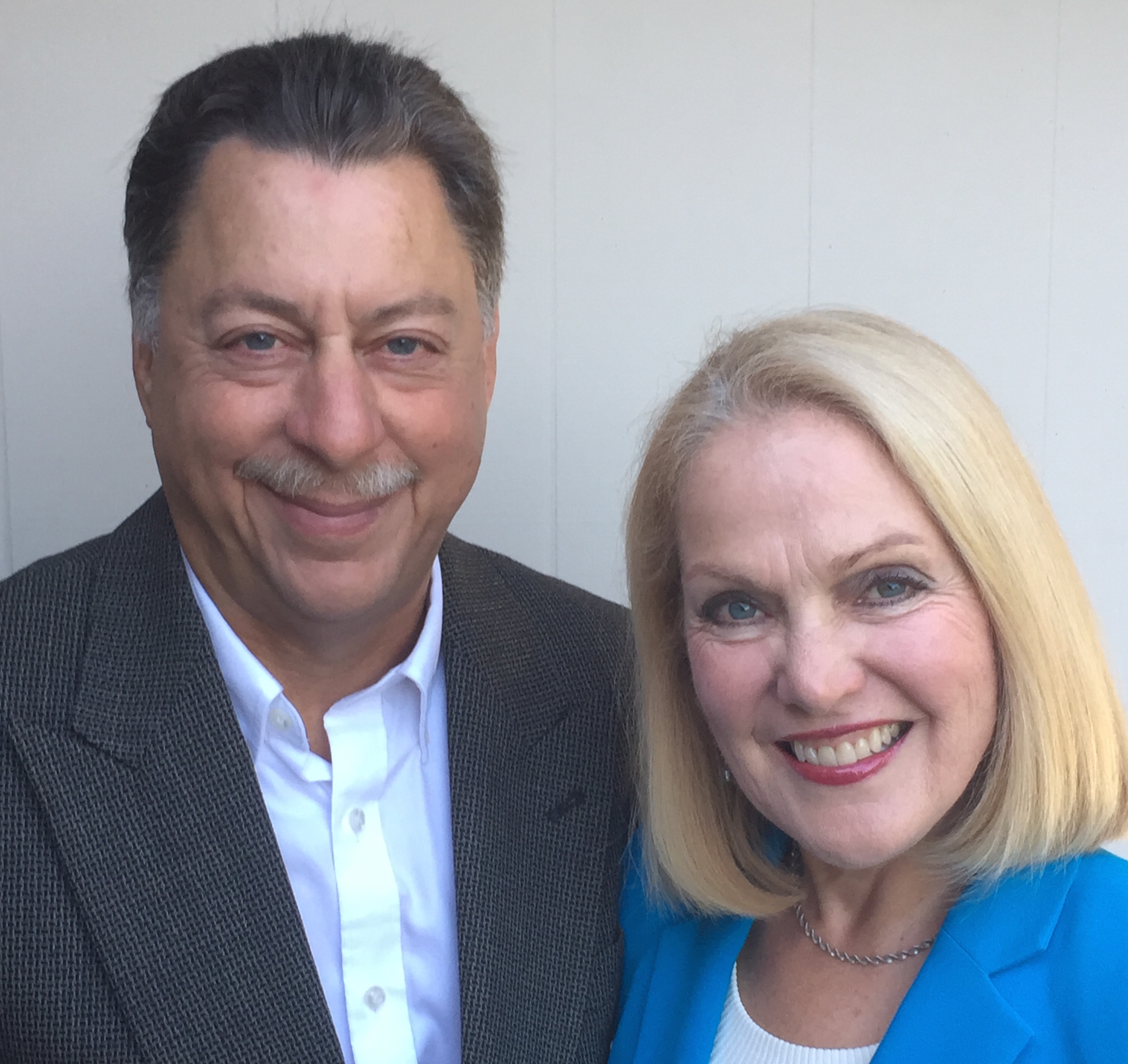
 

Dr. Mikol Davis and Carolyn Rosenblatt, co-founders of AgingInvestor.com

Carolyn Rosenblatt, RN, Elder Law Attorney offers a wealth of experience with aging to help you create tools so you can skillfully manage your aging clients. You will understand your rights and theirs so you can stay safe and keep them safe too.

Dr. Mikol Davis, Psychologist, Gerontologist offers in depth of knowledge about diminished financial capacity in older adults to help you strategize best practices so you can protect your vulnerable aging clients.

They are the authors of "Succeed With Senior Clients: A Financial Advisors Guide To Best Practice," and "Hidden Truths About Retirement And Long Term Care," available at AgingInvestor.com offers accredited cutting edge on-line continuing education courses for financial professionals wanting to expand their expertise in best practices for their aging clients. To learn more about our courses click HERE

The Way To Prevent Panic When Your Client Is Cognitively Impaired: Senior-Specific Policies

The Way To Prevent Panic When Your Client Is Cognitively Impaired: Senior-Specific Policies

You've probably had an aging client or a few of them who had you worried. They are increasingly forgetful. Maybe they called you multiple times a day and didn't remember that you had already answered their question. Perhaps they are not following anything in the conversations you have with them. After the fact, you are scratching your head, trying to figure out what to do with that client.

Regulators have not mandated that firms and individual advisors have policies that specifically address age-related issues with their clients, but they strongly urge it. One of the first things they want you to do is to have several trusted third party contacts in every client's file so you can contact someone in the event that your client becomes impaired.

Regulators want you to recognize the warning signs of financial abuse. They want you to keep your clients financially safer, mainly because they are more vulnerable than your younger clients. They want you to deal with privacy concerns but offer little guidance except for when you see abuse. What to do about financial abuse is not yet a regulation, though it will be.

How many firms have taken even these basic proactive policy steps to keep aging clients safer? From what we read and observe, not many. It takes time. You won't be directly paid for doing it. Maybe you think you can just wait until "something happens" before you do anything to change the status quo. That is a bigger risk than you want to take.

An aging client can fall into cognitive impairment without you noticing. They can be in a dire situation before you have had a chance to think about what to do proactively. Waiting for a crisis is not the style of a competent financial advisor nor any manager. What should you do?

First, you need to do as the regulators recommend: start putting together a plan for those clients who may become impaired for financial decisions. And plan for what to do when you see financial abuse happening. Next, you need to have a uniform path for escalation and contacting a third party. This requires more minds than one. Your mission of client protection needs to be clear and that must drive policy. Legal input is essential to this process. Privacy is a legal issue that can be dealt with when you have a legally sufficient privacy waiver in hand, standardized for every client. Finally, you need to commit your policy to writing and ensure that everyone you work with will follow it.

Develop this yourself or get a kit with the whole thing done for you in a template. Doing so will keep you alert for aging client issues at the beginning, not after things are a mess and you are trapped with that incapacitated client. Learn more about the policy-in-a-box, our Program Initiator at AgingInvestor.com.


Dr. Mikol Davis and Carolyn Rosenblatt, co-founders of AgingInvestor.com

Carolyn Rosenblatt, RN, Elder Law Attorney offers a wealth of experience with aging to help you create tools so you can skillfully manage your aging clients. You will understand your rights and theirs so you can stay safe and keep them safe too.

Dr. Mikol Davis, Psychologist, Gerontologist offers in depth of knowledge about diminished financial capacity in older adults to help you strategize best practices so you can protect your vulnerable aging clients.

They are the authors of "Succeed With Senior Clients: A Financial Advisors Guide To Best Practice," and "Hidden Truths About Retirement And Long Term Care," available at AgingInvestor.com offers accredited cutting edge on-line continuing education courses for financial professionals wanting to expand their expertise in best practices for their aging clients. To learn more about our courses click HERE

What Should You Say To A Client With Diminished Capacity?

What Should You Say To A Client With Diminished Capacity?

We've all had them. Those clients who seem to be more and more forgetful. They're with it some of the time and other times, not so much. They call you multiple times asking the same questions. They repeat their stories to you. It gets scary is when they start wanting to do dumb things with their money.

Unfortunately most firms do not have clear and specific protocols for you to follow when a client begins to show those telltale signs that he's slipping mentally. Or that she is flat out vulnerable to manipulation by some unscrupulous person. You see it, but what can you say? You just carry on hoping it will get better or that family will take care of it. But that doesn't happen. Then what?

At AgingInvestor.com we think it is far too dangerous for you to simply ignore the problem, or expect someone else to take care of it for you. If a scammer takes Dad, you will know when those strange and unexplained large withdrawals start coming out of his account. Family can reasonably expect that you will do something to keep your client, their father safe financially. That's fair enough, but how do you start?

First, you need to document every instance of anything that you observe that shows you that your client's ability to make financial decisions is becoming impaired. You don't need to be an expert to see what's obvious. Multiple phone calls in one day with the same question is an example. When you explain something slowly and clearly enough for a high school kid to understand and your formerly sharp client doesn't get it at all, that's another example: easily confused. There are numerous signs.

When you have collected the signs over a period of say, six months or more, and you have carefully recorded them somewhere, it's time to bring your client in for a face-to-face conversation. If you are at a distance, this may have to be by phone but it has to happen.

Start with your concerns. For instance, you can say "Jack, I'm getting concerned about some things I've noticed with you over the last few months. I've heard you ask the same thing multiple times in the same day. I have noticed that you are forgetting some important things I've explained to you about your portfolio." Jack may push back and probably will. You follow up by calmly showing him or describing to him the dates and your documentations of instances. "See here's what I mean. This is worrisome to me Jack. My job is to be sure your money is safe and that no one tries to rip you off. When you forget a lot, predators are waiting to target you".

Then you bring the conversation to the ask. "Whom do you trust that we could involve in being a backup safety person with you, or just joining in on the decisions about your investments here that might be a reassurance for me that you are ok?"

If you were smart before the diminished capacity issue came up long ago, you would have had Jack identify two trusted others you could contact in this situation. You would have had Jack give you permission to disclose protected information with the trusted others and thus dispose of the barrier that stops so many: the privacy issue. All this would be in your client file.

People respond to this approach in various ways. If you know your client, you will know some words that may work best with him or her. The point here is that you need to have this conversation, which may initiate a series of steps to keep that vulnerable client with diminished capacity as safe from predators or his own foolish decisions as you can.

Here are some takeaways from AgingInvestor.com, where you can learn more on this subject.

  1. Face the issue that you have to address this, awkward or not. Diminished capacity must not be ignored.
  2. Document each and every sign of diminished capacity as you communicate with your client. Here's a checklist to help you.
  3. Open the conversation by making it your concern. You are worried about the client. You want to keep him/ her safe. You want to do your professional job.
  4. Have at the ready your trusted 3d party contacts for your client. Get your client's permission to involve the trusted others at the earliest opportunity.

Does this expand your role as a financial professional? You bet. But there is no escaping aging clients and the issues longevity brings. Be ready for them.

Carolyn Rosenblatt, R.N., Elder Law Attorney, & Dr. Mikol Davis, Gerontologist co-founder of  AgingInvestor.com

Podcast Interview: Common Challenges in Helping Aging Parents

Podcast Interview: Common Challenges in Helping Aging Parents

Interview: Common Challenges in Helping Aging Parents

Hello everyone. Welcome to better health while aging, a podcast that gives you strategies and tips about improving the health and well-being of older adults. We discuss common health problems that affect people over age 60, the best ways to prevent and manage those problems and we also often address common concerns and dilemmas that come up with aging parents and other older loved ones, like what to do if you're worried about falls or safety or memory or even the quality of a seniors healthcare.

I'm your host Dr. Leslie Kernisan. I'm a practicing geriatrician, so that means I'm a medical doctor specialized in geriatrics, which is the art and science of modifying healthcare so that it works better for older people, and for their families.

Today’s episode features a special guest and we are going to be talking about common challenges related to aging parents. My guest is Carolyn Rosenblatt. She is an attorney and a registered nurse, and for the past several years she and her husband Dr. Mikol Davis, who is a geriatric psychologist, have specialized in helping families resolve difficult issues related to older parents. They have a website at AgingParents.com.

Carolyn is the author of “The Family Guide to Aging Parents” and several other books about assisting older adults with legal, financial, and life issues. She also write a column about aging for Forbes.com.

I have read many of Carolyn’s Forbes columns over the past few years and also read her book recently as I was writing one of my own articles about advance planning for legal and financial issues. So I’m thrilled that she was able to join me today to share some of her insights on how to manage some of the common challenges and dilemmas that families often struggle with.

Carolyn, welcome to the show.

Questions:

  • Tell us about your practice and how did you come to specialize in families and aging parents?
  • What are the most common types of problems that people ask you to help them with?
  • Some common scenarios we can discuss:
    • People are sometimes concerned that their parent is losing mental abilities, or becoming “incompetent.” They also often complain that their parent is refusing to talk about the issues and refusing to go see a doctor. What are some of your suggestions to help families resolve this?
    • People worried about how their parents are spending money, and/or worried that someone else is influencing the spending (e.g. a sibling)
    • People worried about their parents driving
    • People who want their parents to plan for decline in the future but the parents refuse or avoid the subject
  • How can older adults and their adult children plan ahead to avoid many of these difficult situations? Can you share some favorite resources that are effective in helping people through this?
  • For families that have set up springing powers of attorney, there is often a requirement that a doctor or other clinician say the older person no longer has capacity to manage finances or whatever power is in question. But families often say they can’t get the person to the doctor/psychologist to obtain this assessment. Suggestions?
  • There is really a lot that families could and should do to plan ahead. If people are feeling really limited in time and energy, what do you think are the most important or high-value things to do, when it comes to older parents who are doing ok now.
    • Another angle on this: what are the things that people end up regretting not doing the most often?
  • You’ve written a lot about preventing financial abuse of older adults. What are some useful steps you recommend to prevent this from happening, or from causing serious financial losses?
  • You have a chapter on helping older parents from a distance, and you write about how you and your husband eventually hired a care manager, in order to have someone close to your mother-in-law. What do you recommend for people who feel they can’t afford to hire a care manager?
  • How can families deal with declining abilities, dementia, and physical dependency if there isn’t family to provide care or money to hire someone?
  • How have you and your husband planned for your own future? (We can skip this if it’s too personal.)

At the end I will tell people they can learn more about you and your special consultation practice at AgingParents.com.

Attention Financial Advisors: Do You Have A Colleague With Cognitive Impairment ?

Attention Financial Advisors: Do You Have A Colleague With Cognitive Impairment ?

Attention Financial Advisors:Do You Have A Colleague With Cognitive Impairment?

The financial services industry frequently shows concern about the problems of longevity and aging clients. Cognitive impairment, diminished capacity and dementia get air time with various solutions, mostly vague, offered by industry insiders. But one problem is not being addressed: the professional herself with cognitive impairment.

It's time to look at this as a real risk, not some unlikely possibility that can easily be taken care of by a succession plan for the professional's business. Dementia is a complicated disease. It sneaks up on people, with the early warning signs of short-term memory loss, followed by increasing difficulty with reasoning and judgment. If we had not witnessed this at AgingInvestor.com with impaired professionals ourselves, we might be fooled into thinking that professionals had figured out how to address it. Simply put, they haven't.

Let's look at the notion that all you need is a succession plan for your business and there will be no problem if you develop cognitive impairment yourself, or someone in your organization does. What's the flaw in this? It is that many people with early Alzheimer's or other dementia do not recognize that they are impaired. This phenomenon is called anosagnosia, an inability or refusal to recognize a defect or disorder that is clinically evident. Ironically, the part of the brain that reasons and analyzes is so affected by the disease that it is not able to process the information about one's own impairment.

How this plays out is that as a person ages and becomes more at risk for dementia, some will surely fall victim to brain disease. The odds are at least one in three by the time we reach age 85. The risk doubles about every 5 years starting at age 65. So some financial professionals are going to develop dementia and some will not know that they have any impairment. So they keep working. Others around them are afraid to raise the topic when alarming signs first appear. No protocol exists to ease a person out of the role to which they are accustomed, particularly when they tell you they're feeling just fine, thank you.

Busting The Myths

Myths exist. The first is that a financial professional, whether managing money for clients, selling products or addressing their taxes and accounting, will know that he or she needs to retire when the time comes. This is not what occurs. Many folks who have a good book of business and enjoy what they do will not look to retire by a certain age. They keep working, and consequently when they are impaired they put every client at risk.

Another myth is that somehow the doctor, the family or someone else will advise you when you have dementia and you will of course agree with their assessment. Denial is a frequent component of cognitive impairment, rooted deeply in fear of losing control over one's life. Even those who start to see and fear their own early difficulties with memory will cover it up, avoid facing it and carry on as if everything is fine. Even an annual physical checkup with the doctor is very unlikely to reveal the early warning signs of dementia unless the patient mentions cognitive problems to the examining doctor.

What Can Professionals Do?

As described in detail in Succeed With Senior Clients: A Financial Advisor's Guide to Best Practices, every organization needs a protocol to address the risk of diminished capacity in an impaired colleague. Few firms have a mandatory retirement age, but this option exists.

A protocol for advisors and others can look similar to the protocol every professional needs for aging clients. First, one needs a standardized way to spot the red flags of diminished capacity. Next, these must be regularly documented and contact with the potentially impaired client must increase. Third, a standard way to escalate the issue to knowledgeable others in the firm should exist. For clients who demonstrate the red flags, the organization must have a next step, which means contacting an appointed third party to become a surrogate decision maker. For professionals, a mandatory way to ease the person out of the job on a specific timeline should be in place, and this should become office policy.

It is time for every professional to look at the reality of the risk we all face with impaired cognition. It can happen to anyone. Your professional skill does not protect you from dementia. Wise planning for how you or your colleague would exit your job when you can't see why you need to must be on everyone's agenda.

By Carolyn Rosenblatt, RN, Attorney,  & Dr. Mikol Davis Geriatric Psychologist

AgingInvestor.com