Sep 22, 2017 | aging investor, cost of aging, cost of long term care
You've probably had an aging client or a few of them who had you worried. They are increasingly forgetful. Maybe they called you multiple times a day and didn't remember that you had already answered their question. Perhaps they are not following anything in the conversations you have with them. After the fact, you are scratching your head, trying to figure out what to do with that client.
Regulators have not mandated that firms and individual advisors have policies that specifically address age-related issues with their clients, but they strongly urge it. One of the first things they want you to do is to have several trusted third party contacts in every client's file so you can contact someone in the event that your client becomes impaired.
Regulators want you to recognize the warning signs of financial abuse. They want you to keep your clients financially safer, mainly because they are more vulnerable than your younger clients. They want you to deal with privacy concerns but offer little guidance except for when you see abuse. What to do about financial abuse is not yet a regulation, though it will be.
How many firms have taken even these basic proactive policy steps to keep aging clients safer? From what we read and observe, not many. It takes time. You won't be directly paid for doing it. Maybe you think you can just wait until "something happens" before you do anything to change the status quo. That is a bigger risk than you want to take.
An aging client can fall into cognitive impairment without you noticing. They can be in a dire situation before you have had a chance to think about what to do proactively. Waiting for a crisis is not the style of a competent financial advisor nor any manager. What should you do?
First, you need to do as the regulators recommend: start putting together a plan for those clients who may become impaired for financial decisions. And plan for what to do when you see financial abuse happening. Next, you need to have a uniform path for escalation and contacting a third party. This requires more minds than one. Your mission of client protection needs to be clear and that must drive policy. Legal input is essential to this process. Privacy is a legal issue that can be dealt with when you have a legally sufficient privacy waiver in hand, standardized for every client. Finally, you need to commit your policy to writing and ensure that everyone you work with will follow it.
Develop this yourself or get a kit with the whole thing done for you in a template. Doing so will keep you alert for aging client issues at the beginning, not after things are a mess and you are trapped with that incapacitated client. Learn more about the policy-in-a-box, our Program Initiator at AgingInvestor.com.
|
|
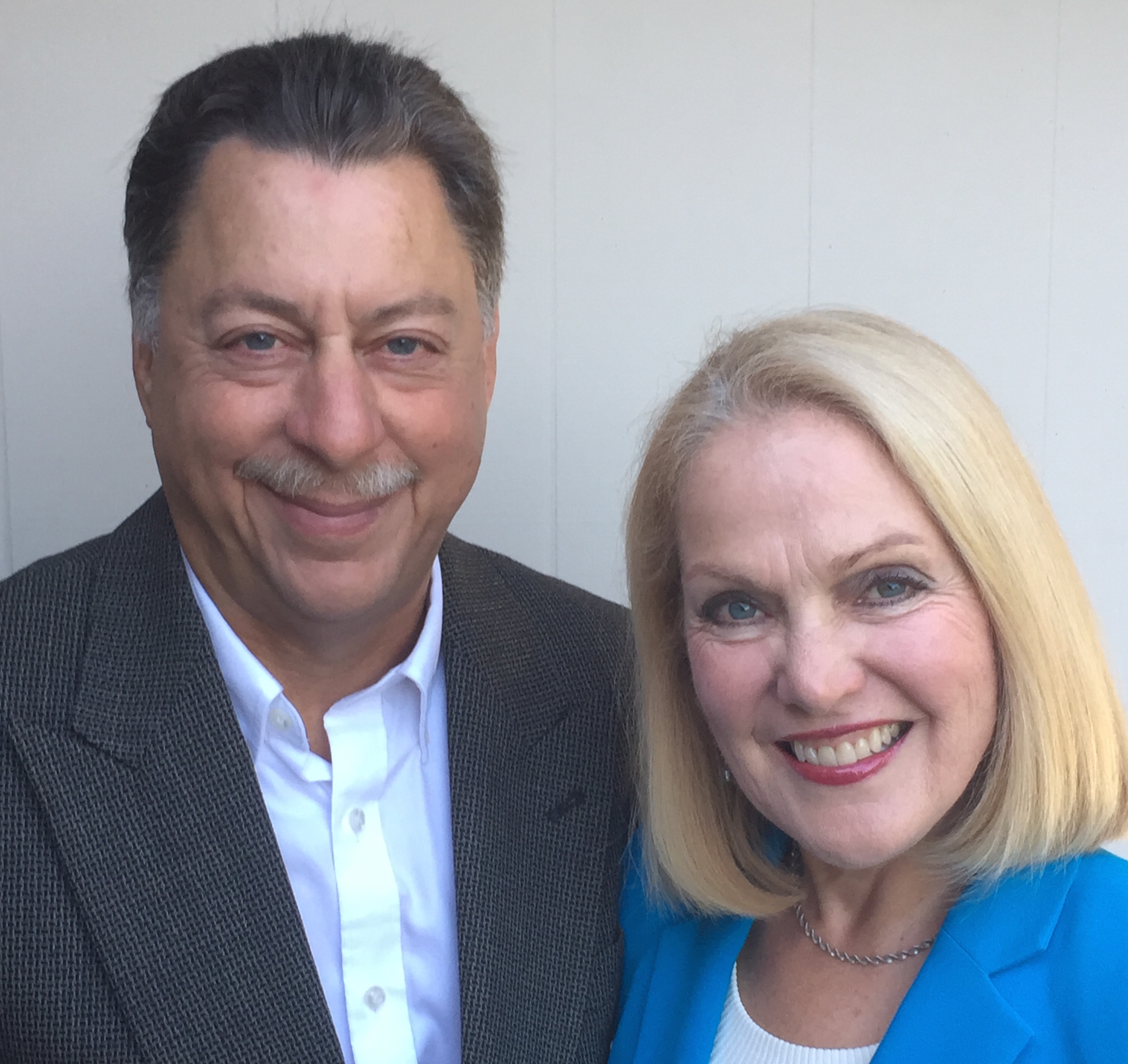
Dr. Mikol Davis and Carolyn Rosenblatt, co-founders of AgingInvestor.com
Carolyn Rosenblatt, RN, Elder Law Attorney offers a wealth of experience with aging to help you create tools so you can skillfully manage your aging clients. You will understand your rights and theirs so you can stay safe and keep them safe too.
Dr. Mikol Davis, Psychologist, Gerontologist offers in depth of knowledge about diminished financial capacity in older adults to help you strategize best practices so you can protect your vulnerable aging clients.
They are the authors of "Succeed With Senior Clients: A Financial Advisors Guide To Best Practice," and "Hidden Truths About Retirement And Long Term Care," available at AgingInvestor.com offers accredited cutting edge on-line continuing education courses for financial professionals wanting to expand their expertise in best practices for their aging clients. To learn more about our courses click HERE
|

Mar 25, 2016 | aging, aging investor, diminished cognition, elder investor, elderly, finances for elders, financial capacity, finra, handling money for seniors, investor, senior citizen investor, senior investor, seniors finances
Have you ever felt frustrated when you thought your client was showing signs of declining mental status? Did you ever want to get someone else involved in financial decisions but thought you couldn’t because of privacy rules?
The average advisor has seven clients with some form of diminished capacity. Perhaps you are one of them, not comfortable with the privacy laws that restrict you from calling in someone to help when your client doesn’t seem all there anymore.
If you are worried that you must just stand by and watch a vulnerable client make bad decisions, or worse, get ripped off by someone who is manipulating him and taking advantage of his cognitive impairment, there’s good news. There is a way around the confidentiality conundrum. You need your client’s permission in advance to call that third party.
How do you plan for the possibility of needing a third party? Take your cue from lawyers. When we have a conflict that would be there unless we get an ok from our clients, we design a document that allows the client to give up the right she would otherwise have. We get the client’s signed approval do to what we need to do whenever feasible. You can do the same thing with privacy restrictions.
Imagine that you have some clients over the age of 65. Imagine that you are a proactive thinker. You want to keep all of them safe and keep those clients, even if they decline cognitively in the future. Imagine that you have been really smart and have gotten a special permission document done. Every client over age 65 signs it. You are ready!
What Should A Privacy Permission Contain?
We recommend three essential elements for your document.
First, you need to identify the circumstances under which your client wants to give you the ok to call in that third party they identify.
Second, the document needs to be legally sufficient; i.e., it should have language like an advance healthcare directive or a standard durable power of attorney.
Third, it needs to be signed and notarized by your client.
How Do You Get It Done?
Your legal department should be able to help you. If not, a model document was created by lawyers at AgingInvestor.com, in the context of a senior-specific program to protect your aging investors. You can’t just throw one together. As you have to know, recognize and document the signs of diminished capacity that would lead to use of this kind of document, those are prerequisites. Then the matter escalates according to a standard procedure. Get a clear path. Find out more about it HERE.

Mar 25, 2016 | aging, aging investor, diminished cognition, elder investor, elderly, finances for elders, financial capacity, financial elder abuse, handling money for aging parents, handling money for seniors, investor, scammers, senior citizen investor, senior investor, seniors finances
There is something about memory loss that should raise a red flag when it comes to your aging clients and their investments. Are you prepared?
By 2030, there will be 72.1 million people in the U.S. over age 65, or “elders”. 7.7 million of them will have Alzheimer’s Disease (AD). This directly translates to a large number of impaired clients making or attempting to make financial transactions and decisions. Some of those transactions could be with you.
According to respected researcher, attorney and neuropsychologist at the University of Alabama, Burmingham, Dr. Daniel Marson, losing capacity for financial decisions is something we need to be ready for, as it affects a huge part of our population. The problem is growing. Financial institutions, organizations and banks need to take preventive steps to avoid financial losses and exploitation of their clients.
What are the implications for the financial services industry? Demographics and dementia demonstrate that policies need to change and institutions need to explicitly plan for diminished financial capacity in their investors. We’re not just talking about escalating a matter to compliance when a client seems to be behaving oddly. We are suggesting that institutions and organizations get over the brick wall excuse that it’s not their problem, it’s the family’s problem. Financial professionals need to change the thinking that privacy concerns prevent them at all times from doing anything unless the client gives permission. A client who is impaired for decision-making may not be willing or able to give permission for you to discuss a problem with family until it is too late. Getting permission needs to be a proactive mandate.
Privacy does not have to be a problem if your organization, institution, or you, as an individual plan for the possibility of diminished capacity as a part of all investment transactions. That planning will include obtaining a special authorization for the financial services professional to contact a designated person when certain criteria are met. That, of course, means thinking through, with the input of aging experts, the criteria that would trigger the use of the special authorization.
Further, one should develop an agreed upon plan of action for the financial professional when the criteria that demonstrate diminished capacity are identified. This will take collaboration among all the players in institutions, so that policy development is uniform, regulation-compliant, and fair to the aging person who may be developing impairment.
Most importantly, a secure path of communication and action for the institution needs to be in place. No one with a questionable aging client should be left wondering:
Should I escalate this to compliance now, or does it take more?
Do I have the authority to contact a family member, or does that violate my client’s privacy and the laws about privacy?
What steps should I take now to protect myself?
Clients with memory loss are likely going to become impaired for making financial decisions at some point. Do you want to lose the assets under your management because your aging investor can’t figure out what you are saying and can’t approve what you need to do to protect him from disaster? We see an absolute connection, based on very solid research, between the dangerous red flag of memory loss and financial loss.
If you have heard the term “sliver tsunami” you may know that it refers to the massive wave of aging folks in our population. In case you haven’t noticed, it has already hit and your feet are getting wet.
Get a one page checklist you can use to identify ten signs of diminished capacity by clicking HERE. Be ready for aging clients and know what to do!
Jan 16, 2016 | aging, aging investor, elder investor, elderly, finra, investor, NASAA, SEC, senior investor
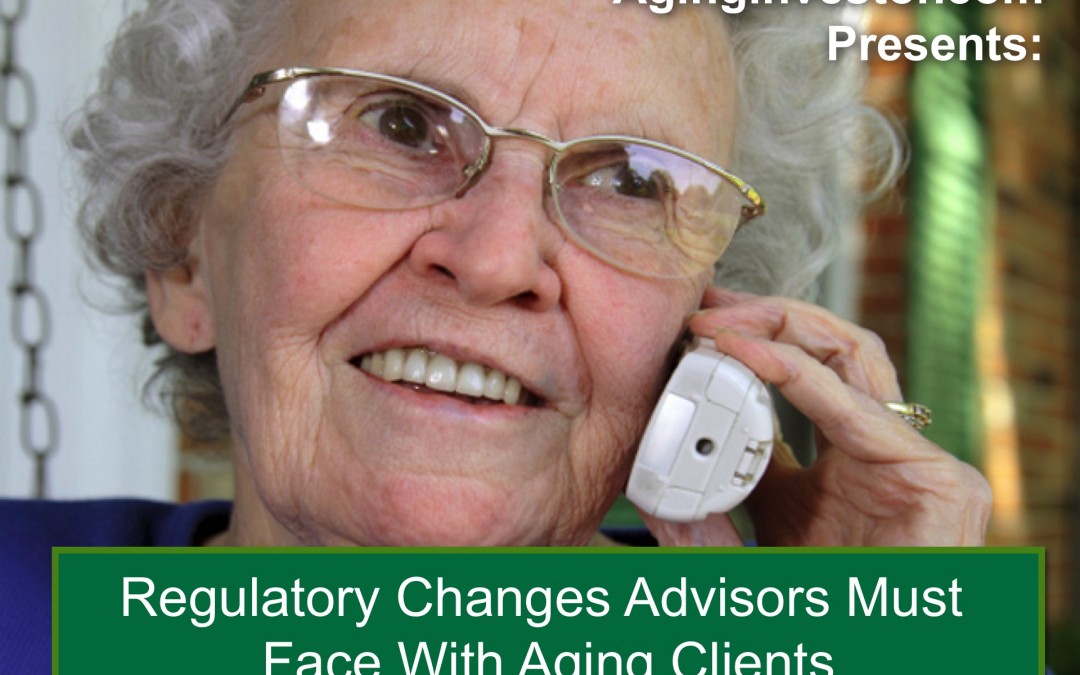
“Regulatory Changes Advisors Must Face With Your Aging Clients”
Summary of course:
Update on what the SEC, FINRA an NASAA have in mind for financial professionals across the country in how they do business with clients over age 65. Review of the research these agencies have done, Model Rules regulators have created and what exemplary things they found firms and organizations doing for aging clients. They all want financial professionals to be more protective of aging investors. They envision mandates for reporting financial abuse of elders will and expand mandates into other areas. This course highlights areas regulators expect advisors to address, such as training in senior issues and increased communication with aging clients. It provides specifics on how to get ready for what the regulators want so that you will not have to scramble to comply with mandates.
Learning Objectives:
- Understand the regulators’ concept of a “senior program” and how you can create one.
- Know the Model Rules about financial abuse the regulators have already publicly posted.
- Know what other firms across the US are doing about aging investors that you should be doing too.
- Know what action steps you can and should take now to be ready for mandates.