Jan 16, 2016 | aging, aging investor, elder investor, elderly, finances for elders, handling money for aging parents, senior citizen investor, senior investor, seniors finances, wealth transfer
“Improving Intergenerational Wealth Transfers”
Summary of course:
It’s pretty well known that intergenerational wealth transfers fail about 70% of the time. What makes the other 30% successful? If you’d like to learn how you can help your client be part of one of the successful families, you’ll need to understand the critical parts of success and how to achieve them. Communication is one of the things we talk about in this course. Who better to advise us than an experienced psychologist who has worked with families for over 40 years? Dr. Davis has given us great information to help ease your way and give you confidence in creating a path to a wealth transfer that works well.
Learning objectives:
- Facilitate advisor-led intergenerational communication.
- Improve retention of managed assets by establishing relationships with client’s heirs.
- Increase communication skills to build new client base of aging client’s heirs.
- Implement specific, established and successful communication techniques.

Aug 29, 2015 | aging, aging investor, elder investor, elderly, finances for elders, handling money for aging parents, handling money for seniors, senior citizen investor, senior investor, seniors finances
3 Ways To Talk With Aging Parents About Finances
One benefit of the increasing life expectancies for Americans is that more people have bonus years for enjoying the company of their aging parents.
But all is not rosy. Those extended years also boost the odds that parents could go broke or suffer from dementia and be unable to make financial decisions for themselves.
That can leave adult children perplexed about when and whether they should step in and find out what’s happening with their parents’ money, says Carolyn Rosenblatt, a registered nurse and elder law attorney.
“Unfortunately, it’s not always easy to have those conversations,” says Rosenblatt, co-author with her husband, Dr. Mikol Davis, of The Family Guide to Aging Parents (www.agingparents.com) and Succeed With Senior Clients: A Financial Advisors Guide To Best Practices.
“Some stubborn parents just refuse to talk about their money. No matter what their adult children say to them, they put it off, change the subject or tell their children it’s none of their business.”
Of course, many adult children aren’t in any particular hurry to broach the subject either, says Davis, a clinical psychologist and gerontologist.
“They have their own discomfort about it and procrastinate,” he says. “Then a crisis comes up and no one has any idea what the parents have or where to find important documents.”
But Rosenblatt and Davis say it’s critical that these conversations take place so that the offspring can gather information about such subjects as the parent’s income and expenses, where legal documents are kept, and what kind of medical or long-term-care insurance the parent might have.
The success of these conversations often comes down to how you approach the subject, Rosenblatt and Davis say. They offer a few tips:
- End the procrastination by picking a date for the talk. Make an appointment with yourself to bring up the subject at a specific time. An opportune time to schedule this is after a birthday, a family event or a holiday where other family members are together who may share in the responsibility for the aging parents in the future.
- Show respect. Tell your parents you understand and respect their reluctance to discuss their finances. You can even make the conversation about yourself rather than about them. Say that you’re concerned that if something went wrong, you would be completely lost as to how to help them.
- Address their fears head-on. Let them know you understand they are worried that if they talk about their finances their independence might be taken away. You might add that you want them to maintain their independence as long as possible and you’re willing to help accomplish that, but you can’t do it without the correct information.
“Getting past an aging parent’s fear about talking about finances can be daunting,” Rosenblatt says. “But a well-planned strategy for approaching the subject will give you your best chance.”
About Carolyn Rosenblatt and Dr. Mikol Davis
Carolyn Rosenblatt and Dr. Mikol Davis are co-authors of The Family Guide to Aging Parents (www.agingparents.com) and Succeed With Senior Clients: A Financial Advisors Guide To Best Practices. Rosenblatt, a registered nurse and elder law attorney, has more than 45 years combined experience in her professions. She has been quoted in the New York Times, Wall Street Journal, Money magazine and many other publications. Davis, a clinical psychologist and gerontologist, has more than 44 years experience as a mental health provider. In addition to serving his patients, Davis creates online courses and products to assist professionals and the public with understanding aging issues. Rosenblatt and Davis have been married for 34 years.
|
|
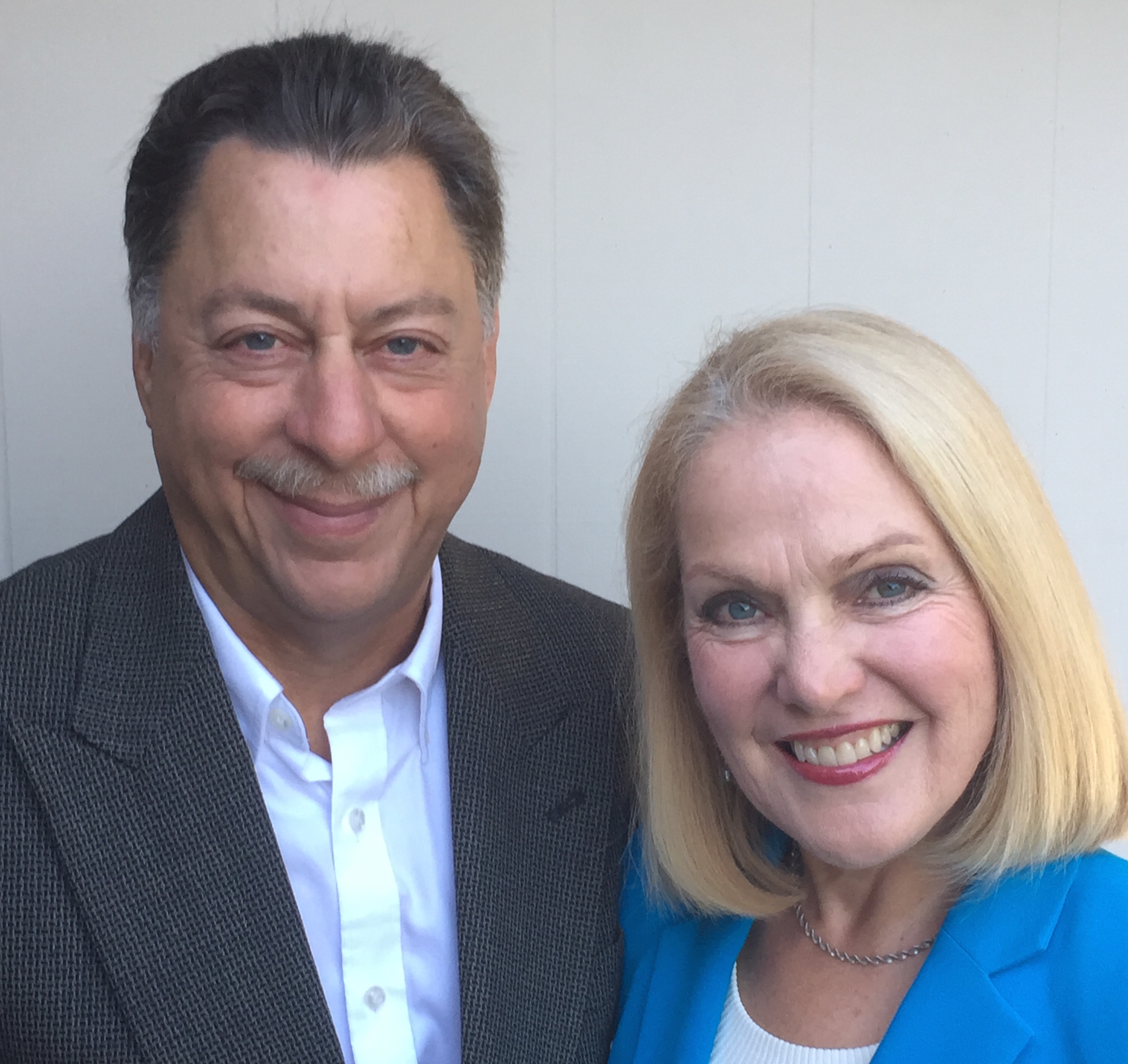
Dr. Mikol Davis and Carolyn Rosenblatt, co-founders of AgingInvestor.com
Carolyn Rosenblatt, RN, Elder Law Attorney offers a wealth of experience with aging to help you create tools so you can skillfully manage your aging clients. You will understand your rights and theirs so you can stay safe and keep them safe too.
Dr. Mikol Davis, Psychologist, Gerontologist offers in depth of knowledge about diminished financial capacity in older adults to help you strategize best practices so you can protect your vulnerable aging clients.
They are the authors of "Succeed With Senior Clients: A Financial Advisors Guide To Best Practice," and "Hidden Truths About Retirement And Long Term Care," available at AgingInvestor.com offers accredited cutting edge on-line continuing education courses for financial professionals wanting to expand their expertise in best practices for their aging clients. To learn more about our courses click HERE
|

Jun 13, 2015 | aging, aging investor, diminished cognition, elder investor, elderly, finances for elders, financial capacity, financial elder abuse, finra, handling money for aging parents, handling money for seniors, investor, senior citizen investor, senior investor, seniors finances
Why Delay Is Not A Solution
The securities industry is pushing to impose temporary holds on certain transactions that may be precipitated by a clients’ declining mental capacity, or purported loved ones who may be trying to swindle them. Sounds good in theory. Too bad it won’t solve the problem of financial abuse. Does the industry think that waiting is going to make the problem of predators go away?
Here is an example of a real case in which this exact method of the broker waiting and hoping didn’t do a thing for the elder who was being abused. READ what happened:
(more…)

Nov 22, 2014 | aging, aging investor, Alzheimer's disease, diminished cognition, elder investor, elderly, financial elder abuse, investor, senior citizen investor, senior investor
We know that abuse of seniors is a growing problem. Based on information from the National Center on Elder Abuse, the majority of abusers are family members. However, only 44 out of 1000 instances of abuse are reported to authorities. Why aren’t more cases reported to the very authorities capable of stopping the abusers?
It seems to me that most family members are simply unwilling to “rat out” another family member even when they know that abuse is going on. When it comes to the seniors themselves, there is shame and embarrassment associated with being taken advantage of by someone close, especially someone they surely trusted. There is hesitation and fear. They want to talk about it but not do anything about it. The reluctance to report the abuse to Adult Protective Services is not limited to the seniors who can’t bear to call the authorities about a son, daughter or other relative.
I recently received a call from a distressed sister of a brother that she was convinced was stealing from their parents. He had total control over their parents, one of whom had dementia. His parents had appointed him as the agent on both the Durable Power of Attorney and the Advance Healthcare Directive. This gave him the legal authority to make both financial decisions without being accountable to anyone else and all healthcare decisions as well. I listened patiently to all the reasons she thought her brother was taking her parents’ money and using it for himself. I asked her if she had called Adult Protective Services.” No”, she said. When I asked why not she said “I don’t want to get my brother in trouble”. Where is the logic in that?
In another case, the elder herself had called. “I gave my grandson a big loan and he hasn’t paid it back,” she said. “But now I need the money to live on”. She described how her favorite grandson had taken title to her mobile home and gotten a loan, even after she had “loaned” him most of her savings. I explained that her chances of getting paid back were probably not very good, but the least she could do was to report what had happened to authorities. I advised her that taking a “loan” from an 80 year old and not paying it back would likely be considered elder abuse and it should be reported to APS. “Would my grandson go to jail?” she asked. I told her I didn’t know but it can happen when someone has committed this crime of elder abuse. She said, “I don’t want my grandson to go to jail”. Unfortunately, I am sure she did not follow up or do anything more about the problem.
Seniors like the 80-year-old woman are typical of why elder abuse does not get reported and therefore prosecuted more often, even when a family member is well aware of what is going on and knows that it is wrong. They would rather suffer impoverishment than be the one to report abuse. In fact, these same victims may refuse to testify against a relative who has abused them, even when these cases are prosecuted. Charges may not stick when the victim is unwilling to testify, unless there are independent records to prove the case in court.
It is as much a problem of our emotions and fears as it is of the wrongdoing itself. We somehow justify the actions, we look the other way or we fear what justice will do to our abusive relative.
I wonder, where is the anger at a crime against a person who is easily taken advantage of by the abuser? Where is the advocacy for the vulnerable person who is also our relative? Why are we remaining silent in this growing, $2.9 billion dollar a year problem?
I would be willing to guess that there is someone reading this whose client has a financial abuser in a their family or knows of a family where this has taken place. I urge you to speak up. To my knowledge, you can remain anonymous in your reporting, just as you can with any crime. Whether or not the criminal justice system can prove the crime is not your problem. It is your problem to carry the knowledge of financial abuse with you and to do nothing to protect the elder. One day it could be you who is victimized.
We are all encountering an aging population and the crime of opportunity of abusing elders is not going away. I am hopeful that we will show enough concern, enough responsibility and enough guts to do the right thing when we see a wrong that needs our attention.