

Add Value By Offering Family Meetings For Aging Clients

Add Value By Offering Family Meetings For Aging Clients

Some advisors don't have any clients over age 75 and some of you have a book full of them. No matter what you have now, it is certain that if you intend to keep clients long term, you'll have elderly among them. Here is an important way to add value to what you do for them: meet with them and their intended heirs to discuss finances and aging issues.

Initiating family meetings about investments is not something most people are doing all by themselves. They need a nudge and you are the right person to give that nudge. What's the big deal? Don't underestimate the importance of family communication about their assets. Lack of trust and communication between generations causes 70% of wealth transfers to fail.

What that means is that the family wealth is lost when it gets into the hands of the first generation of heirs to follow the matriarch and patriarch. They aren't ready for and don't handle it well. You may be helping your client to build and maintain wealth but the client is not preparing his heirs to receive it. You can certainly help by offering to conduct meetings and explaining the strategy of wealth building and maintaining assets that you do.

There is more to the discussion in a family meeting than investments and the passing on of assets. There is the sometimes long, drawn-out period of an elder in failing health. Does the spouse know what to do and how much things will cost in providing long-term care to a loved one? Do the adult children know? It can get quite complicated if your client, like most people chooses to age in place at home rather than go to a facility to get needed care. Hiring, managing and supervising home care workers is no small task for anyone. You can offer factual information.

When dementia is an issue, you could be looking at a client living with it for 20 years. Each year that passes with this fatal brain disease is a year of greater dependency on others to get by. The possibility of long-term care needs discussion among family members. Starting the conversation may not be within your comfort zone but the skills of how to talk about these emotional subjects can be learned.

Most advisors proclaim that they want to add value to their services and they need to show how they are better than the competition. Have you considered that you can promote your ability and willingness to protect your client's financial safety for life as a selling point? You go way past the "successful retirement planning" line to the things that worry people about aging. You educate, collaborate, and coordinate discussions with their families and help them overcome the resistance to delving into aging issues no one likes to talk about. It is a part of your potential services you should not overlook nor avoid.

To learn some practical tips on how to conduct successful family meetings, check out our anytime on-demand online course here. It's CFP accredited, one hour, and very affordable. Join us today!
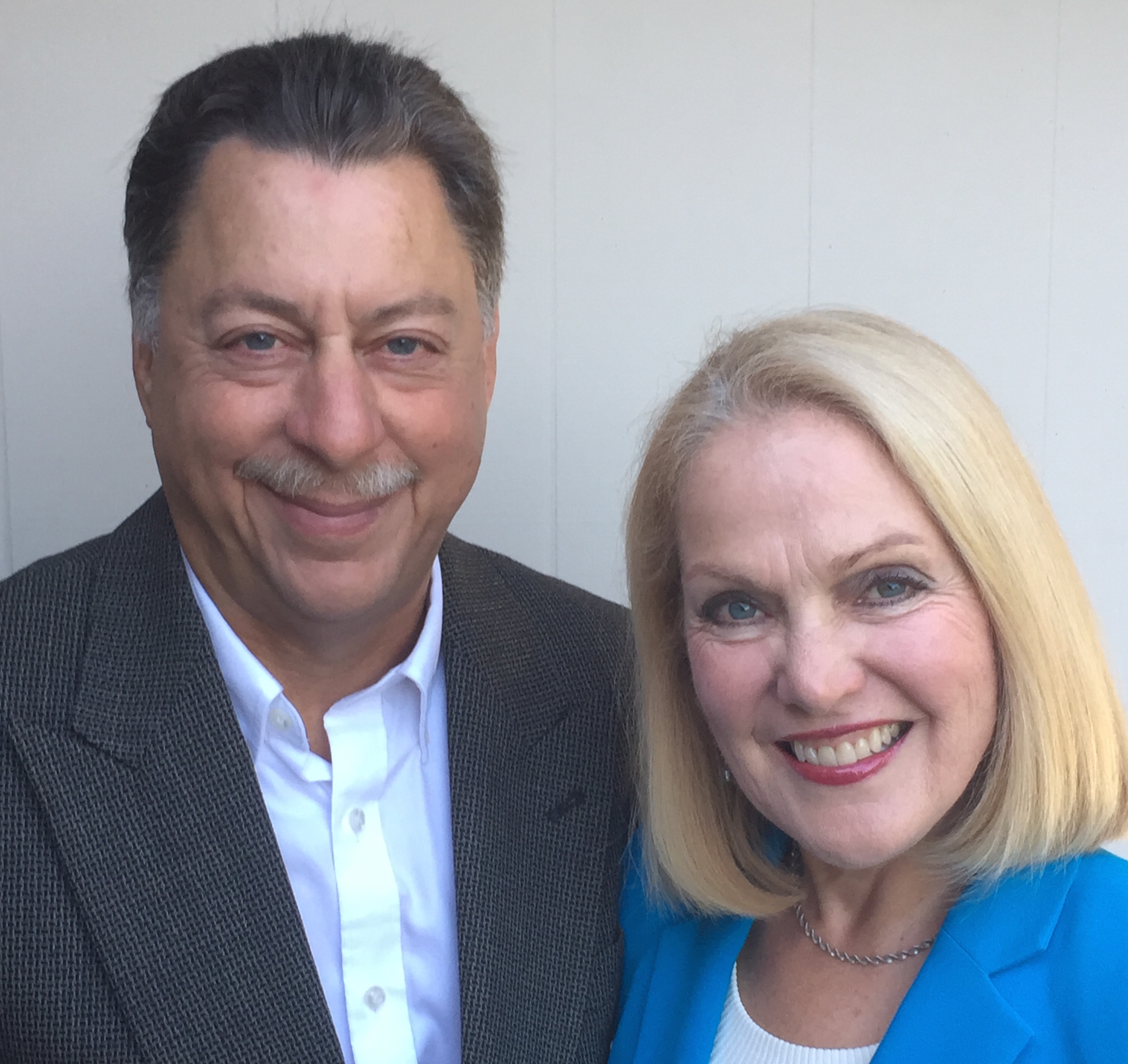
 

Dr. Mikol Davis and Carolyn Rosenblatt, co-founders of AgingInvestor.com

Carolyn Rosenblatt, RN, Elder Law Attorney offers a wealth of experience with aging to help you create tools so you can skillfully manage your aging clients. You will understand your rights and theirs so you can stay safe and keep them safe too.

Dr. Mikol Davis, Psychologist, Gerontologist offers in depth of knowledge about diminished financial capacity in older adults to help you strategize best practices so you can protect your vulnerable aging clients.

They are the authors of "Succeed With Senior Clients: A Financial Advisors Guide To Best Practice," and "Hidden Truths About Retirement And Long Term Care," available at AgingInvestor.com offers accredited cutting edge on-line continuing education courses for financial professionals wanting to expand their expertise in best practices for their aging clients. To learn more about our courses click HERE

One Man’s Shock At His Adult Children’s Neglect When He Needed Them

One Man’s Shock At His Adult Children’s Neglect When He Needed Them

All his life Philip worked hard and was successful. He amassed wealth beyond expectations. He gave generously to all of his kids, buying them homes and bestowing money gifts. In fact giving kids money was the only way he really knew how to show he cared. Expressing love in other ways was not his thing. He and his wife lived a luxurious lifestyle: country club, exotic vacations, lavish parties, fancy cars. She ran the house and he ran the flourishing business.

It all looked great when he retired. Until his wife developed Alzheimer's disease. Things began to fall apart when he was78, with a wife becoming increasingly dependent and in need of care. He wasn't used to running the house. Things descended into disrepair. Then his vision got cloudy and his hearing started to go.

He expected his adult children to step up and be there. But entitled kids, used to having Dad hand them things without having to work for them, never did take much responsibility. If they needed something, Dad would just buy it for them. Now Dad needed more from them but none of them had ever learned about giving back. Communication was poor. If the conversation wasn't about money, no one had much to talk about.

Things broke down among the family members. They were never good at talking to each other or to their parents about anything of substance. Now that the parents were both in need of help they could not rely on their adult children to work on household management, or budgeting for care or doing needed repairs.

Philip found himself depressed. He looked at what he had created, all the wealth, all the things and somehow he felt a loss. Financial success had not led to family success.

But he decided to act. He decided that this part of his life was going to be meaningful before his end and he set to work.

He gathered his adult children in his home for a meeting. He was frank with them and revealed how sad and disappointed he felt. He revealed his fears, something he had never done. He told them he expected more from them. The kids looked at each other somewhat sheepishly. They admitted that they had been off in their own worlds. They told their father how much they wanted to be closer but just didn't know how. They asked him to be open to telling them he loved them. He asked them to express more caring by showing up and pitching in. The paid caregivers for the parents were great but they were not there all the time.

Agreements were made. Some stumbling and awkwardness happened at first. But as the next month passed, the kids finally started to show up with a schedule. And empty talk was replaced by family history, expressions of thanks and acknowledgment to each other of the changes they were making.

The last years for Philip were much better. He was able to express his feelings in ways he had never done before. Maybe age just made him not care about what people might think. It had a profound effect on his family. All of them grew closer, in spite of their differences. They learned to accept each other far better, led by Philip.

Philip passed away in peace at age 84. His story is one to share with any child who grew up in wealth and any parent who did not expect enough of the kids in a younger day. Adult children can learn to give more to parents as they age and become more vulnerable. Parents can learn to express love and affection apart from cash and objects. It's not too late in your advanced years to change for the better.

Carolyn Rosenblatt, RN, Elder Law Attorney, & Dr. Mikol Davis, Gerontologist co-founder of AgingInvestor.com

3 Ways To Talk With Aging Parents About Finances

3 Ways To Talk With Aging Parents About Finances

3 Ways To Talk With Aging Parents About Finances

One benefit of the increasing life expectancies for Americans is that more people have bonus years for enjoying the company of their aging parents.

But all is not rosy. Those extended years also boost the odds that parents could go broke or suffer from dementia and be unable to make financial decisions for themselves.

That can leave adult children perplexed about when and whether they should step in and find out what’s happening with their parents’ money, says Carolyn Rosenblatt, a registered nurse and elder law attorney.

“Unfortunately, it’s not always easy to have those conversations,” says Rosenblatt, co-author with her husband, Dr. Mikol Davis, of The Family Guide to Aging Parents (www.agingparents.com) and Succeed With Senior Clients: A Financial Advisors Guide To Best Practices.

“Some stubborn parents just refuse to talk about their money. No matter what their adult children say to them, they put it off, change the subject or tell their children it’s none of their business.”

Of course, many adult children aren’t in any particular hurry to broach the subject either, says Davis, a clinical psychologist and gerontologist.

“They have their own discomfort about it and procrastinate,” he says. “Then a crisis comes up and no one has any idea what the parents have or where to find important documents.”

But Rosenblatt and Davis say it’s critical that these conversations take place so that the offspring can gather information about such subjects as the parent’s income and expenses, where legal documents are kept, and what kind of medical or long-term-care insurance the parent might have.

The success of these conversations often comes down to how you approach the subject, Rosenblatt and Davis say. They offer a few tips:

  • End the procrastination by picking a date for the talk. Make an appointment with yourself to bring up the subject at a specific time. An opportune time to schedule this is after a birthday, a family event or a holiday where other family members are together who may share in the responsibility for the aging parents in the future.
  • Show respect. Tell your parents you understand and respect their reluctance to discuss their finances. You can even make the conversation about yourself rather than about them. Say that you’re concerned that if something went wrong, you would be completely lost as to how to help them.
  • Address their fears head-on. Let them know you understand they are worried that if they talk about their finances their independence might be taken away. You might add that you want them to maintain their independence as long as possible and you’re willing to help accomplish that, but you can’t do it without the correct information.

“Getting past an aging parent’s fear about talking about finances can be daunting,” Rosenblatt says. “But a well-planned strategy for approaching the subject will give you your best chance.”


About Carolyn Rosenblatt and Dr. Mikol Davis

Carolyn Rosenblatt and Dr. Mikol Davis are co-authors of The Family Guide to Aging Parents (www.agingparents.com) and Succeed With Senior Clients: A Financial Advisors Guide To Best Practices. Rosenblatt, a registered nurse and elder law attorney, has more than 45 years combined experience in her professions. She has been quoted in the New York Times, Wall Street Journal, Money magazine and many other publications. Davis, a clinical psychologist and gerontologist, has more than 44 years experience as a mental health provider. In addition to serving his patients, Davis creates online courses and products to assist professionals and the public with understanding aging issues. Rosenblatt and Davis have been married for 34 years.


Financial Advice Your Boomer Clients May Need

Financial Advice Your Boomer Clients May Need

Are you considering the issue of Boomers having to care for their aging loved ones in retirement? You've probably done a good job with helping clients be ready for retirement age, but every financial professional needs to consider a massive problem we now face. Our oldest old are living longer than anyone expected and they can run out of resources. Their adult children might have to care for, pay for or take in their aging parents.

Years before, the parent probably extracted a vow from the adult child your client, (typically a daughter) "promise you'll never put me in one of those homes".  And the daughter, without much thought replied, "Of course Mom. I'd never do that".  How time changes things.

The concept of "being put in a home" is vague, based on largely outdated notions our elders have of ugly warehouses for the poor, something conjured not just out of an English novel, but out of the way things once actually were in some places, long before Medicare and Medicaid existed to ensure at least some care for our elders. We did neglect older impoverished people and place them in poorly regulated homes.

Things are supposed to be better now, with the rise of public benefits, and government regulations over skilled nursing facilities, all designed to keep residents safe and in a somewhat dignified existence. The intended outcome of these regulations does not always meet reality. The cost of caregiving for all but the lowest income in our society is borne by the elders themselves if they have the funds or by their families if the parent has limited means.  .

Advisors may discuss with retirement-age clients that Medicare doesn't cover all the costs of medical treatment that clients themselves may need as they age. But few advisors have the foresight to ask their clients if they anticipate also having to pay the cost of care and out of pocket medical expenses for their parents too.

We have a 94 year old mother in law. She's in decent health, and has the means to cover what she needs now and in the future. We're among the fortunate ones. Years ago, we and my husband's parents made a joint investment that pays enough income for her, now widowed, to live on. She can cover health emergencies, home care, expensive medications and whatever downturns her health may bring. She has savings as well. This is not how it works for the average person in our country. Perhaps your clients are wealthy but their parents might not be.

Some folks solve the issue of what to do by bringing the aging parent into their homes and providing or paying for care themselves. This multi-generation household approach is a cost effective way to house an aging parent with limited resources and cover many expenses that would otherwise have to be borne by the elder who just might be low income by the time they reach the age of 94, like she did in my family.

Bringing in the aging parent to live with you is not a solution for everyone, but one worth considering. If you broach the subject with your Boomer clients, you can get them thinking about this. Longevity is increasing steadily and it is going to affect those whose parents live longer than anyone thought they would. The takeaway here is for you, the financial professional to ask them about it.

Here are some basic questions you should ask:

"Do you anticipate having to pay for support for anyone else during your retirement years? Are your parents living? How is their health these days? What would you do if they got low on funds and needed care? Have you thought about what it would cost to care for them?"

Learn more about how your clients need to discuss finances with their own aging family members at AgingInvestor.com in Succeed With Senior Clients, A Financial Advisor's Guide to Best Practices. You'll be doing a great service and prudent planning when you initiate the discussion they need to have.

Why You Need To Act When Your Client Has Serious Memory Problems

Why You Need To Act When Your Client Has Serious Memory Problems

Have you ever found yourself in a situation with an older client who can't seem to remember anything anymore. You may have known the client over a number of years and feel responsible. But you are at a loss now. What are you supposed to do with this client? He's pleasant and just loves you. But you are worried.

You are pretty sure your client is experiencing a slow, but steady cognitive decline. He has a daughter in another state but maybe she isn't paying attention to what is going on. He has a son she's not close to, though he lives in the same area she does. You asked him once if he had someone to be his agent, his power of attorney. He hadn't gotten around to that yet.

No one acts. No one insists that your client choose a relative or friend and sign the Durable Power of Attorney document. He says he doesn't want to talk about it and you just back off and never mention it again. You suspect he may have Alzheimer's disease, from your experience with your own family member.

Here is what can happen to your client.

He steadily loses judgment about what is a good thing to spend money on or invest in; therefore, bad decisions happen. We have observed clients who were once financially comfortable start falling for obvious scams. They buy worthless coins or stamps or fly-by-night property investments that take their money and disappear. Perhaps no one knows because the elder is in the secrecy habit. Time passes and the client's cognitive ability declines even more. There is no stopping dementia caused by Alzheimer's disease.   The predators find an easy mark. As long as there is cash to spend or credit cards to run up, the elder keeps getting into deeper and deeper trouble. Unquestionably, financial decimation can result.

These situations are real. We have talked to the families of elders who have probably been impaired for years, hearing them say they wished someone had done something sooner. No one but the financial professional knew what the client had nor where his money was going. The family thought the elder's finances were fine. Now, with too much drained out by excessive giving, the family may well end up having to support their aging relative just at the time when extensive care is needed and the expense of it skyrockets.

How do you prevent the worst? By engaging in discussion with your client's family or appointed other early in your relationship. If you have an ongoing connection with that trusted person in your client's life, you stand a better chance of protecting her from dumb and destructive decisions if her mind starts to go, later on in life. Even if you can't imagine how a perfectly alert, intelligent person could get dementia, it happens to millions of people as they live longer. The risk rises with age.

If you have never had conversations with your older clients' families now is the time to start. You need to educate your client about the importance of having someone else named by her for you to reach out to if she gets sick or has an accident.

You need to develop the skill of conducting family meetings while each client is fully competent. Even if a client has a few memory lapses now it is not too late to have a meeting with family to figure out the path forward in case of trouble ahead. This is a "soft skill" every advisor needs. If you want to learn how to conduct a family meeting or get better at this, you can learn the techniques in an hour.

Putting these skills to work takes some practice. It is especially important to know what to do when a client's family is difficult, or there is a history of conflict among them. That's tricky and you will need some outside help. Get smarter about conducting successful family meetings in our new book, Succeed With Senior Clients: A Financial Advisor's Guide to Best Practices. There's a great chapter entitled "Your Client's Family: An Open Book or Pandora's Box?" Click HERE for your copy today!