

Three Things Every Advisor Must Do With Cognitively Impaired Clients

Three Things Every Advisor Must Do With Cognitively Impaired Clients

Everyone is going to have someone in your book, sooner or later, who has cognitive decline. Studies tell us that the average advisor has at least 7 clients with some form of cognitive impairment now. We’d bet that when you became an advisor, your education did not give you guidance about what to do when you see the warning signs of decline in a client’s mental function. With increasing longevity, we have a problem like never before.

What are you supposed to do about it? Isn’t this the family’s problem? In truth, it’s not just the family’s issue—it’s an issue for everyone in an elder’s life, including the financial advisor. There are three essentials everyone should be doing to keep yourself and your client safer.

  1. For openers, you, the advisor must be familiar with the warning signs of cognitive impairment. At AgingInvestor.com, we offer a free downloadable checklist of these red flags, so you can keep it and use it as a guide. Please do. You can’t ignore these signs, as they are very likely to worsen over time. When your client is too “out of it” to make decisions, you are in trouble.
  2. Have two or three trusted contacts in your client’s file. If you have never asked for even one, now is the time. Make it part of your office policy, your task at a portfolio review, or what you decide to do this week because you are a smart, plan-ahead person. Why two or three? Because family members are often named first and family, unfortunately, are the ones who steal from aging folks most often. One of the contacts should be outside the family.
  3. Get written permission from your client to speak to their estate planning attorney, their accountant and any other professional involved in managing their affairs. This can be extremely helpful to you as a client begins to show those red flags. All of the professionals can act together to protect the client, get an appointed surrogate decision maker in place or otherwise reduce the risks of financial fraud and abuse. All it takes to give permission is a letter from your client, a simple but very important step you must take. Draft it for the client, ask him or her to sign and do it. 
                                                                                                                     
    The point of this action is to protect a vulnerable client from getting ripped off, from failing to attend to financial business, and from the neglect of basics that often accompanies this kind of mental impairment. You don’t need to be a hero. You do need to be a professional in the way you treat these older clients. And remember that if the client is “losing his marbles” and money gets drained by predators, decimating the portfolio, the family may look to you if you failed altogether to act. Remember, their inheritance could be at stake.

For more on working with your aging clients, check out our book, Succeed With Senior Clients: A Financial Advisor’s Guide to Best Practices.
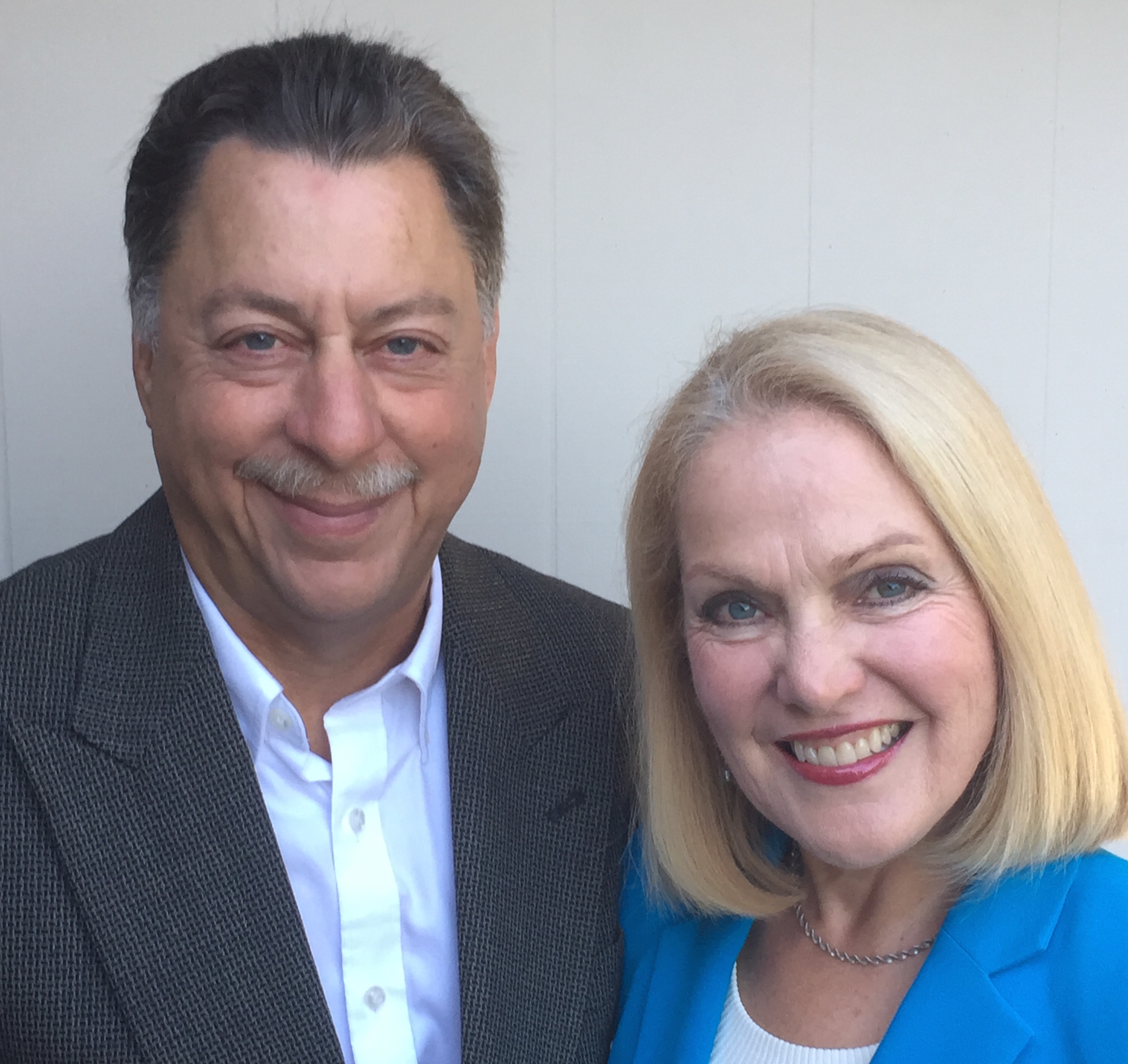
 

Dr. Mikol Davis and Carolyn Rosenblatt, co-founders of AgingInvestor.com

Carolyn Rosenblatt, RN, Elder Law Attorney offers a wealth of experience with aging to help you create tools so you can skillfully manage your aging clients. You will understand your rights and theirs so you can stay safe and keep them safe too.

Dr. Mikol Davis, Psychologist, Gerontologist offers in depth of knowledge about diminished financial capacity in older adults to help you strategize best practices so you can protect your vulnerable aging clients.

They are the authors of "Succeed With Senior Clients: A Financial Advisors Guide To Best Practice," and "Hidden Truths About Retirement And Long Term Care," available at AgingInvestor.com offers accredited cutting edge on-line continuing education courses for financial professionals wanting to expand their expertise in best practices for their aging clients. To learn more about our courses click HERE

Warn Your Clients About This Fake U.S. Marshal Scam

Warn Your Clients About This Fake U.S. Marshal Scam

The Federal Trade Commission makes every effort to warn consumers about the latest scams and the information is important. However, your investors are not likely to spend time browsing through the FTC website for scams. We at AgingInvestor.com are passing on a warning for you to share with your clients. We want them to love you for how much you take care of them. When they get a friendly letter or email from you, that shows you're paying attention to them.

Let them know about the fake U.S. Marshal scam. Here's how it works:

The scammers get phone numbers from lists of potential targets. It is no secret that telephone numbers of seniors, in particular, are bought and sold by unscrupulous people. This scam is not limited to elders, but they are especially vulnerable, having been raised to generally respect authority. The scammer has a fake phone ID and number and perhaps even a real badge number stolen from the Marshal's office. So your client might have caller ID and see "U.S. Marshal" on it. It's intended to scare them. It works.

The caller says the target is delinquent in reporting for jury duty and there is a fine due immediately which must be paid. The caller threatens that the Marshal will arrest the target if he or she does not pay immediately. Of course, there is no such consequence for failing to report for jury duty and there was no summons for Federal jury service the target ever got. Never mind that, the target reacts out of fear.

When we react out of fear, we're not logical. Why would a U.S. Marshal insist that anyone buy a pre-paid gift card for cash or wire money? That never happens. This may sound very obviously phony to you, but your aging client can be fooled by it. Perhaps the client is a bit forgetful and is terrified that he forgot about a jury summons. Or she thinks she is about to be taken away and she complies, feeling she has no choice but going to jail.

The takeaway is this. Please send a communication to all your clients that warns them of this scam and advises that you are looking out for their financial safety. You need to tell them:

  1. Don't ever wire money or buy a prepaid card for anyone who contacts you by phone making threats, no matter who they say they are.
  2. Thieves get phony caller ID and can look real but they are not.
  3. Never give out any personal information such as your address, date of birth, your credit card number, your social security number or any other private data to a caller. If you call a company on your own and need to give this information that's different. If anyone calls you and asks for it, hang up.

Your client can report attempts made by scammers to the Federal Trade Commission online. However, these thieves are hard to catch. They change states and phone numbers faster than law enforcement can track them. Finally, do not, as a financial advisor, assume that your smart, educated or savvy clients would never fall for these phony calls. Over $36B is stolen from elders every year in this country. Even the smartest people can be caught off guard. Warning everyone is a small thing but could save one of your clients from painful loss and ID theft.

We have form letters you can use, YouTube videos and lots of other tips to help you help the older clients in your book. Check us out at AgingInvestor.com.


Dr. Mikol Davis and Carolyn Rosenblatt, co-founders of AgingInvestor.com

Carolyn Rosenblatt, RN, Elder Law Attorney offers a wealth of experience with aging to help you create tools so you can skillfully manage your aging clients. You will understand your rights and theirs so you can stay safe and keep them safe too.

Dr. Mikol Davis, Psychologist, Gerontologist offers in depth of knowledge about diminished financial capacity in older adults to help you strategize best practices so you can protect your vulnerable aging clients.

They are the authors of "Succeed With Senior Clients: A Financial Advisors Guide To Best Practice," and "Hidden Truths About Retirement And Long Term Care," available at AgingInvestor.com offers accredited cutting edge on-line continuing education courses for financial professionals wanting to expand their expertise in best practices for their aging clients. To learn more about our courses click HERE

Your Retirement-Age Clients and Budget Politics

Your Retirement-Age Clients and Budget Politics

While advisors are there to serve those with investable assets, it is not only your clients who are affected by politics, the Federal budget and cuts to programs. It may be your clients' family members, their aging parents or struggling adult kids.

When family members are beneficiaries of various public programs that help them get by, your clients may not be affected except with feeling relief. But when programs are slashed, the reverberation can affect your own clients, who are likely to be better off financially and therefore expected to help. Every advisor needs to consider this. Cash flow projections on retirement savings can be totally disrupted when your client has to pitch in and give financial help to a low-income family member.

Imagine this: your Boomer clients are ready for retirement. You have carefully worked out what they will need to sustain their lifestyle and make their money last. One or the other of them has low income aging parents in their 80s. Their parents have part of their health care costs paid by Medicaid. Medicaid gets slashed. Your client has to help pay the 20% of costs Medicaid was previously covering for their parent's health care costs. And since those costs tend to rise with aging, your client will potentially pay the cost of a supplemental insurance policy or non-covered medications or other things.

Here's another thing to see in looking at how budget cut proposals can destroy your careful retirement income planning for your clients. Some have disabled siblings, adult children or others who benefited directly from the Medicaid expansion of the Affordable Care Act. Some of those folks are not yet eligible for Medicare and rely entirely on Medicaid for all health care coverage. With massive cuts to Medicaid, they are among the millions who would lose insurance altogether. If they have a well-to-do family member, your client, where will they look if a medical need arises and there is no way to pay for it? Probably to your client.

Then, lets look at your clients' lowest income family members who rely on the Supplemental Nutrition Assistance Program (SNAP), formerly called food stamps. Nearly five million seniors rely on this program in order to afford food. A massive cut (proposed) of $194 billion would surely affect them immediately. Can you imagine any client refusing a request from a low-income family member for money because he or she couldn't afford groceries? That grocery money contribution could be every week and go on indefinitely into the future.

Perhaps this is just a heads-up for every financial planner to build into clients' retirement planning that some cash may be needed on a monthly basis to help their relatives who can't get by without their help. In my own family, four of us pitch in every month to support a low-income sibling. He has Medicare and also Medicaid. For all of us who are Boomers and a bit older, a hit to the existing Medicaid benefit would cost each one of us more dollars every month than we are currently paying.

Your clients may be in the same situation. We at AgingInvestor.com hope you will bring up the subject and help your clients plan accordingly. You would do that by asking clients planning retirement if there is anyone in the family they may be called upon to help support.

Our political climate may not change for some time. And every lower income American who is a needy family member of your retirement-aged clients will be affected one way or another. Help them prepare for the anticipated expense.


Dr. Mikol Davis and Carolyn Rosenblatt, co-founders of AgingInvestor.com

Carolyn Rosenblatt, RN, Elder Law Attorney offers a wealth of experience with aging to help you create tools so you can skillfully manage your aging clients. You will understand your rights and theirs so you can stay safe and keep them safe too.

Dr. Mikol Davis, Psychologist, Gerontologist offers in depth of knowledge about diminished financial capacity in older adults to help you strategize best practices so you can protect your vulnerable aging clients.

They are the authors of "Succeed With Senior Clients: A Financial Advisors Guide To Best Practice," and "Hidden Truths About Retirement And Long Term Care," available at AgingInvestor.com offers accredited cutting edge on-line continuing education courses for financial professionals wanting to expand their expertise in best practices for their aging clients. To learn more about our courses click HERE

Watch Out For The Latest Tax Scam That Could Snare Your Aging Clients

Watch Out For The Latest Tax Scam That Could Snare Your Aging Clients


Warning: Undefined array key "extension" in /home4/seniorc2/public_html/aginginvestor/wp-content/themes/Divi/epanel/custom_functions.php on line 1479

Carolyn L. Rosenblatt, is a nurse and elder law attorney, along with blogging for Forbes.com and author of 4 books on aging. She is a co-founder of AgingInvestor.com and AgingParents.com
The Fraud Watch Network sent out a press release detailing a new and fast moving telephone scam targeting taxpayers across the country. As many of us are aware, our aging loved ones are quick to fall for these phone scams. Thousands of victims have already lost more than $1million.  Please caution your aging parents and others as well.

Here's how it works:

Fake IRS agents call taxpayers, claim they owe taxes, and pressure them with demands for payment using a prepaid debit card or a wire transfer. They threaten their targets with arrest, deportation or loss of a business or driver's license, said J. Russell George, Treasury inspector general for tax administration.

The fake agents mask their caller ID, making it look like the call is coming from the IRS. In some cases, even more frightening, fake agents know the last four digits of Social Security numbers.  They go so far as to follow up their targets with official-looking emails.

The reports about the scam describe how immigrants were targeted first, and threats of deportation were very effective.  It has since spread to thousands of other victims in most states.

Imagine your aging parent getting one of these calls.  Unsuspecting, intimidated and wanting to comply.  You, as the adult child with more of a fraud antenna might wonder why a supposed IRS agent would call you, as the IRS always communicates with a taxpayer via mail. Your aging loved one might not think of that.  When a second call comes in, once again with caller ID masked and faked to look like the police department or the Department of Motor Vehicles, it looks even more like the threat  of consequences for not paying is real.

What if your parent really does owe back taxes? They can call the  IRS directly at 1-800-829-1040 and get the truth.  The IRS never demands wire transfers or debit card payments nor do they use license suspension or deportation as a threat.

Most of us understand that when someone demands payment over the phone by wire transfer or debit card that you should simply hang up.  But not everyone knows this, particularly the 20,000 or so people who have been tricked so far with just this scheme.

So, keep your loved ones safe, especially your elderly family members. Warn them about this latest scam and follow up with questions as to whether they have gotten any calls like the ones described here, from anyone posing as an IRS agent. These scams escalate around tax time.

In consulting with families who have elderly loved ones as we do here at AgingParents.com, we often find that adult children want to believe that their parents are still competent and that such a thing could never happen to them because their parents are intelligent, or well educated, or they had work experience in finance, etc. But these clever scum with the fake IRS calls can probably fool even a smart, well educated person because the scheme gets past "filters" like caller ID and knowing the last digits of a person's Social Security number.  This is too scary to ignore.

Not only am I going to warn my 91 year old mother in law about this, but I'm going to ask her to tell all her friends at the seniors' community where she lives.  I'll let my own adult kids know about this scam too. I hope you will do the same.

Until next time,
Carolyn Rosenblatt
AgingParents.com & AgingInvestor.com


Reverse Mortgages Warning: Hidden Pitfalls and Consumer Complaints

Reverse Mortgages Warning: Hidden Pitfalls and Consumer Complaints

paradise

Heavy advertising by those selling reverse mortgages could convince anyone that this product will get you to nirvana. The sellers tout them, promising to let you “live the life of your dreams” or “have a better retirement”.  Really?

The Federal government has responded to numerous complaints by borrowers about reverse mortgages (home equity conversion mortgages or HECMs) and issued a summary report.  It’s available through the Consumer Financial Protection Bureau but if you don’t have time to read it, we summarize for you it here at AgingInvestor.com.
The reverse mortgage complaints submitted to the CFPB demonstrate the wide range of problems some consumers have with these loans. The largest volume of complaints, according to the report, center on difficulty in trying to change the terms of the loans. When borrowers want to refinance the loan or add borrowers, they can’t.  Some borrowers do not understand that the loan proceeds as well as accrued interest on the loan over time substantially decrease the amount of available equity. What this tells us at AgingInvestor.com is that despite mandatory “counseling” before getting the mortgage, the borrower is not getting the message. Whether that is a defect in the counseling itself or the consumer being swayed by the “live the life of your dreams” advertising we do not know.  What we do know is that borrowers get upset when they find out they can’t refinance these loans.
Other consumers complain that lenders refuse to lower their loans’ interest rates and they feel that as interest rates have declined, that they’re being overcharged.  Trying to change the terms of the loan at all is very problematic. When adult children want to be added as borrowers they can’t be added. Borrowers do not understand that adult children can only retain the home for an aging parent by paying off the entire loan balance or by paying 95% of the value of the home. Is this a failure to understand the mandatory counseling their parents were given? Or is it that this critical detail is lost in the effort to get an older homeowner to take the loan, “live the life of their dreams”  and have a wonderful time with the loan proceeds?
As we see it, the worst outcome of a reverse mortgage occurs when title is transferred to one spouse in order to get the HECM, perhaps because he or she is  of an age that makes it possible to borrow more equity than the other spouse could do.  The loan is taken in the name of that one spouse only. The borrowing spouse later dies.  The non-borrowing spouse then will lose the home. Distraught widows and widowers face foreclosure in this scenario. Of course they can’t pay off the loan or they wouldn’t have needed the HECM in the first place.  Some consumers report that their loan originator falsely assured them they would be able to add the other spouse to the loan at a later date.
The U.S. Department of Housing and Urban Development (HUD) is changing this horrible problem.  It issued a mortgagee letter in August 2014 that provides that non-borrowing spouses meeting certain conditions, may remain in the home after the death of the borrower spouse but only for loans originated after the date of this letter.  Most HECMs originated after August 4, 2014 will be made in both spouses’ names. For the rest of the many borrowers whose loans are older than that, a widowed person will likely lose the home after the borrowing spouse dies.  So much for living the life of their dreams.
If you are in a position to advise clients about the pros and cons of a reverse mortgage, be sure that you know these details before directing anyone to such a loan.  Yes, in some cases, a HECM can be a lifesaver.  But as we see it, that’s only a good idea when there are no other options available to pay the basic cost of living in the home and surviving there to the end of life. It’s not prudent for any consumer to have a lavish lifestyle on borrowed money, only to run out of equity when they need money most: when disabled and in need of care. Consumers need to be cautioned not to take out equity and recklessly spend it as if there were no consequences to depleting what is for many, their only significant asset.
Help us keep elders informed.  Please share this with a friend, a client or member of your own family.
Until next time,
Carolyn Rosenblatt, RN, Attorney, Mediator
Dr. Mikol Davis, Psychologist, Gerontologist