
Danger: You Need To Act Fast When Your Client Seems Cognitively Impaired

Danger: You Need To Act Fast When Your Client Seems Cognitively Impaired

Danger: You Need To Act Fast When Your Client Seems Cognitively Impaired

This really happened. An advisor was managing a portfolio for a client we'll call "Janet" with about $5M in assets. She seemed to be "with it" most of the time. But she had become confused in some of their conversations, unable to follow what her advisor was saying. (It was not complicated). She called several times in one week, asking the same questions over and over. She forgot that they had already been answered. She missed two appointments, apologizing that she had been really busy. The advisor didn't seem to take all this seriously and didn't do anything differently from how he had always interacted with this client.

Janet had always been a generous person. She liked to help people out. She got drawn into a "friendship" with a stranger, who was very sweet and complimentary to her and it made her feel good to hear all those nice things. He saw her often. And after awhile, he asked her for a loan. She gave it to him. He kept up the frequent calls and visits. Perhaps she was addicted to them. The loans continued. Her advisor was concerned, but he figured it's her money and she can do what she wants with it. The amounts climbed, first to $100,000 in these "loans" and over three years the amount she had given to this false friend reached over $500,000. Of course he never intended to repay any of it.

The advisor finally seemed to catch on that something was wrong. He contacted Janet's daughter, and steps were taken right away to stop the drain on her assets, stop the phony friend and stop Janet from making those poor decisions.

The takeaways that every advisor should know are these:

  1. When your clients seem confused, forgets phone conversations and misses two appointments, these are RED FLAGS of diminished capacity. The time to contact the family is right then, not after some disaster happens.
  2. Even if your client has ample assets, it is wrong to simply allow a predator to manipulate her or him out of them. You, the advisor have the obligation to do all things possible to stop financial manipulation. It is not an excuse that "it's her money and she can do what she wants with it." That aids and abets elder abuse.
  3. You need advance information in your file when you accept the client into your book. That information must include more than one alternate contact and written permission from your client in a legally sufficient document, to contact the responsible others when you see fit.
  4. An unusual change in your client's spending pattern, such as Janet's taking out huge sums to "loan" to this fake friend should be red flags of financial elder abuse for you. Please don't wait until a thief takes a half a million dollars from someone before you catch on that something is very wrong here and you need to act right away.

If you are not sure about the warning signs of diminished capacity to look for, you can get a free checklist at AgingInvestor.com. Download yours today and you won't make the same mistake as the anonymous advisor in this case study. If you aren't sure about the major warning signs of financial elder abuse, we can help you there too, with another free checklist. Get yours right away and keep those aging clients financially safer.

Carolyn Rosenblatt, RN, Elder Law Attorney, AgingInvestor.com
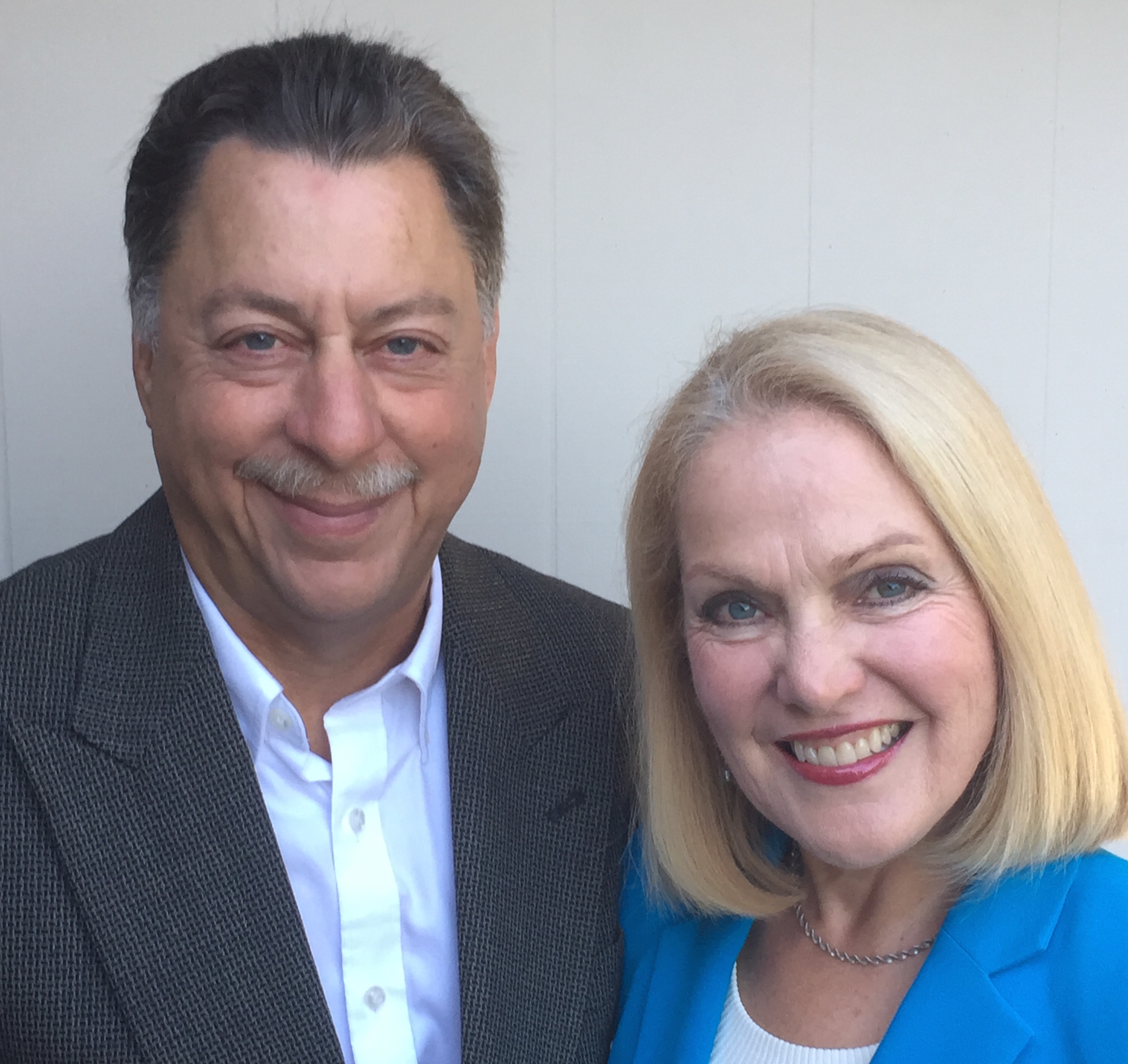
 

Dr. Mikol Davis and Carolyn Rosenblatt, co-founders of AgingInvestor.com

Carolyn Rosenblatt, RN, Elder Law Attorney offers a wealth of experience with aging to help you create tools so you can skillfully manage your aging clients. You will understand your rights and theirs so you can stay safe and keep them safe too.

Dr. Mikol Davis, Psychologist, Gerontologist offers in depth of knowledge about diminished financial capacity in older adults to help you strategize best practices so you can protect your vulnerable aging clients.

They are the authors of "Succeed With Senior Clients: A Financial Advisors Guide To Best Practice," and "Hidden Truths About Retirement And Long Term Care," available at AgingInvestor.com offers accredited cutting edge on-line continuing education courses for financial professionals wanting to expand their expertise in best practices for their aging clients. To learn more about our courses click HERE

What Should You Say To A Client With Diminished Capacity?

What Should You Say To A Client With Diminished Capacity?

We've all had them. Those clients who seem to be more and more forgetful. They're with it some of the time and other times, not so much. They call you multiple times asking the same questions. They repeat their stories to you. It gets scary is when they start wanting to do dumb things with their money.

Unfortunately most firms do not have clear and specific protocols for you to follow when a client begins to show those telltale signs that he's slipping mentally. Or that she is flat out vulnerable to manipulation by some unscrupulous person. You see it, but what can you say? You just carry on hoping it will get better or that family will take care of it. But that doesn't happen. Then what?

At AgingInvestor.com we think it is far too dangerous for you to simply ignore the problem, or expect someone else to take care of it for you. If a scammer takes Dad, you will know when those strange and unexplained large withdrawals start coming out of his account. Family can reasonably expect that you will do something to keep your client, their father safe financially. That's fair enough, but how do you start?

First, you need to document every instance of anything that you observe that shows you that your client's ability to make financial decisions is becoming impaired. You don't need to be an expert to see what's obvious. Multiple phone calls in one day with the same question is an example. When you explain something slowly and clearly enough for a high school kid to understand and your formerly sharp client doesn't get it at all, that's another example: easily confused. There are numerous signs.

When you have collected the signs over a period of say, six months or more, and you have carefully recorded them somewhere, it's time to bring your client in for a face-to-face conversation. If you are at a distance, this may have to be by phone but it has to happen.

Start with your concerns. For instance, you can say "Jack, I'm getting concerned about some things I've noticed with you over the last few months. I've heard you ask the same thing multiple times in the same day. I have noticed that you are forgetting some important things I've explained to you about your portfolio." Jack may push back and probably will. You follow up by calmly showing him or describing to him the dates and your documentations of instances. "See here's what I mean. This is worrisome to me Jack. My job is to be sure your money is safe and that no one tries to rip you off. When you forget a lot, predators are waiting to target you".

Then you bring the conversation to the ask. "Whom do you trust that we could involve in being a backup safety person with you, or just joining in on the decisions about your investments here that might be a reassurance for me that you are ok?"

If you were smart before the diminished capacity issue came up long ago, you would have had Jack identify two trusted others you could contact in this situation. You would have had Jack give you permission to disclose protected information with the trusted others and thus dispose of the barrier that stops so many: the privacy issue. All this would be in your client file.

People respond to this approach in various ways. If you know your client, you will know some words that may work best with him or her. The point here is that you need to have this conversation, which may initiate a series of steps to keep that vulnerable client with diminished capacity as safe from predators or his own foolish decisions as you can.

Here are some takeaways from AgingInvestor.com, where you can learn more on this subject.

  1. Face the issue that you have to address this, awkward or not. Diminished capacity must not be ignored.
  2. Document each and every sign of diminished capacity as you communicate with your client. Here's a checklist to help you.
  3. Open the conversation by making it your concern. You are worried about the client. You want to keep him/ her safe. You want to do your professional job.
  4. Have at the ready your trusted 3d party contacts for your client. Get your client's permission to involve the trusted others at the earliest opportunity.

Does this expand your role as a financial professional? You bet. But there is no escaping aging clients and the issues longevity brings. Be ready for them.

Carolyn Rosenblatt, R.N., Elder Law Attorney, & Dr. Mikol Davis, Gerontologist co-founder of  AgingInvestor.com

The Myth of That “Nice Long Life Ahead” at Age 65

The Myth of That “Nice Long Life Ahead” at Age 65

Probably I'm not the only one who has seen the deluge of ads on TV for Medicare supplement insurance. One that really bothers me though is the bit with the actress saying she's only in her 60s and "I've got a nice long life ahead." She's so smug and so sure she's just fine and will stay that way.


The ad taps into the belief most people cherish, which is that impairments happen to other people and that they will just keep being fine, at any age. People say they want to live to be 100. Their imagination is that they will be perfectly capable in all ways and will not need any help at 100. That is belief, not truth.


What makes a "nice long life" anyway? No one ever wants to think about infirmity and cognitive decline. And yet, by the time we reach that nice old age of 85 at least one in three of us, and maybe even one in two will have Alzheimer's disease. Not so nice. And oh, by the way, that supplement insurance the actress is promoting doesn't pay for care if you need it at home long term. Neither does Medicare.


Every financial planner who has a client over age 65 needs to be considering that the "nice long life" that is part of our cultural fantasy is indeed dreaming for most people. It's not about longevity. That we've probably got. It's about good health in old age. That, we have definitely not totally figured out. As 10,000 people a day are now turning 70, it's time to get past fantasy and consider how to make that long life a lot safer financially.


Are your client's assets enough to pay for the care they are likely to need? If not, you, the client and her family must engage in the essential discussion about who will care for the client as she ages and how much it will likely cost. One must do the math. The cost of caring for someone with dementia at home is staggering. And the advisor needs to calculate it. This is not considering the usual figures thrown around about "the average couple at age 65 will spend "x" dollars on out of pocket medical expenses for their lifetimes". None of those commonly used figures consider what it may cost to pay for a person with Alzheimer's disease who lives for 7-20 years with the disease. Help from someone will be absolutely necessary for anyone with dementia.


Your portfolio review with a client at retirement is a good time to talk it over and bring up the actual, not fantasy prospects for the future. And here's hoping you will not be influenced by stupid TV commercials about what the future may look like. Longevity can be wonderful, yes, and you can help make it financially safer for your older clients. A nice long life is certainly possible. And a long life with accessible assets to cover long term home care near the last phase of life is ideal.


Carolyn Rosenblatt, RN, elder law attorney, AgingInvestor.com