

Shocking Vedict: Firemen’s Fund Set Up Employees To Lose Retirement Savings
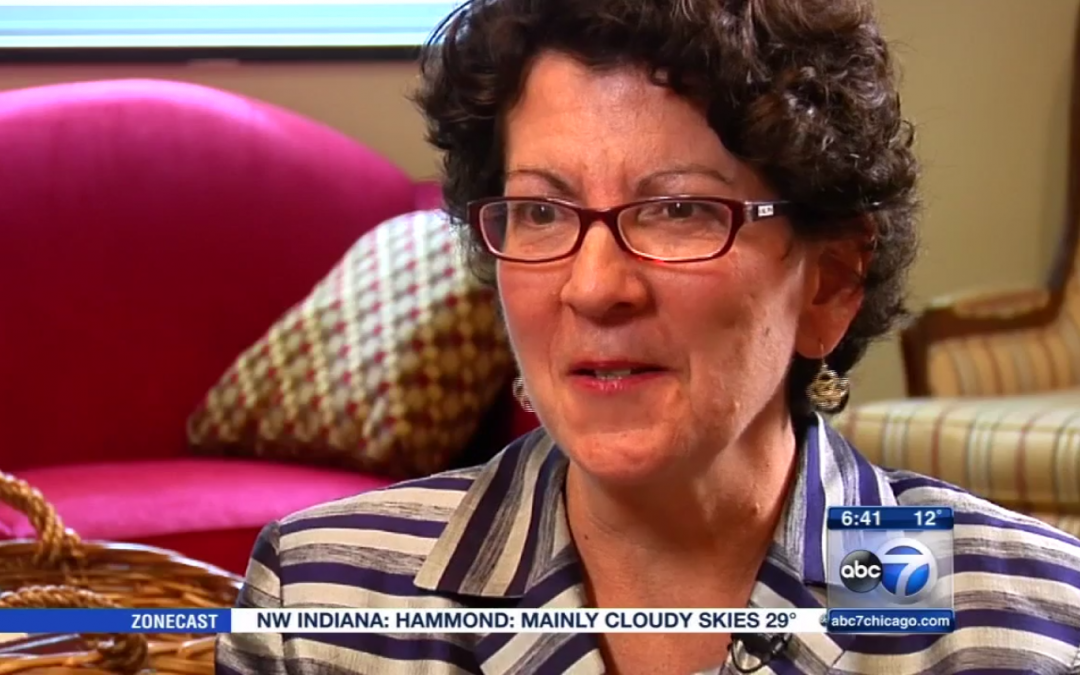
A judge agreed with Fireman’s Fund insurance company’s retirees who sued the employer for introducing them to “financial education seminars”. They attended, followed the advice given and lost everything. Maybe you thought this only happened to naive older folks preyed on by slick salesmen outside the workplace. But no. It happened to 34 long time employees and retirees of Fireman’s Fund who lost most or all of their retirement savings by being misled into risky investments.

A Great Way To Distinguish Yourself As A Professional
Doesn’t every professional want to stand out from the crowd? Be better at delivering services? Somehow get a reputation as a cut above the average guy or gal in the biz?
It’s hard to sell the idea that you give better service when you are doing essentially what your competitors do in the same space. The secret is in offering a different service from the others in your field, besides the usual expertise in your field clients have a right to expect use the best essay editor source.
What will that different service be? If you want to focus on senior safety, that can be it. We don’t mean that you know about the things seniors need to know about, such as retirement strategy, estate planning, moving, wealth preservation, tax planning and all that. It will be about specifically protecting them from abuse.To do that, you’ll need a senior-specific policy that spells out how you can protect a client.
(more…)
(more…)

Why You Need To Act When Your Client Has Serious Memory Problems
Have you ever found yourself in a situation with an older client who can't seem to remember anything anymore. You may have known the client over a number of years and feel responsible. But you are at a loss now. What are you supposed to do with this client? He's pleasant and just loves you. But you are worried.
You are pretty sure your client is experiencing a slow, but steady cognitive decline. He has a daughter in another state but maybe she isn't paying attention to what is going on. He has a son she's not close to, though he lives in the same area she does. You asked him once if he had someone to be his agent, his power of attorney. He hadn't gotten around to that yet.
No one acts. No one insists that your client choose a relative or friend and sign the Durable Power of Attorney document. He says he doesn't want to talk about it and you just back off and never mention it again. You suspect he may have Alzheimer's disease, from your experience with your own family member.
Here is what can happen to your client.
He steadily loses judgment about what is a good thing to spend money on or invest in; therefore, bad decisions happen. We have observed clients who were once financially comfortable start falling for obvious scams. They buy worthless coins or stamps or fly-by-night property investments that take their money and disappear. Perhaps no one knows because the elder is in the secrecy habit. Time passes and the client's cognitive ability declines even more. There is no stopping dementia caused by Alzheimer's disease. The predators find an easy mark. As long as there is cash to spend or credit cards to run up, the elder keeps getting into deeper and deeper trouble. Unquestionably, financial decimation can result.
These situations are real. We have talked to the families of elders who have probably been impaired for years, hearing them say they wished someone had done something sooner. No one but the financial professional knew what the client had nor where his money was going. The family thought the elder's finances were fine. Now, with too much drained out by excessive giving, the family may well end up having to support their aging relative just at the time when extensive care is needed and the expense of it skyrockets.
How do you prevent the worst? By engaging in discussion with your client's family or appointed other early in your relationship. If you have an ongoing connection with that trusted person in your client's life, you stand a better chance of protecting her from dumb and destructive decisions if her mind starts to go, later on in life. Even if you can't imagine how a perfectly alert, intelligent person could get dementia, it happens to millions of people as they live longer. The risk rises with age.
If you have never had conversations with your older clients' families now is the time to start. You need to educate your client about the importance of having someone else named by her for you to reach out to if she gets sick or has an accident.
You need to develop the skill of conducting family meetings while each client is fully competent. Even if a client has a few memory lapses now it is not too late to have a meeting with family to figure out the path forward in case of trouble ahead. This is a "soft skill" every advisor needs. If you want to learn how to conduct a family meeting or get better at this, you can learn the techniques in an hour.
Putting these skills to work takes some practice. It is especially important to know what to do when a client's family is difficult, or there is a history of conflict among them. That's tricky and you will need some outside help. Get smarter about conducting successful family meetings in our new book, Succeed With Senior Clients: A Financial Advisor's Guide to Best Practices. There's a great chapter entitled "Your Client's Family: An Open Book or Pandora's Box?" Click HERE for your copy today!

The Art of Communication With Aging Clients
Have you ever had an older client who didn’t want anyone, not even family, to know what his assets were? Did you find this secrecy about money to be a problem with a few of these older folks? It’s not so rare.
Everyone is entitled to privacy, of course, and the rules mandate that you not share a person’s private financial information. But what if your client begins to decline in his health? What if he starts to appear as if he’s “losing it”? Then are you supposed to just let him make mistakes and feel constrained that you can’t call a family member or anyone about his health? It does seem that most advisors do nothing until things reach a crisis point.
As aging experts, we think things should be handled differently. When you open every client file, you are not required to get the name of someone to call in case of emergency or in case of need. That is precisely what needs to change. Let’s consider common sense. If people are living longer than ever, their chances of developing cognitive impairment are consequently greater. With impairment, people lose their financial judgment. If you have a client’s trusted contact in the file, you may need it. And you can’t wait until your client is really, obviously impaired. If you do, she probably won’t want to give you anything. That puts you in a bad position. Your client is vulnerable to big mistakes and even to financial abuse. You don’t know what to do. You can’t call anyone and you wouldn’t know who to call even if you could.
Here’s the sensible solution: get the names and contact information of two trusted others for your client when you open any file. And with existing clients, ask them for the contact for two trusted people in their lives at the next portfolio review. Do it across the board for every single client. That way, when any one of them goes on to develop cognitive impairment, or dementia or has a stroke or anything disabling, you are not caught flat. And how do you ask that secretive client for the names and for permission to call when, in your judgment, the need arises? You start by making it your problem. You let the client know that it is now office policy. You politely insist and you get it done.
Not every single client will immediately cooperate. Some will need your patient persuasion and tact to coax them to do this. That is one of those “soft skills‘ you absolutely need with your older clients. A few may refuse your request and you can’t force it on them. But for most clients, the encouragement from you to look to the future may be considered part of your job.
Senior clients can pose a number of communication issues with you besides being secretive about finances. Hearing loss, vision limitations and mobility issues can all make conversation more difficult. What you need to know to hone your skills and keep on top of these challenges is all spelled out for you in our book, Succeed With Senior Clients, A Financial Advisor’s Guide to Best Practices. Check out the chapter, “Tough Talk: Communication Challenges With Aging Clients”. You’ll get those soft skills down in no time! Get your copy today by clicking HERE.
 AgingInvestor
- Consider $2M: The Cost of Long-Term Care For One Aging Parent
- One Thing You Should Never Tell Your Aging Investors
- How to Resolve Family Conflicts Care, Control and Money: Approaches from Legal, Psychological and Compassionate Perspectives
- Your Aging Clients Living Alone: The Dangers They Face
- Danger: You Need To Act Fast When Your Client Seems Cognitively Impaired
- Financial Wellness and Physical/Mental Wellness: Are They Related?
- We are really excited to see you October 22,Being Extraordinary: Advising For Longevity
- Tips-Having Calming Conversations With Upset Clients In This Pandemic
- Five Very Personal Questions Older Advisors Need To Ask Themselves
- What Extraordinary Advisors Do For Retiring Clients That Other Advisors Miss